-
by sayum
28 August 2026 6:47 AM







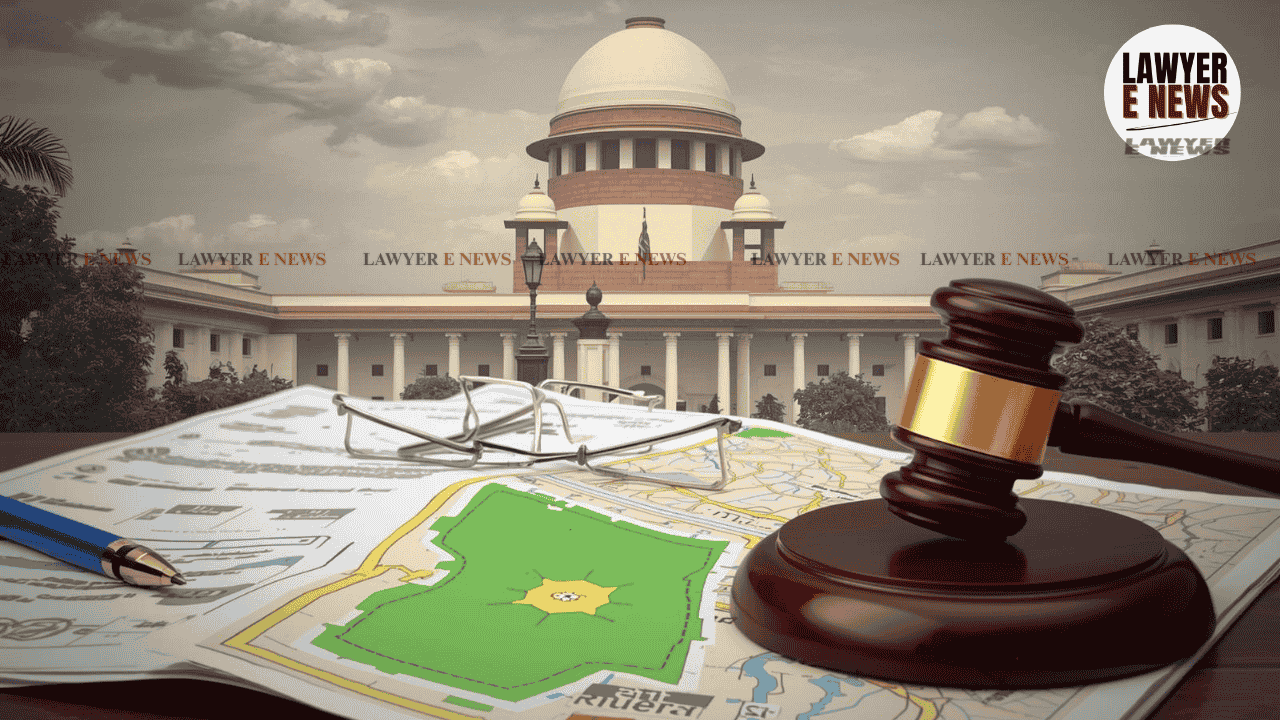
"It Is Strange How Trial Court Granted Mandatory Injunction Without Proof of Land's Exact Location" — In a significant ruling clarifying the limits of injunctive relief under the Specific Relief Act, the Supreme Court on 15 January 2026 dismissed a civil appeal filed by plaintiffs seeking a mandatory injunction against Bharat Heavy Electricals Ltd. (BHEL) for allegedly constructing a boundary wall that blocked their access to a public road. The Bench comprising Justice Aravind Kumar and Justice Nongmeikapam Kotiswar Singh held that in the presence of serious disputes regarding title, possession, and identity of the suit property, a suit for injunction simpliciter is legally untenable, especially without seeking the relief of possession.
“When the construction of a wall results in dispossession, a suit for mandatory injunction without the corresponding relief of possession is clearly barred under Section 41(h) of the Specific Relief Act,” observed the Bench, upholding the High Court’s interference under Section 100 CPC, which had reversed concurrent findings of the Trial Court and First Appellate Court.
Mandatory Injunction Cannot Replace Suit for Possession Where Title and Possession Are Disputed
The dispute arose when the plaintiffs—partners in an unregistered firm Vaishali Builders—sought a mandatory injunction directing BHEL to demolish a boundary wall allegedly constructed over part of Khasra No. 436 in Haridwar, which they claimed obstructed access to a public road. The plaintiffs asserted ownership and possession over 15 biswas of land purchased via registered sale deed in 1992 from Laxminarayan Jha and Bashir Khan, and claimed that BHEL’s wall between points “C” and “D” on the plaint map interfered with their lawful use.
The Trial Court decreed the suit, and the First Appellate Court affirmed, both courts holding that the plaintiffs had established their ownership and possession based on sale deed and revenue records, and the wall amounted to unlawful obstruction.
However, on second appeal, the Uttarakhand High Court reversed the decree, holding that the plaintiffs ought to have filed a suit for possession, not merely injunction, since there was a serious dispute on title, possession, and identity of the land.
The Supreme Court found no infirmity in the High Court’s reasoning and remarked:
“When a plaintiff claims relief based on title that is disputed, possession that is unclear, and land identity that is unproven, a suit for mandatory injunction without possession cannot be entertained.”
"Availability of Equally Efficacious Remedy Bars Injunction" — Section 41(h) Specific Relief Act Applies
The Court heavily relied on Section 41(h) of the Specific Relief Act, 1963, which prohibits granting injunctions where an equally efficacious remedy exists.
The judgment states:
“The availability of a remedy for possession in case of alleged dispossession renders a suit for mandatory injunction untenable under Section 41(h). The Trial Court and First Appellate Court erred in ignoring this bar and decreeing the suit.”
Rejecting the plaintiff’s reliance on Sant Lal Jain v. Avtar Singh and Joseph Severance v. Benny Mathew, the Supreme Court held that those decisions apply only to cases of permissive possession (e.g., licensees) where no dispute over title or identity of property exists. In contrast, the present case was marked by “serious cloud over both title and possession” and thus governed by the principles laid down in Anathula Sudhakar v. P. Buchi Reddy.
In this context, the Court explained:
“Where the title is in dispute, the remedy is not injunction simpliciter. The plaintiff must sue for declaration of title and possession.”
“Plaintiffs Failed to Prove Identity of Disputed Land or Wall Location” — Decree Unsustainable Without Precise Evidence
The Supreme Court further observed that the plaintiffs had failed to establish the exact location or identity of the portion of land within Khasra No. 436 where the wall was allegedly constructed. Despite relying on an Amin’s report and local inspection, the Court found inconsistencies and absence of measurements.
“It is strange,” the Court remarked, “how a decree of mandatory injunction came to be granted in the absence of any cogent proof regarding the exact location of the land or the wall.”
It held that a mandatory injunction for demolition of construction cannot be granted in the absence of clear evidence identifying where the wall stands vis-à-vis the plaintiffs’ purchased land.
"No Jurisdictional Error by High Court in Interfering Under Section 100 CPC" — SC Affirms Interference in Second Appeal
The Supreme Court rejected the contention that the High Court exceeded its jurisdiction under Section 100 CPC, clarifying that:
“Where concurrent findings are vitiated by misapplication of law or disregard of statutory bars, the High Court is fully justified in exercising its jurisdiction.”
The Bench observed that the High Court rightly framed substantial questions of law, particularly regarding the bar under Section 41(h), and found that the findings of the lower courts were legally unsustainable.
Section 69 of Partnership Act Inapplicable, But Not Enough to Save the Suit
While the defendant had raised an objection that the suit was barred due to non-registration of the plaintiffs' partnership firm, the Supreme Court affirmed the finding that Section 69 of the Partnership Act, 1932, did not apply in this case since the plaintiffs were asserting property rights and not contractual claims. However, this finding alone could not rescue the otherwise defective suit, the Court held.
Suit for Mandatory Injunction Without Possession or Proper Identification of Land is Legally Barred
Concluding the judgment, the Supreme Court stated:
“The plaintiffs failed to seek the proper relief, failed to prove title and possession beyond doubt, and failed to identify the land. In such circumstances, the High Court rightly reversed the erroneous decrees passed by the courts below.”
The appeal was accordingly dismissed, with the Court directing parties to bear their own costs.
Date of Decision: 15 January 2026