-
by sayum
28 August 2026 2:11 PM







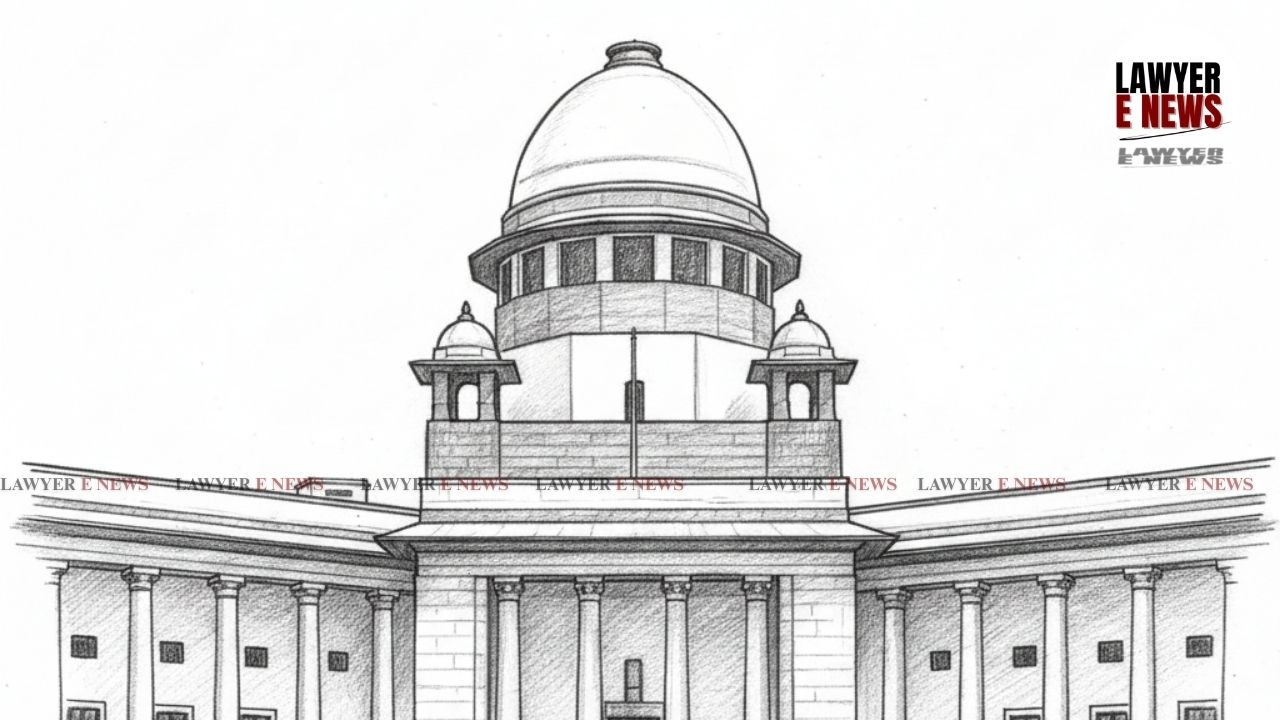
“Lip-Service to Justice Cannot Cloak State Bias…..Bias of the State is heavily loaded in favour of the accused… the trial has been reduced to a mockery” – In a damning indictment of the criminal justice system's misuse for political ends, the Supreme Court refusing to cancel the bail of the murder accused while simultaneously rejecting his plea to ease restrictions imposed on his liberty. The Court, while balancing competing claims of personal freedom and witness protection, condemned the State’s conduct, remarking that “the prosecution has been reduced to lip-service” and that “an aura of fear and apprehension seems to pervade the minds of the witnesses.”
Justice Dipankar Datta, writing for the Bench also comprising Justice Augustine George Masih, held that judicial finality cannot be upended through tactical litigation and shifting benches. "The strength of judicial power lies less in the hope of perfection and more in the confidence that decisions, once made, are settled," the Court declared.
“The State Was Not Prosecuting, It Was Facilitating”: Court Finds Prosecution Attempted Withdrawal to Shield Politically Connected Accused
At the heart of this case lies the 2019 murder of one Kurban Sha, allegedly conspired by Sk. Md. Anisur Rahaman, a politically affiliated individual who was accused of orchestrating the assassination of a rival. Though trial proceedings had begun, the Legal Remembrancer of West Bengal in 2021 directed the Public Prosecutor to withdraw the case under Section 321 CrPC, an action the Calcutta High Court later set aside for being wholly motivated and devoid of public interest.
The Supreme Court made no effort to soften its words: “The State seems to have crossed the line of being an honest and fair prosecutor and bordered on becoming a real facilitator for the accused in the Sessions trial to evade conviction.”
The withdrawal order, passed in "tearing hurry," was labelled as "dubious" and "betraying public trust" by both the High Court and later endorsed by the Supreme Court.
“Bail Is Not a License to Rewrite Conditions”: Court Declines to Relax Travel Restriction, Warns Against Bench-Hopping
Despite being granted bail in January 2025 after more than five years in custody, Anisur returned to the Court seeking modification of a key bail condition that restricted him to the city of Kolkata. The Court rejected this plea in no uncertain terms, observing, “This is not an innocent application; it is an attempt to take a chance because of the changed bench.”
The Court took judicial notice of a growing trend: “In the recent past, we have rather painfully observed a growing trend in this Court… of verdicts being overturned by succeeding benches at the behest of some party aggrieved by the verdicts prior in point of time.”
Justice Datta stressed that the restrictive bail condition was not without logic: “If indeed there is any threat perception that endangers Anisur’s life in Purba Medinipur, it would be appropriate for him not to leave Kolkata till such time the trial is concluded.”
The earlier bench's rationale—granting bail only upon confinement within Kolkata—was upheld as the accused’s presence in his home district posed risk to the fairness of the trial, given his influence and alleged intimidation of witnesses.
“Hostile Witnesses, Political Patronage and a Compromised Trial”: Supreme Court Shields Special Public Prosecutor from Sessions Court’s Unwarranted Attack
In a rare postscript to its main ruling, the Supreme Court also intervened to protect the dignity of the Special Public Prosecutor, who had been publicly rebuked by the Sessions Court for filing a belated application to recall or re-examine certain witnesses.
“We are pained to record that the comments made by the Sessions Court criticising the Special Public Prosecutor are wholly uncalled for, thoroughly unwarranted and absolutely unnecessary,” the Court noted, while setting aside the Sessions Court’s communication to the Legal Remembrancer against the prosecutor.
Emphasising that the Prosecutor had been appointed under its own directions, the Bench reminded the trial judge that “the endeavour of the Sessions Court ought not to have been to discourage the prosecution from placing its case by all means, as permitted by law.”
It added with unmistakable clarity, “To characterise the approach of the Special Public Prosecutor as torpid and indifferent amounts to unjustly criticising him for lack of initiative.”
“Justice Must Not Only Be Done but Must Be Seen to Be Done – Even if the Accused is Powerful”
The judgment is a searing reaffirmation that a fair trial cannot coexist with prosecutorial bias, judicial haste, or political patronage. The Court acknowledged that Anisur may not have individually breached bail conditions but reminded that the magnitude of witness-hostility and institutional reluctance necessitated continued caution.
Rejecting the cancellation plea filed by the victim’s brother, Afjal, the Court still acknowledged the moral ground he stood on: “The anxiety and concern of Afjal is understandable. Having lost his brother in a homicidal attack… he would sincerely and earnestly wish to have the culprits brought to book.”
In the final analysis, the Court reminded all stakeholders—State, defence, and judiciary—that “concluding a trial is not a race against time; it is a journey toward truth.”
Date of Decision: 26 November 2025