-
by sayum
22 August 2026 7:11 AM







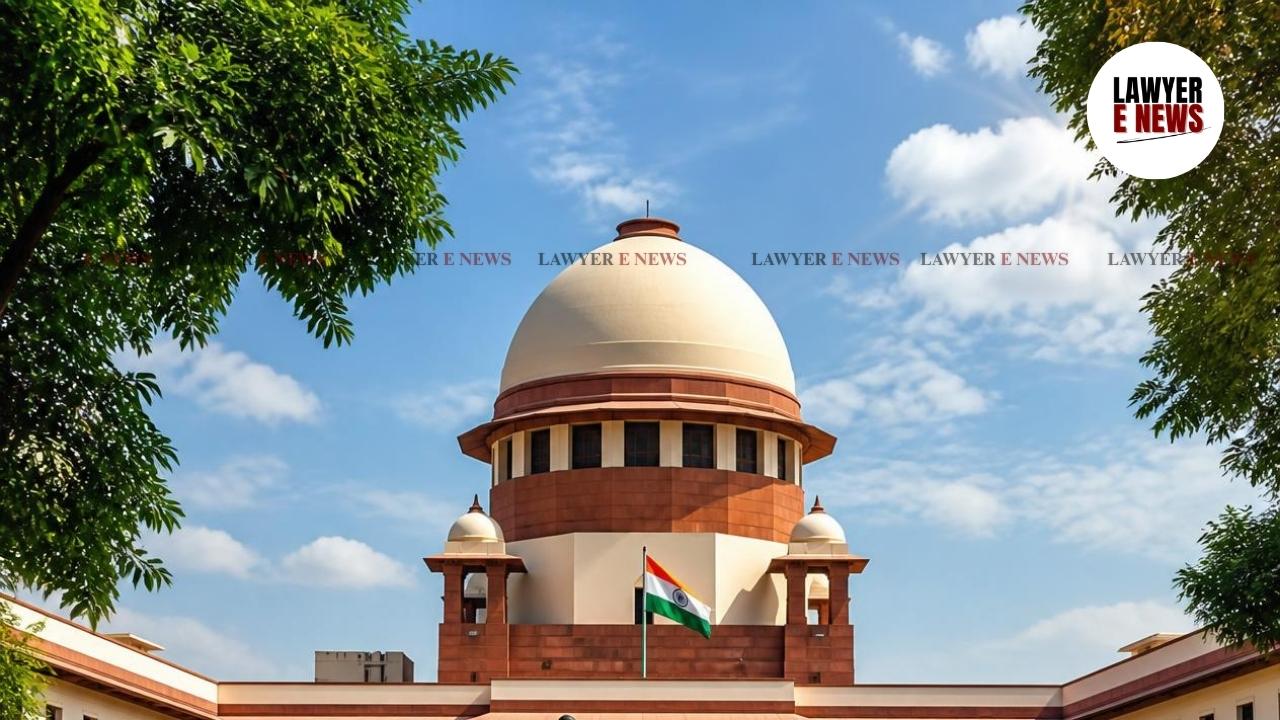
"Appellant has demonstrated how a vigilant and bona fide citizen can, through sustained and responsible engagement with public authorities and constitutional courts, draw attention to an issue affecting the community at large. Such constructive civic participation deserves acknowledgment." Supreme Court, in an impactful ruling delivered on August 21, 2026, commended a citizen for relentlessly pursuing a public cause in person over two decades while issuing binding directions to the Tamil Nadu Government and Southern Railway to expedite a long-pending subway project.
A bench comprising Justice Vikram Nath and Justice Sandeep Mehta held that while constitutional courts are routinely burdened by frivolous litigation styled as Public Interest Litigation (PIL), genuine and constructive civic participation by a vigilant citizen must be recognized and supported.
The appeal arose out of a judgment dated July 25, 2025, passed by the Madras High Court, which disposed of a writ petition filed by a local resident seeking the time-bound construction of a Limited Use Subway (LUS) in lieu of Level Crossing No. 81 at Vaniyambadi in Tirupattur District. The project, initially sanctioned in 2007 as a Road Over Bridge (ROB) and subsequently altered to a Road Under Bridge (RUB) and then to an LUS, had remained mired in procedural delays and land acquisition hurdles for nearly twenty years. Aggrieved by the High Court's refusal to fix a concrete schedule or monitor the execution, the appellant approached the apex court.
The primary issue before the Supreme Court was whether binding directions and a fixed timeframe ought to be issued to state authorities and the Southern Railway to conclude land acquisition and construction for the long-delayed public subway. The Court was also called upon to examine whether the High Court was justified in disposing of the writ petition without ensuring enforcement mechanisms for public infrastructure completion.
Contrast Between Frivolous PILs And Bona Fide Civic Engagement
Addressing the appellant’s sustained efforts, the bench drew a clear distinction between frivolous public interest litigations and genuine civic interventions. The Court highlighted that while writ courts are frequently approached with petitions that do not advance any real public cause, the appellant had consistently fought for community relief without any personal benefit.
The bench observed that the appellant demonstrated how a dedicated citizen can effectively utilize constitutional remedies to hold public authorities accountable on issues impacting the public at large.
"These days, Writ Courts are frequently called upon to deal with proceedings styled as public interest litigations which, on closer scrutiny, do not advance any genuine public cause. The present matter stands on a different footing."
Progress of The Two-Decade-Old Project Recorded
Examining the status reports, the Court noted that the project dividing the eastern and western parts of Vaniyambadi Town had finally advanced past the preliminary stages. The Tamil Nadu Government had sanctioned land acquisition proceedings under the Tamil Nadu Highways Act, 2001 for approximately 5,009 square metres pursuant to G.O. (Ms.) No. 84 dated May 15, 2025.
The Court placed on record that Southern Railway had already floated tenders for its portion of the work, with seven bidders participating, and the contract was at the stage of final award.
Strict Six-Month Construction Window For Railways
Taking note of Southern Railway’s affidavit, the Court held the authorities strictly to their undertakings. The bench recorded that Southern Railway must finalize the tender process without delay and complete its assigned portion of the subway construction within six months from the date of contract award, subject to the State handing over the required approach land for casting boxes.
The bench emphasized that inter-departmental delay would not be tolerated and directed the State Highways Department to simultaneously process administrative approvals, designs, and estimates.
"The project, which has remained under consideration in one form or another for a considerable period of almost 20 years, has now progressed materially towards execution. We take the aforesaid statements and assurances of the respondents on record and expect the concerned authorities to proceed with the remaining steps with due expedition."
State Directed To Complete Land Acquisition With Utmost Expedition
The Supreme Court directed the State Government authorities to finalize all pending land acquisition proceedings under the Tamil Nadu Highways Act, 2001 with utmost urgency. The bench ordered the State to ensure seamless handover of the requisite land to Southern Railway so that execution of the railway portion is not impeded.
The Court made it clear that while it would not keep the appeal pending indefinitely for continuous monitoring, the undertakings given by the State and Railway authorities carried the force of judicial directions.
Mandatory Compliance Affidavits Ordered Within Eight Months
To ensure absolute compliance, the bench directed the State authorities and Southern Railway to file their respective compliance affidavits before the Court upon concluding their assigned domains of work. The Court mandated that these affidavits must be placed before the Registry within eight months from the date of the judgment.
Disposing of the appeal, the Supreme Court established strict operational deadlines for the execution of the subway project while holding public bodies accountable to their statutory duties. The ruling serves as an important precedent affirming that constitutional courts will step in to fix binding timelines when vital public infrastructure is trapped in bureaucratic inertia.
Date of Decision: August 21, 2026