
-
by sayum
26 August 2026 1:49 PM







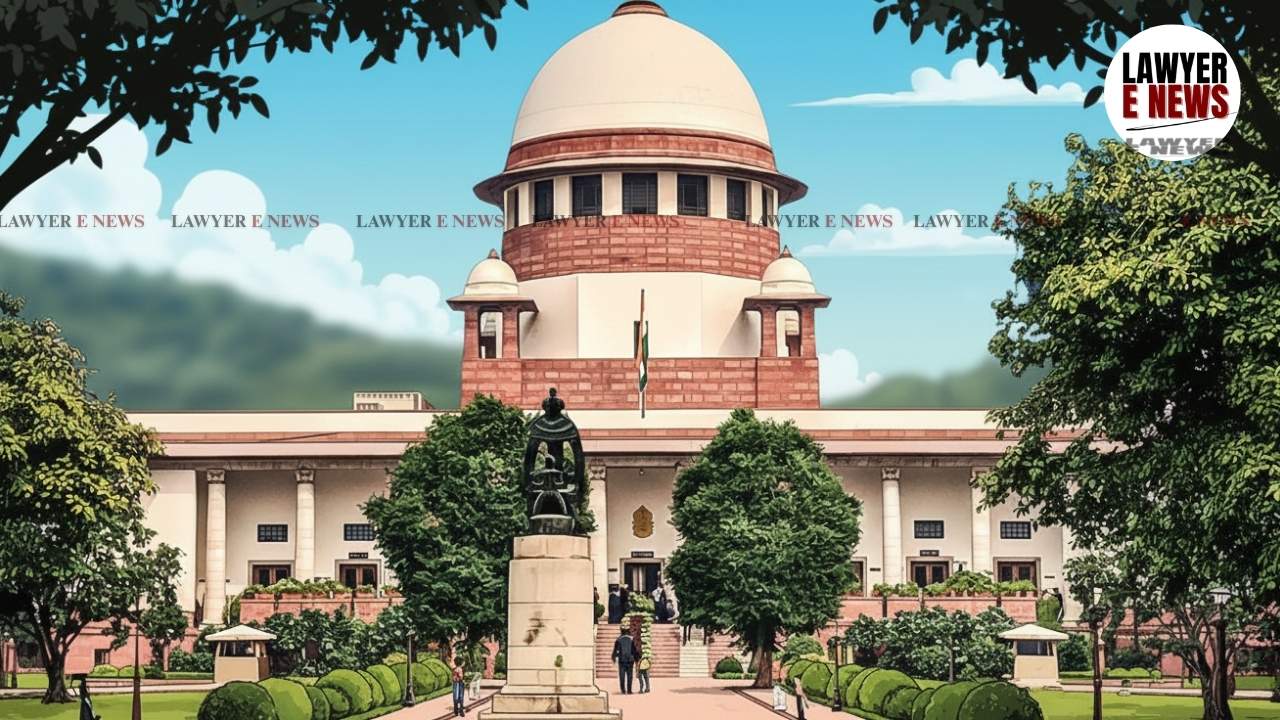
“Omissions in Police Statements Fatal to Prosecution Case”, In a significant ruling delivered on January 6, 2026, the Supreme Court of India acquitted Jaswinder Singh @ Shinder Singh, who had been convicted in a 1999 double murder case by the Trial Court, with the conviction subsequently upheld by the High Court. The judgment, rendered by a Division Bench comprising Justice Ahsanuddin Amanullah and Justice K. Vinod Chandran, found that the prosecution had failed to establish the appellant’s direct involvement in the crime, particularly given glaring omissions in the statements of key witnesses and the absence of any incriminating material connecting the appellant to the murders.
The bench observed that the conviction of the appellant, who was alleged to have been the driver of the getaway vehicle used by two shooters in the murders, could not be sustained in law due to the lack of credible and corroborated evidence.
Acquittal Based on Lack of Credible Involvement, Contradictions in Witness Testimony
The case arose from a double murder that took place on October 14, 1999, in Village Poonia, Punjab, where two brothers—Shingara Singh and Balkar Singh—were allegedly shot dead by co-accused Sukhdev Singh @ Deba and Dhalwinder Singh @ Bhinder. According to the prosecution, the murders occurred in quick succession and the assailants used a blue Tata Mobile 207 vehicle, purportedly driven by the appellant Jaswinder Singh.
The FIR was registered the following morning, and the appellant was not originally named as an accused. He was subsequently summoned under Section 319 of the Code of Criminal Procedure, 1973, by the Trial Court, based on the depositions of two key prosecution witnesses—PW-7 (father of the deceased) and PW-10 (wife of one of the deceased).
However, the Supreme Court found these testimonies riddled with inconsistencies and significant omissions. “PW-7, though he spoke of the appellant having driven the vehicle, did not speak of any overt act on the part of the appellant resulting in a direct involvement in the crime proper,” the Court noted. Further, the Bench highlighted that PW-7 had claimed during trial that the appellant had dragged his son before he was shot, yet such a detail was conspicuously absent from his statement under Section 161 CrPC. The Court emphasized: “The omission is fatal when we consider that the appellant was not arrayed at the first instance and was summoned under Section 319 CrPC.”
Similarly, PW-10, who claimed to have witnessed the second murder, also testified that the appellant drove the vehicle. Yet the Court noted that her statement under Section 161 CrPC was not recorded at all after the inquest, despite her alleged presence. “Pertinent is the fact that there was no statement recorded of the said witness by the police at the first instance…,” the judgment remarked, casting doubt on the credibility of her testimony.
Defense Testimony Further Undermined Prosecution Story
The Court also considered the testimonies of two defense witnesses. DW-1, a Deputy Superintendent of Police who conducted the initial investigation, confirmed that the appellant had been found innocent and thus not charge-sheeted. He also stated that both PW-7 and PW-10 were uncooperative during the initial investigation.
Further undermining the prosecution's claim, DW-2—father of the registered owner of the Tata Mobile vehicle—categorically stated that he had not entrusted the vehicle to the appellant. The vehicle, although seized, was neither linked to the appellant nor produced for identification before the court. “There is nothing incriminating against the appellant found in the vehicle and the vehicle was not even produced before the Court or got identified by the eyewitnesses,” the Court held.
Animosity, Gang Rivalry, and Cross-Litigation Cited as Background
The Court also took judicial notice of the broader context of the case. “The deposition of PW-7 reveals a history of animosity between two families related to each other. The members of one of which was the accused and in the other group, there was active participation of the sons of PW-7,” the Bench observed. The judgment detailed how both sides were involved in prior criminal proceedings, narcotic raids, and mutual false implication. “Vengeful actions were taken against each other which have also resulted in the death of members of both the gangs,” it added.
Given this background of enmity, coupled with weak evidentiary links, the Court declined to uphold the conviction. “We are inclined to acquit the appellant finding no incriminating circumstance against him but for a vague statement of the appellant having driven the vehicle and the involvement in the crime proper omitted to be stated to the police and for the first time stated before Court,” the Bench declared.
“We find absolutely no reason to uphold the conviction”: Supreme Court Sets Aside High Court Judgment
Rejecting the findings of both the Trial Court and High Court, the Supreme Court allowed the appeal and acquitted the appellant. The Bench clarified that the acquittal pertained solely to Jaswinder Singh, and it made no comments on the guilt or innocence of the remaining absconding accused. “We make it clear that we have dealt with only the lack of incriminating circumstances against the appellant and have not spoken on the evidence or the testimony with regard to the other accused,” the judgment concluded.
Accordingly, the Court directed that if the appellant was in custody, he be released forthwith, and if on bail, his bail bonds be cancelled.
Date of Decision: January 6, 2026





