-
by sayum
28 July 2026 1:44 PM







"There is no rule of universal application that vacancies must be necessarily filled on the basis of the law which existed on the date when they arose," Supreme Court, in a significant ruling dated May 18, 2026, held that a government employee does not possess a vested right to be promoted or considered for promotion under rules that have been superseded, even if the vacancies arose prior to the amendment.
A bench of Justices Dipankar Datta and Augustine George Masih observed that the right to be considered for promotion occurs only on the date the actual consideration takes place, and such consideration must be governed by the "rule in force" at that time. The Court emphasized that the State cannot be compelled to fill vacancies under old rules when a policy decision has been taken to restructure the cadre.
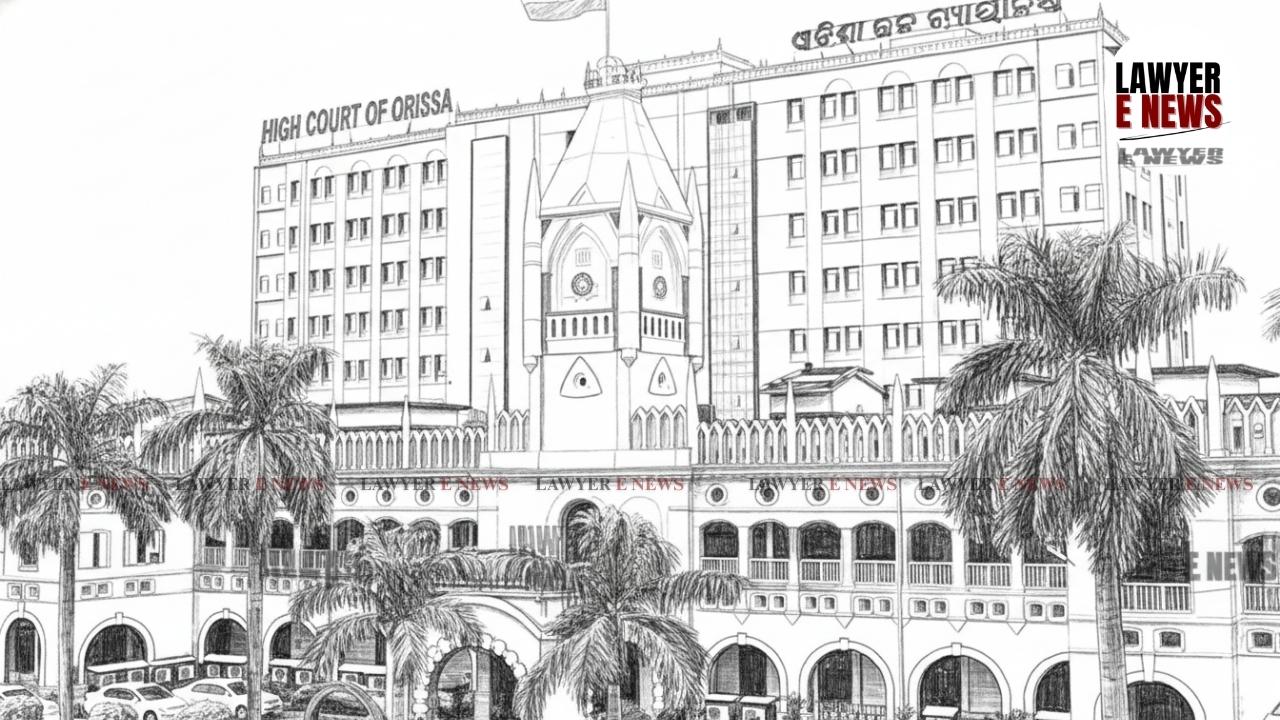
The dispute arose when the State of Odisha restructured the Odisha Transport Service. The respondents, who were serving as Assistant Section Officers, sought promotion to the post of Assistant Regional Transport Officer (ARTO) based on Executive Instructions issued in 1981. While their representations were pending and subject to litigation, the State notified the Odisha Transport Service (Method of Recruitment and Conditions of Service) Rules, 2021. These new rules mandated that the post of ARTO be filled through a competitive examination conducted by the OPSC, rather than through the selection process contemplated under the 1981 Instructions.
The primary question before the court was whether the respondents had a vested right to be considered for promotion under the 1981 Executive Instructions because the vacancies had occurred prior to the 2021 Rules. The court was also called upon to determine whether the High Court was correct in directing the State to convene a Departmental Promotion Committee (DPC) under the old instructions despite the enactment of statutory rules under Article 309 of the Constitution of India.
Supreme Court Reaffirms Overruling of Y.V. Rangaiah Principle
The Court noted that for nearly four decades, the judgment in Y.V. Rangaiah v. J. Sreenivasa Rao had held the field, suggesting that vacancies must be filled as per the rules existing when they arose. However, the bench clarified that this principle has been expressly overruled by a three-judge bench in State of H.P. v. Raj Kumar. The Court observed that "the statement in Y.V. Rangaiah that vacancies which occurred prior to the amended Rules would be governed by the old Rules... does not reflect the correct proposition of law."
"The rights and obligations of persons serving the Union and the States are to be sourced from the rules governing the services."
No Vested Right To Promotion Based On Seniority Alone
The bench emphasized that an employee has no vested right to promotion, but only a limited right to be considered for the same. It was noted that when the government, as an employer, chooses in its wisdom not to fill vacancies due to cadre restructuring, it cannot be compelled to do so. The Court highlighted that "should the government, being the appointing authority choose, in its wisdom, to not fill up vacancies by promotion, especially when there is a change in cadre and restructuring of posts, it cannot be compelled to carry out the appointments."
Court Distinguishes Between Promotion And Selection Posts
The Court further pointed out a significant distinction between a "promotional post" and a "selection post." It observed that the post of ARTO was a selection post where merit, and not just seniority, was the primary criterion. In such cases, the manner of selection is a matter of policy that vests entirely with the Government. The bench held that "the post being a selection post and not one of promotion, the manner of selection is a matter of policy which completely vests with the Government."
Statutory Rules Under Article 309 Supersede Executive Instructions
The judgment reiterated the settled law that rules framed under the proviso to Article 309 of the Constitution of India supersede any executive instructions or circulars. The bench found that the 1981 Instructions were merely a "pro-tem arrangement" pending the finalization of cadre rules. Once the 2021 Rules were notified, the Executive Instructions stood superseded. The Court remarked that if there is a conflict between executive instructions and rules made under Article 309, the latter must prevail.
"If there is a conflict between the executive instructions and the rules made under the proviso to Article 309 of the Constitution of India, the rules... prevail."
High Court Erred In Ignoring Recent Precedents
The Supreme Court expressed disappointment that the Division Bench of the High Court summarily rejected the application of the Raj Kumar case. The bench noted that a mere reference to a precedent without engaging in an analysis of its applicability is insufficient compliance with the judicial duty to assign reasons. The Court observed that the High Court "appears to have missed the woods for the trees" by failing to recognize that the 2021 Rules had completely replaced the old selection regime.
The Supreme Court concluded that the respondents had no right to be appointed to the post of ARTO other than in a manner consistent with the 2021 Rules. Since the DPC had not even been constituted before the new rules came into force, there was no "act done" that could be saved from the supersession. Consequently, the appeals filed by the State of Odisha were allowed, and the orders of the High Court directing promotion under the old instructions were set aside.
Date of Decision: May 18, 2026