-
by sayum
24 August 2026 3:22 PM







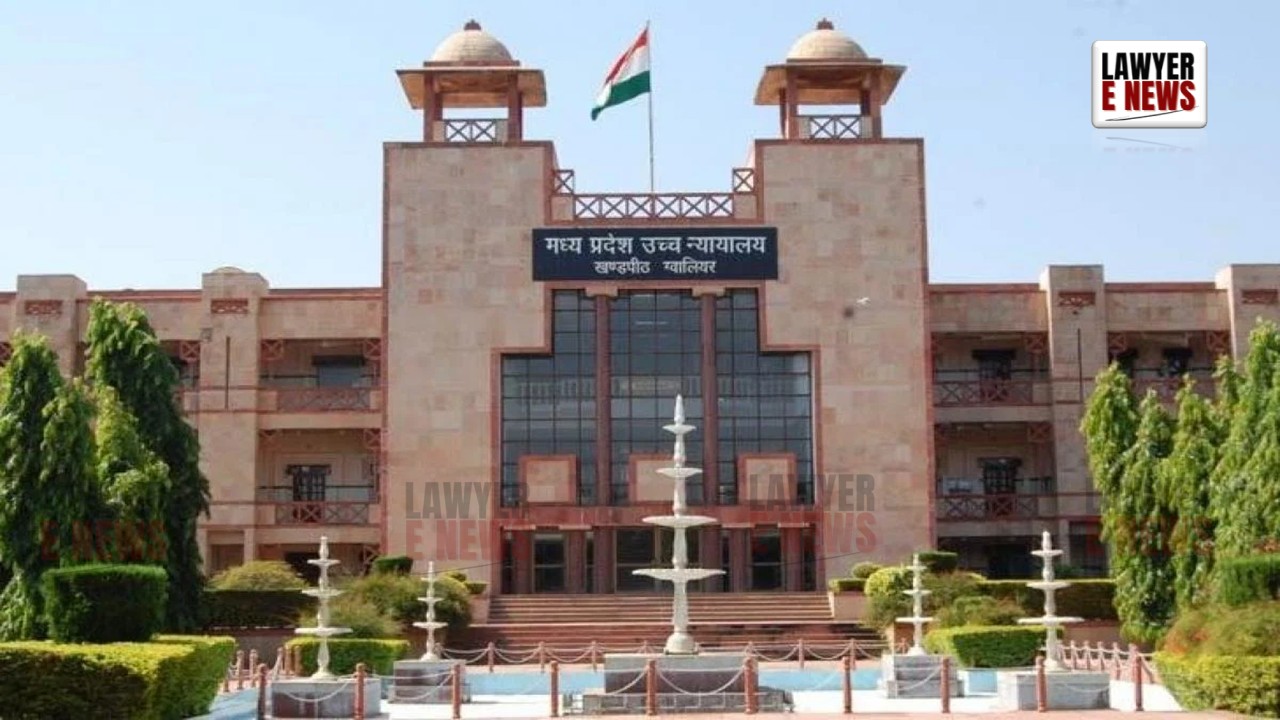
“Without Proof of Authority, No Title Passes – Sale Deed by Alleged POA Holder Held Invalid”, In a pivotal ruling Madhya Pradesh High Court reaffirmed that a sale of immovable property executed through a power of attorney holder is void if the power of attorney is neither produced nor registered. Justice Ratnesh Chandra Singh Bisen held that “in the absence of proof of authority, sale deed cannot confer valid title on purchaser,” and thus dismissed the plaintiff’s suit for ejectment on the ground of lack of ownership.
The judgment fortifies a crucial tenet of property law: title cannot be claimed on the basis of a power of attorney unless the power itself is both registered and proved. The Court found the appellant's claim riddled with evidentiary defects and refused to interfere with the trial court's decision.
“The Plaintiff Never Entered the Witness Box – Defendant Had No Chance to Cross-Examine the Real Party to the Sale”
The controversy arose when Jabbar Khan, the appellant-plaintiff, sought eviction of Rajendra Kumar Jaiswal, claiming ownership of a house allegedly purchased from the original owner Sonabai through her son Mahendra Kumar, acting as her power of attorney holder. Jabbar Khan relied on a sale deed dated 20.02.1997, but failed to produce the foundational power of attorney document in court.
While arguing that the property had devolved on Sonabai through a will and that her son Mahendra Kumar executed the sale deed as her agent, the plaintiff never substantiated this claim with documentary proof. In fact, the trial court found, and the High Court affirmed, that “the appellant/plaintiff had not presented the special power of attorney executed by Sonabai in favour of Mahendra Kumar.”
What added to the fragility of the case was that Jabbar Khan never stepped into the witness box. Instead, he sent a special power of attorney holder, Sahabuddin, to testify on his behalf. Justice Bisen underscored the problem with this substitution: “In such a situation, the respondent/defendant did not get any opportunity to cross-examine the plaintiff Jabbar Khan regarding the execution of the sale deed.”
“Power of Attorney Must Be Registered for Transfer of Immovable Property”
Referring to the requirement under the Registration Act, the Court highlighted that “in cases involving immovable property, it is mandatory that such a special power of attorney must be registered.” In this case, not only was the POA not registered, it was not even presented in court. The alleged POA holder, Mahendra Kumar, also did not appear to give evidence.
Justice Bisen was unequivocal: “It was primarily the plaintiff’s responsibility to prove that Sonabai had authorized Mahendra Kumar through a power of attorney to sell the disputed property, but this fact has not been proved by the plaintiff.” He further stated, “Since the sale of immovable property through a power of attorney was said to have been executed and the property value exceeded ₹2,00,000… without a registered power of attorney, the sale… cannot legally take place.”
Even the oral testimonies of witnesses failed to bridge the gap. Farid Mohammad (P.W.-2) and Sattar Khan (P.W.-3) admitted they had limited knowledge of the transaction. Neither could verify Mahendra Kumar’s authority. The Court found their testimonies weak, with Farid admitting he did not know what Mahendra Kumar did or where he lived, and Sattar acknowledging he had no personal dealings with him.
“Ejectment Suit Based on Defective Title Not Maintainable”
The High Court concluded that in the absence of proven title, the plaintiff’s ejectment suit was fundamentally flawed. The defendant’s possession, claimed by the plaintiff to be “permissive,” could not be disturbed merely on such assertions.
Justice Bisen declared: “When plaintiff fails to establish lawful title, suit for ejectment is not maintainable – Trial Court justified in dismissing suit.” The judgment reasserted that lawful ownership is the bedrock of an ejectment claim, and any defect in the chain of title extinguishes that right.
The Court also noted that the findings of the trial court were not only sound but based on proper appreciation of evidence. “In these circumstances, it appears that the trial court has not committed any error in passing the impugned judgment/decree and no interference is required in it.”
Accordingly, the First Appeal was dismissed, affirming the decree dated 05.01.2002 passed in Civil Suit No. 24-A/2001 by the Second Additional District Judge, Harda.
The judgment sends a clear message to litigants attempting to rely on transactions based on unproven or unregistered power of attorney: “No document, no title – and without title, no right to evict.”
Date of Decision: 23 January 2026