-
by sayum
24 August 2026 3:22 PM







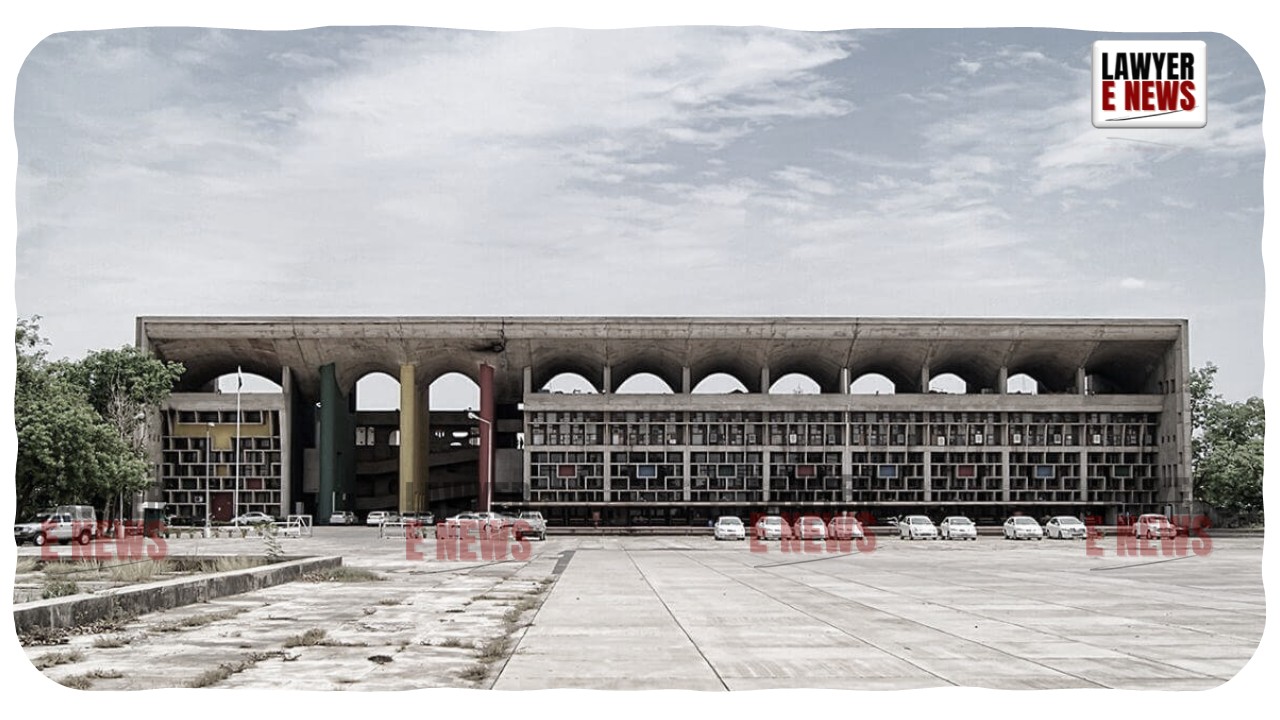
“Courts should not come to the aid of lethargic litigants” – Punjab and Haryana High Court dismissed a civil revision petition filed under Article 227 of the Constitution challenging an order that struck off the petitioner’s defence for failing to file a written statement within the statutory timeline prescribed under Order VIII Rule 1 of the Code of Civil Procedure, 1908.
Justice Yashvir Singh Rathor, sitting in revisionary jurisdiction, affirmed the trial court's decision dated 15.10.2025, holding that prolonged inaction and procedural non-compliance — even if attributed to personal hardship — cannot constitute “exceptional circumstances” to justify deviation from the mandatory outer limit of 90 days for filing a written statement.
“Exceptional Circumstances” Must Be Genuine and Unavoidable – Not Vague or Generalised Distress
The petitioner, Harbans Singh, who was arrayed as defendant no.2 in the suit, appeared through counsel on 18.04.2024 but failed to file a written statement for more than 18 months. Seeking leniency, the petitioner pleaded that he had been under mental distress due to the death of his younger son, Amandeep Singh (also a co-defendant in the suit), and claimed that his lawyer did not inform him about developments in the case.
Rejecting the plea, the Court observed: “The petitioner has not been able to show that the delay in filing the written statement was due to ‘exceptional circumstances’ rather than mere negligence.”
The Court underscored that while personal loss or emotional hardship may explain momentary inaction, they cannot justify complete procedural abandonment over an extended period — especially where the litigant continued to be represented and had multiple opportunities to comply.
Repeated Default Despite Costs – Trial Court’s Discretion Justified
Referring to the trial court's detailed order, the High Court noted that not only had the petitioner failed to file the written statement after appearance, but even when costs were imposed on 23.04.2025, those costs were not paid, nor was the written statement filed.
The trial court, after repeated indulgence, had held:
“Even vide order dated 23.04.2025, cost was imposed on the defendants but neither cost paid nor written statement filed… The period of 90 days has already elapsed… No reasonable justification is there to grant more time… The defence of the defendants no.2 and 3 is ordered to be struck off.”
Justice Rathor found no flaw in this conclusion, and made it clear that procedural timelines are not ornamental:
“It is well settled that when a defendant fails to file the written statement within the stipulated period and consequently, the defence is struck off due to lethargy or wilful negligence, the courts should not come to the aid of such lethargic litigants.”
Scope of Article 227 Is Not Appellate – Interference Only for Jurisdictional Error or Perversity
Dismissing the revision petition, the High Court reiterated that supervisory jurisdiction under Article 227 does not entitle the Court to interfere in every case of procedural non-compliance or seek to substitute its own view for that of the trial court.
The trial court had exercised discretion after recording detailed reasons and after observing the outer limit under Order VIII Rule 1 CPC had long elapsed. No perversity, procedural illegality, or jurisdictional error was found in the impugned order.
“The learned Trial Court has rightly struck off the defence as the petitioner failed to file the written statement for a period of around 1½ years… No ground to set aside the well-reasoned order is made out.”
Ultimately, the High Court dismissed the revision petition as meritless, upholding the importance of procedural discipline in civil trials.
Date of Decision: January 20, 2026