-
by sayum
28 October 2026 3:34 PM







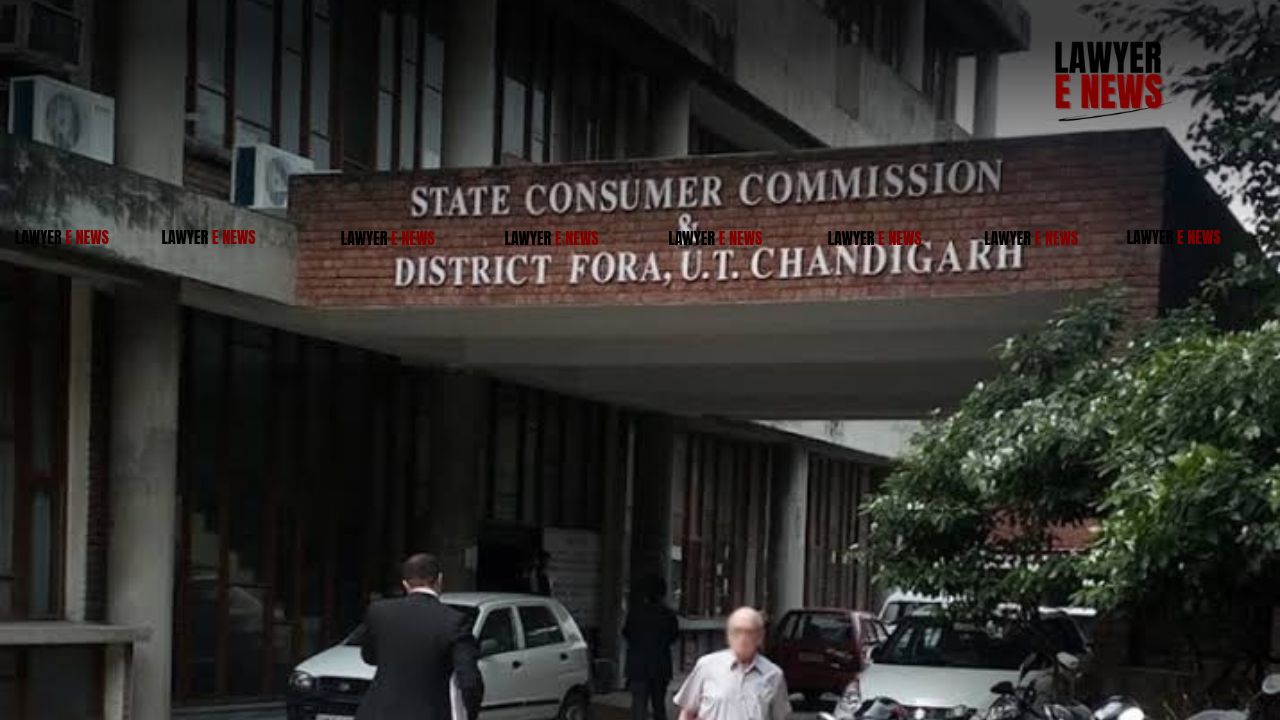
"The privity of contract or relationship of consumer and service provider between the parties if any, came to an end the moment petitioner accepted the amount unconditionally." Punjab State Consumer Disputes Redressal Commission, in an authoritative pronouncement dated October 21, 2026, held that an insured who executes a discharge voucher towards full and final settlement without contemporaneously lodging a protest ceases to qualify as a "consumer" under the Consumer Protection Act.
A bench comprising Mrs. Justice Daya Chaudhary (President), Ms. Simarjot Kaur (Member), and Mr. Vishav Kant Garg (Member) ruled that in the absence of cogent evidence establishing fraud, coercion, or undue influence, subsequent consumer proceedings seeking additional compensation for the same loss are barred by the doctrine of res judicata.
The complainant firm, Khalsa Stores, had insured its business premises with The Oriental Insurance Company Limited when a fire caused extensive damage to its stock and building on November 17, 2021. The complainant previously instituted Consumer Complaint No. 02 of 2023, wherein the District Consumer Disputes Redressal Commission, Tarn Taran directed the insurer to pay Rs. 88,46,630/-, which was subsequently remitted against an executed discharge voucher and letter of subrogation. Alleging that the voucher was signed under financial duress and relying on a surveyor’s gross loss estimate of Rs. 1,35,00,000/-, the complainant filed a second complaint seeking the balance amount of Rs. 46,53,370/-, which the District Commission partially allowed on September 27, 2024, prompting the insurer to file the present statutory appeal.
The primary question before the State Commission was whether an insured who executes an unconditional discharge voucher and letter of subrogation can sustain a subsequent consumer complaint for the balance claim amount. The Commission was also called upon to determine whether a second consumer complaint founded on the same cause of action is hit by the principle of res judicata.
Execution Of Unconditional Discharge Voucher Extinguishes Consumer Status
The State Commission examined the evidentiary record, specifically scrutinizing the full and final settlement discharge voucher and the accompanying letter of subrogation executed by the proprietor of the complainant firm. The bench observed that the complainant had accepted the sum of Rs. 88,46,630/- without contemporaneous demur, objection, or written reservation of rights, thereby extinguishing the contractual nexus.
Relying upon the binding precedent of the National Consumer Disputes Redressal Commission in MJRJ Medichem Surgicals v. National Insurance Co. Ltd., the bench underscored that unconditional receipt of insurance proceeds terminates the statutory relationship of consumer and service provider. Once the claim stands fully satisfied pursuant to mutual accord, the insured forfeits the standing to initiate further adversarial proceedings under consumer protection jurisprudence.
"The privity of contract or relationship of consumer and service provider between the parties if any, came to an end the moment petitioner accepted the amount unconditionally."
Bald Allegations Of Coercion And Duress Legally Unsustainable
Addressing the complainant’s contention that the discharge voucher had been procured under duress, the Commission noted that the record was devoid of any contemporaneous protest letter or independent proof of coercion. The bench highlighted that the burden of proving that a release document was executed under vitiating circumstances lies strictly on the party asserting it.
Reiterating the ratio laid down by the National Commission in Patanjali Foods Ltd. v. Oriental Insurance Co. Ltd., the bench ruled that self-serving and generic assertions of economic hardship cannot displace an express contract of discharge. Where an insured signs a voucher voluntarily and accepts the computed sum, no subsequent claim for the balance amount can be legally entertained.
"Hence, a bald and generic allegation levelled by the Respondent/Complainant is insufficient to prove that the discharge voucher signed in absence of freewill."
Second Consumer Complaint On Same Cause Of Action Barred By Res Judicata
The Commission held that the District Commission committed a patent jurisdictional error by admitting and adjudicating the second complaint on the very same cause of action. The bench held that the foundational tenets of res judicata embodied under Section 11 of the Code of Civil Procedure apply with equal rigour to summary proceedings before consumer fora to prevent vexatious re-litigation.
The bench observed that the rights of the parties flowing from the fire incident had already attained finality vide the prior order dated June 8, 2023 in CC No. 02 of 2023. Since the earlier decision was rendered by a court of competent jurisdiction between the identical parties, the dispute could not be reopened collaterally through a fresh complaint.
"No Court shall try any suit or issue in which the matter directly and substantially in issue has been directly and substantially in issue in a former suit between the same parties."
District Commission's Re-Appreciation Of Surveyor Assessment Set Aside
The State Commission found that the District Commission had erroneously recalculated the insurance liability by mechanically subtracting the disbursed amount from the total sum insured of Rs. 1,20,00,000/- while adjusting for dead stock, depreciation, and salvage. The bench affirmed the settled position cited in Khatema Fibres Ltd. v. New India Assurance Co. Ltd. and National Insurance Co. Ltd. v. Sehtia Shoes that insurance liability must strictly adhere to surveyor assessments under defined sub-heads rather than arbitrary deductions from the maximum policy ceiling.
Consequently, finding merit in the appeal preferred by the insurer, the State Commission allowed First Appeal No. 676 of 2024 and set aside the impugned order of the District Commission dated September 27, 2024. The Commission directed the Registry to refund the statutory pre-deposit of Rs. 18,75,077/- along with accrued interest to the appellant insurer upon the expiry of the limitation period.
The State Commission concluded that unconditional acceptance of insurance proceeds under a discharge voucher terminates consumer status and completely forecloses subsequent claims. The ruling reaffirms that consumer fora cannot entertain successive complaints arising from the same cause of action where the dispute has been formerly adjudicated and fully settled.
Date of Decision: 21 October 2026