-
by sayum
20 October 2026 1:07 PM







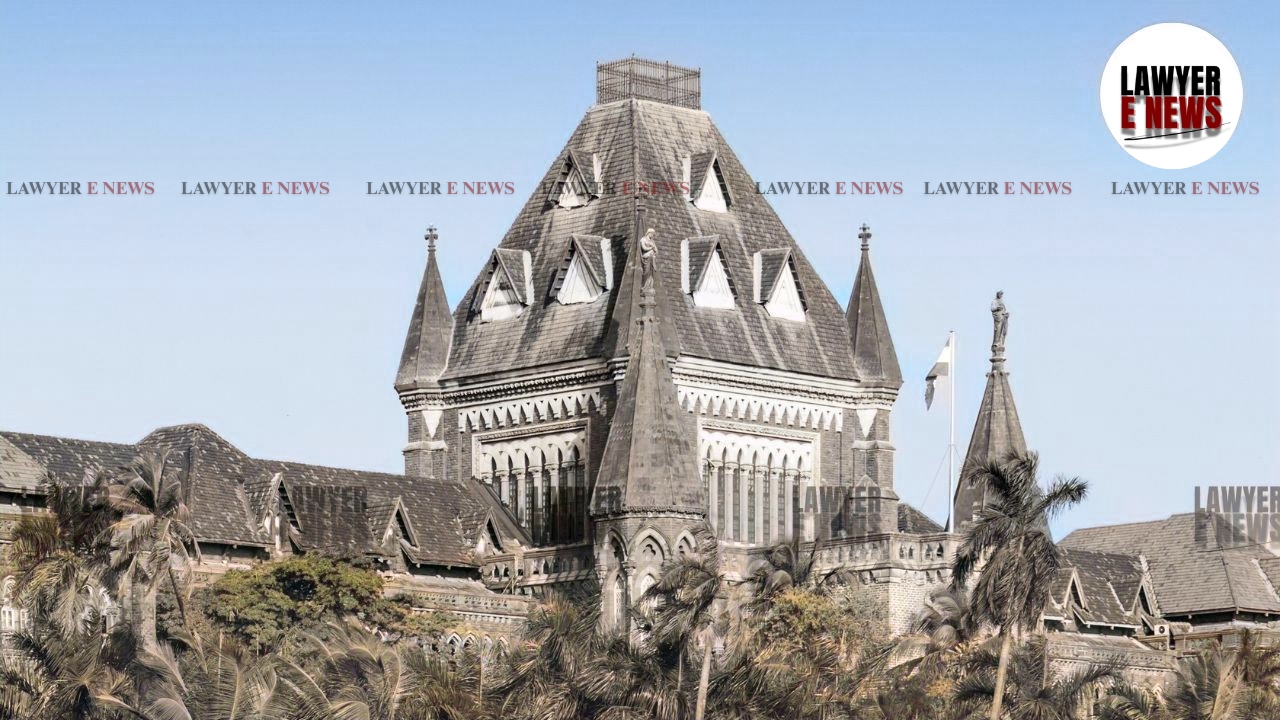
"Once the proceedings under the ULC Act concerning the said land had been judicially declared to have abated, a revenue entry cannot itself confer or revive a right, liability or statutory obligation which no longer survives. The Respondents cannot by an administrative action seek to override or nullify a judicial order." Bombay High Court has ruled that once land ceiling proceedings under the Urban Land (Ceiling and Regulation) Act, 1976 stand judicially declared as abated due to possession not being taken prior to the repeal of the statute, the State cannot subsequently resurrect statutory liabilities or restrict land development through administrative directions and mutation entries.
A Division Bench comprising Justice Suman Shyam and Justice Gautam A. Ankhad held that an administrative authority cannot override or nullify a binding inter-parties judicial order under the guise of Section 3 of the Urban Land (Ceiling and Regulation) Repeal Act, 1999, observing that "a revenue entry cannot itself confer or revive a right, liability or statutory obligation which no longer survives."
The Petitioners, who had acquired land at Village Navghar in Thane district, approached the High Court challenging administrative circulars and mutation entries made in 2015 and 2021 by revenue authorities that imposed restrictions on the land regarding pending obligations under a Section 20 ULC scheme. The High Court had earlier, by an order dated November 18, 2009 in Writ Petition No. 441 of 2009, categorically declared that all further proceedings under the ULC Act in respect of the land had abated because actual physical possession was never taken by the State prior to the enactment of the Repeal Act on November 29, 2007. Aggrieved by the State's continued insertion of encumbrance remarks in the 7/12 extract despite the judicial declaration, the Petitioners invoked the writ jurisdiction of the High Court.
The legal issue before the High Court was whether the State authorities could lawfully maintain adverse revenue mutation entries and enforce obligations under a Section 20 exemption scheme after a competent court had already declared that all ULC proceedings concerning the subject land stood abated. The Court was also called upon to determine whether the saving clause under Section 3 of the ULC Repeal Act permits the State to resurrect liabilities and nullify a binding judicial decree inter-parties.
Judicial Declaration Of Abatement Binds State Authorities
The Court observed that in the earlier round of litigation in Writ Petition No. 441 of 2009, the High Court had specifically recorded that the exemption under Section 20 of the ULC Act was deemed to have been withdrawn, prompting the authorities to initiate acquisition notices under Section 10. Taking into account the State's explicit admission that possession had never been taken before the Repeal Act came into force, the Court had declared that all further proceedings in relation to the subject land stood abated under the precedent laid down in Voltas Ltd. v. Additional Collector and Competent Authority.
The Bench emphasized that this judicial order had attained finality between the parties without being challenged in appeal, thereby making it impermissible for the State to re-litigate the controversy or whittle down the phrase "all further proceedings in relation to the land". Citing the Supreme Court ruling in Erach Boman Khavar v. Tukaram Shridhar Bhat, the Court noted that once an issue of fact or law is decided inter-parties, neither party can be allowed to canvass the matter again in subsequent proceedings.
Res Judicata Extends Beyond Civil Procedure Code To Secure Finality
Relying on the decision of the Supreme Court in Hope Plantations Ltd. v. Taluk Land Board, Peermade, the High Court highlighted that the doctrine of res judicata is grounded in public policy to ensure that competent court decisions remain final and that litigants are not dragged into successive rounds of litigation. The Bench noted that even where Section 11 CPC may not strictly govern writ proceedings, the underlying principles of finality and fair play apply with full rigor to prevent administrative re-agitation of conclusively decided disputes.
The Court further referred to the apex court's ruling in V.S. Charati v. Hussein Nhanu Jamadar, observing that an order rendered by a competent forum, even if assumed to be legally flawed, continues to bind the parties unless set aside by a superior court. The Bench underscored that an unchallenged judicial determination cannot be treated as a nullity or bypassed at the whim of the executive machinery.
Administrative Actions Cannot Nullify Binding Court Decrees
Addressing the State's contention that there was no formal order withdrawing the exemption scheme under Condition No. 17 of the exemption order, the Bench ruled that the State itself had proceeded on the premise that the exemption was withdrawn when it issued notices under Sections 10(1), 10(3), and 10(5) of the ULC Act. The Court held that executive authorities cannot rely on unexpired conditional periods or subsequent circulars to sidestep the binding adjudication rendered in 2009.
The Bench stressed that revenue records are merely fiscal in nature and cannot be utilized to fabricate rights or obligations that have ceased to exist in law. A revenue entry cannot breathe fresh life into statutory liabilities extinguished by judicial orders, and executive functionaries possess no authority to override conclusive court verdicts through mechanical administrative communications.
Saving Clause In Repeal Act Does Not Resurrect Abated Proceedings
The High Court decisively rejected the State's reliance on Section 3 of the ULC Repeal Act, holding that the saving clause merely protects valid exemption orders and lawful actions that fell within its statutory boundary at the time of repeal. The Bench held that the saving provision does not vest the State Government with any authority to resurrect defunct proceedings or subvert final judicial determinations inter-parties regarding the affected land.
The Court found support in Co-ordinate Bench decisions in Manik M. Ragit v. State of Maharashtra and Vithabai Bama Bhandari v. State of Maharashtra, which settled that where actual possession is not taken prior to the Repeal Act, the land must stand restored to the rightful owner and revenue records must be rectified accordingly. The Bench also noted that a subsequent notification issued by the Competent Authority in September 2010 had already conceded that physical possession was never taken and cancelled the State's ownership entry, rendering the Full Bench decision in Maharashtra Chamber of Housing Industry v. State of Maharashtra inapplicable to the State's defense.
The High Court accordingly allowed the writ petition, quashed the impugned administrative orders dated December 1, 2008 and November 3, 2020, and directed the authorities to forthwith delete and rectify Mutation Entry Nos. 2222 and 2760 from the revenue records of the subject land. The Court also directed the Mira Bhayander Municipal Corporation to issue the eligible Transfer of Development Rights certificate in respect of the parking facility handed over on the subject land.
Date of Decision: 16 October 2026