-
by sayum
26 July 2026 2:39 PM







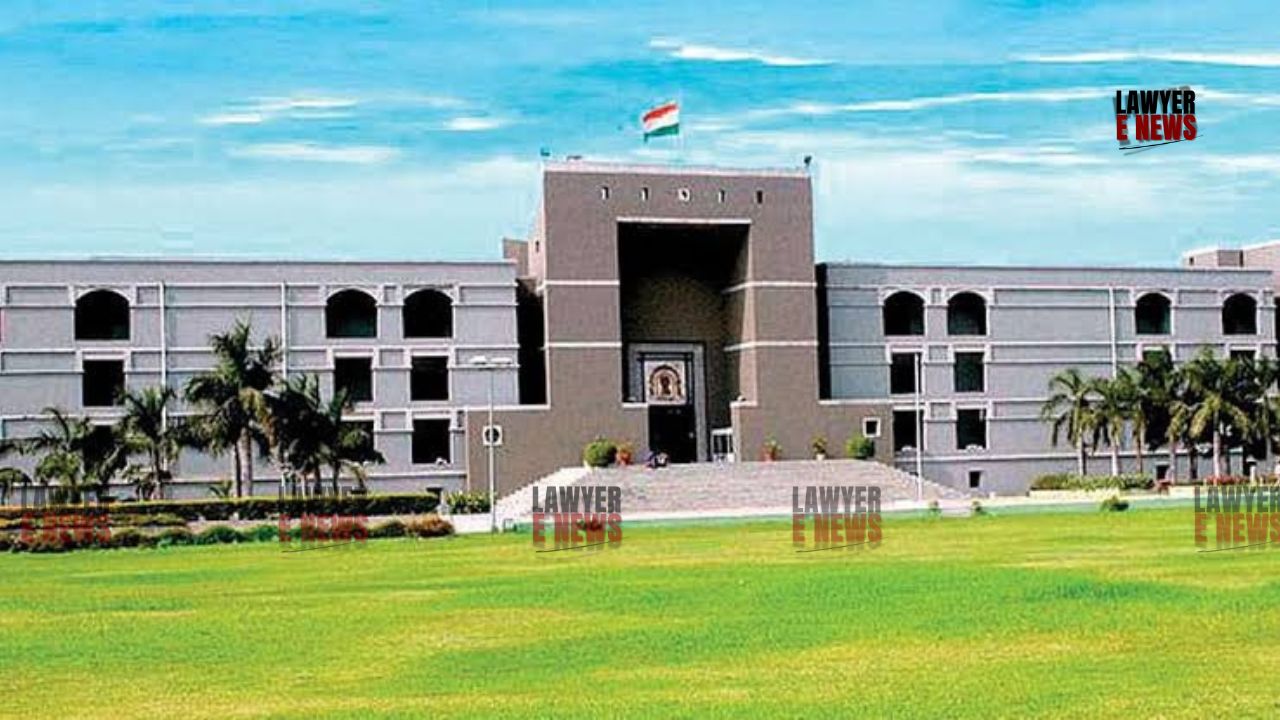
"Learned Judge without dealing with the said applications erred in abating the entire proceedings of the suit, thereby depriving the legitimate right of the plaintiff, which otherwise non-suited the applicant." Gujarat High Court, in a significant ruling dated July 2, 2026, held that a Trial Court cannot proceed to abate a civil suit while an application to bring the legal heirs of a deceased party on record is pending.
A division bench of Justice Ilesh J. Vora and Justice R. T. Vachhani observed that dismissing a suit as abated without addressing such pending motions deprives the plaintiff of their legitimate right to pursue the litigation.
The case arose from a Special Civil Suit filed in 2010 seeking specific performance of a contract regarding a disputed property. During the proceedings, the first respondent passed away, prompting a dispute over whether the suit had abated or whether the legal heirs could be substituted to continue the trial.
Primary Legal Issues Before The Court
The primary question before the court was whether the Trial Court was justified in allowing an abatement application while a contemporaneous application to bring legal heirs on record remained undecided. The court was also called upon to determine if a delay of 2145 days in preferring the appeal against the abatement order could be condoned.
Condonation Of 2145 Days Delay In Filing Appeal
The High Court first addressed a civil application seeking the condonation of a significant delay of 2145 days in preferring the first appeal. The bench noted that the applicant had successfully established "sufficient cause" as required under the law of limitation to explain the lapse of time.
Court Finds Sufficient Cause For Delay
Having heard the counsel for the respective parties and considering the averments made in the application, the bench found that the delay deserved to be condoned. The court emphasized that when sufficient cause is shown, the technicality of delay should not stand in the way of substantial justice.
Trial Court Erred In Abating Suit Without Deciding Pending Motions
Turning to the merits of the appeal, the bench examined the procedural history where the original plaintiff had filed an application (Exh. 35) to bring the legal heirs of the deceased Respondent No. 1 on record. Simultaneously, Respondent No. 2 had filed an application (Exh. 30) seeking the abatement of the suit.
Pendency Of Heirship Application Ignored By Lower Court
The High Court noted with concern that the learned Judge of the Civil Court allowed the abatement application and disposed of the suit under Exh. 1, while essentially failing to deal with the plaintiff's application to bring the heirs on record. The bench found this approach to be legally unsustainable.
Failure To Decide Substitution Application Non-Suits Plaintiff
The bench observed that since the application seeking to place the legal heirs was well on record, the lower court erred in abating the entire proceedings. This action resulted in non-suiting the applicant and depriving them of their right to a trial on merits without considering the pending substitution request.
Parties Reach Consensus On Relegation To Trial Court
During the hearing, the advocates for both sides arrived at a consensus to avoid further technicalities. They agreed that the impugned orders should be set aside, with the parties being relegated back to the Trial Court to contest all motions, including the substitution of heirs, on their own merits.
Court Reserves Liberty For Parties To Raise Objections
The High Court clarified that it had not entered into the merits of the underlying dispute or the specific applications. It noted that the learned Judge of the Civil Court would be free to consider the applications afresh, ensuring an opportunity of hearing to all concerned parties without being influenced by the High Court's order of remand.
Impugned Order Of Abatement Quashed
In view of the procedural lapses, the bench deemed it fit to quash and set aside the order dated August 30, 2017, which had abated the Special Civil Suit. The court directed that the record and proceedings be transmitted back to the concerned Trial Court forthwith for further adjudication.
The High Court concluded that the interest of justice would be served by allowing the First Appeal and directing the Trial Court to decide the pending motions. This ensures that the suit is not terminated on technical grounds of abatement without a proper hearing on the substitution of legal representatives.
Date of Decision: 02 July 2026