-
by sayum
13 August 2026 11:02 AM







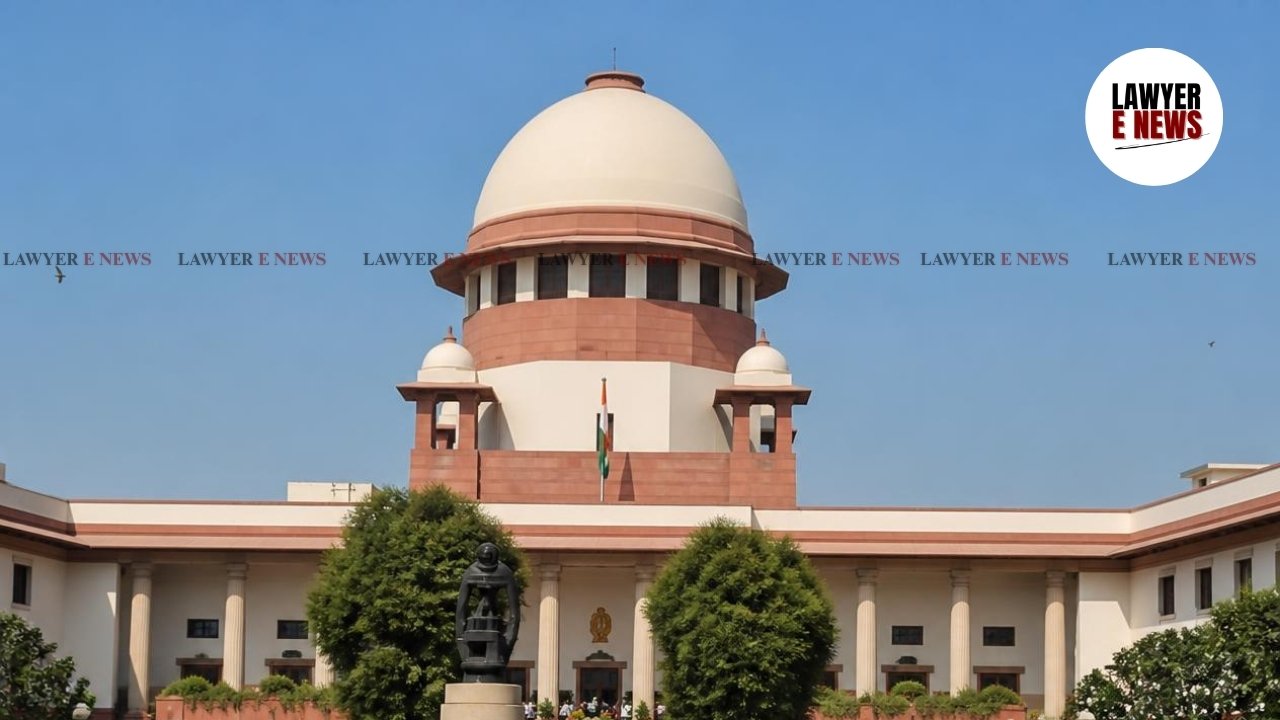
"High Court failed to appreciate that all these cases were actions in tort and negligence was required to be established firstly by the claimants." Supreme Court, in a significant ruling dated August 12, 2026, held that writ petitions under Article 226 of the Constitution of India seeking compensation in electrocution cases are not maintainable when there are disputed questions of fact regarding negligence and liability.
A bench comprising Justice Sanjay Karol and Justice Nongmeikapam Kotiswar Singh observed that actions in tort require a proper trial to establish negligence, and summary proceedings under writ jurisdiction cannot resolve conflicting factual claims.
The litigation arose from separate tragic incidents of electrocution in Karnataka, where victims or their legal heirs directly approached the High Court of Karnataka via writ petitions seeking compensation. The Karnataka Power Transmission Corporation Limited contested these petitions on grounds of maintainability, lack of fault, and the existence of disputed factual questions. The Single Judge and the Division Bench of the High Court rejected these objections, holding the writ petitions maintainable and awarding substantial compensation by applying the framework and principles of the Motor Vehicles Act, 1988.
The primary question before the apex court was whether a writ petition under Article 226 of the Constitution is maintainable for claiming compensation in electrocution cases involving disputed questions of fact. The court was also called upon to determine the appropriate standard of liability applicable to electricity supply bodies and the correct yardstick for calculating compensation.
Revisiting The Rule Against Entertaining Disputed Facts
The bench underscored that the law regarding the maintainability of writ petitions in the presence of alternative remedies and disputed facts is well-settled. Relying on landmark precedents such as Radha Krishan Industries v. State of H.P. and Chairman, Grid Corpn. of Orissa Ltd. v. Sukamani Das, the court reiterated that where liability depends on establishing disputed negligence, writ courts must decline jurisdiction.
"Where Disputed Questions Of Facts Are Involved A Petition Under Article 226 Of The Constitution Is Not A Proper Remedy" The court observed that the mere snapping of a transmission line and resultant electrocution does not automatically establish negligence or fault on the part of the power corporation without examining surrounding circumstances.
Enumerating Disputed Facts In The Present Appeals
The bench meticulously detailed the factual disputes in the two civil appeals, ranging from the use of aluminium ladders in coffee plantations near 11KV lines to compliance with statutorily mandated distances between electric lines and buildings. These controversies, the court noted, required oral and documentary evidence that could not be satisfactorily resolved on the basis of affidavits alone.
Analyzing Absolute Versus Strict Liability
The court undertook an extensive examination of strict liability versus absolute liability, tracing the doctrine from Rylands v. Fletcher through the Constitution Bench decision in the Oleum Gas Leak Case (M.C. Mehta v. Union of India) and M.P. Electricity Board v. Shail Kumari. The bench clarified that while hazardous activities attract strict liability, recognized exceptions under tort law—such as the act of a stranger, default of the plaintiff, or Act of God—remain available as defenses.
"To Impose Strict Liability Would Be More Appropriate, For Not In All Cases Can It Be Said That The Electricity Boards Are Liable" The court held that electricity boards operate on a loss-distribution mechanism and are strictly liable for injuries caused by the transmission of electrical energy, subject to recognized exceptions under the rule of strict liability.
Rejecting The Applicability Of Motor Vehicles Act Multiplier Method
On the question of compensation, the bench faulted the High Court for applying the multiplier method derived from the Motor Vehicles Act, 1988, mutatis mutandis to electrocution cases. Reaffirming the principle laid down in Raman v. Uttar Haryana Bijli Vitran Nigam Ltd. and Balram Prasad v. Kunal Saha, the court noted that the Electricity Act, 2003, does not prescribe a specific calculation method, though any compensation must adhere to the overarching standard of being just, fair, and reasonable.
Consequently, the Supreme Court allowed the appeals, setting aside the judgments of the Division Bench and the Single Judge of the High Court. The court clarified that the dismissal of the writ petitions on the ground of maintainability does not bar the claimants from pursuing appropriate remedies before civil courts or other competent forums, uninfluenced by any observations made in the judgment. The court also ordered that the interim compensation of five lakh rupees already disbursed to the respondents shall not be recovered and will remain protected.
The Supreme Court has firmly delineated the boundaries of writ jurisdiction in tortious claims, ensuring that disputed questions of negligence in electrocution cases are relegated to appropriate civil forums for comprehensive adjudication.
Date of Decision: 12 August 2026