Vague Allegations Of Infidelity And Harassment Without Cogent Evidence Do Not Amount To Cruelty For Divorce: Telangana High Court Supreme Court Introduces 'Periodic Review' Mechanism For Monitoring Contumacious Advocates Supreme Court Suspends Criminal Contempt Conviction Of Yatin Oza; Invokes Article 142 To Grant 'Final Act Of Forgiveness' With Periodic Conduct Review Court Must Adopt Parental Temperament While Disciplining Bar Members; SC Suspends Yatin Oza’s Contempt Conviction As ‘Final Act Of Forgiveness’ Conviction Can Be Based On Testimony Of Solitary Witness Of Sterling Quality; Indian Law Values Quality Over Quantity Of Evidence: Supreme Court Authorities Can't Turn A Blind Eye To Illegal Constructions; Must Follow Due Process For Demolition: Telangana High Court Section 506 IPC Charges Liable To Be Quashed If Threat Lacks 'Intent To Cause Alarm' To Complainant: Supreme Court SC/ST Act Offences Not Made Out If Alleged Abuse Occurs Inside Private Residence Without Public Presence: Supreme Court Election Tribunal Becomes Functus Officio After Passing Final Order; Cannot Later Declare New Result Based On Recount: Supreme Court Remarriage Contracted Immediately After Divorce Decree Before Expiry Of Limitation Period Has No Validity In Law: Telangana High Court Lack Of Notice For Spot Inspection Under Stamp Act Is An Irregularity, Not Illegality If No Prejudice Caused: Allahabad High Court Mutation Entry In Revenue Records Does Not Create Or Extinguish Title; Succession To Agricultural Land Governed Strictly By Statute: Delhi High Court Children Shouldn't Be Deprived Of Parental Affection Due To Matrimonial Disputes; Courts Must Ensure Child Isn't Tutored: Andhra Pradesh High Court 138 NI Act | Wife Of Sole Proprietor Not Vicariously Liable For Dishonoured Cheque She Didn't Sign: Calcutta High Court Quashes Proceedings State Cannot Profit From Its Own Delay In Deciding Land Tenure Conversion Applications: Gujarat High Court Owner Of Establishment Cannot Evade Liability Under Employees’ Compensation Act By Shifting Responsibility To Manager: Bombay High Court Developer Assigning Only Leasehold Rights Via Sub-Lease Not A 'Promoter', Project Doesn't Require RERA Registration: Allahabad High Court Court Cannot Be Oblivious To Juveniles Used By Organized Syndicates To Commit Heinous Crimes: Delhi High Court Denies Bail To CCL Conviction For Assaulting Public Servant Sustainable Based On Victim's Testimony & Medical Evidence Even If Eye-Witnesses Turn Hostile: Bombay High Court

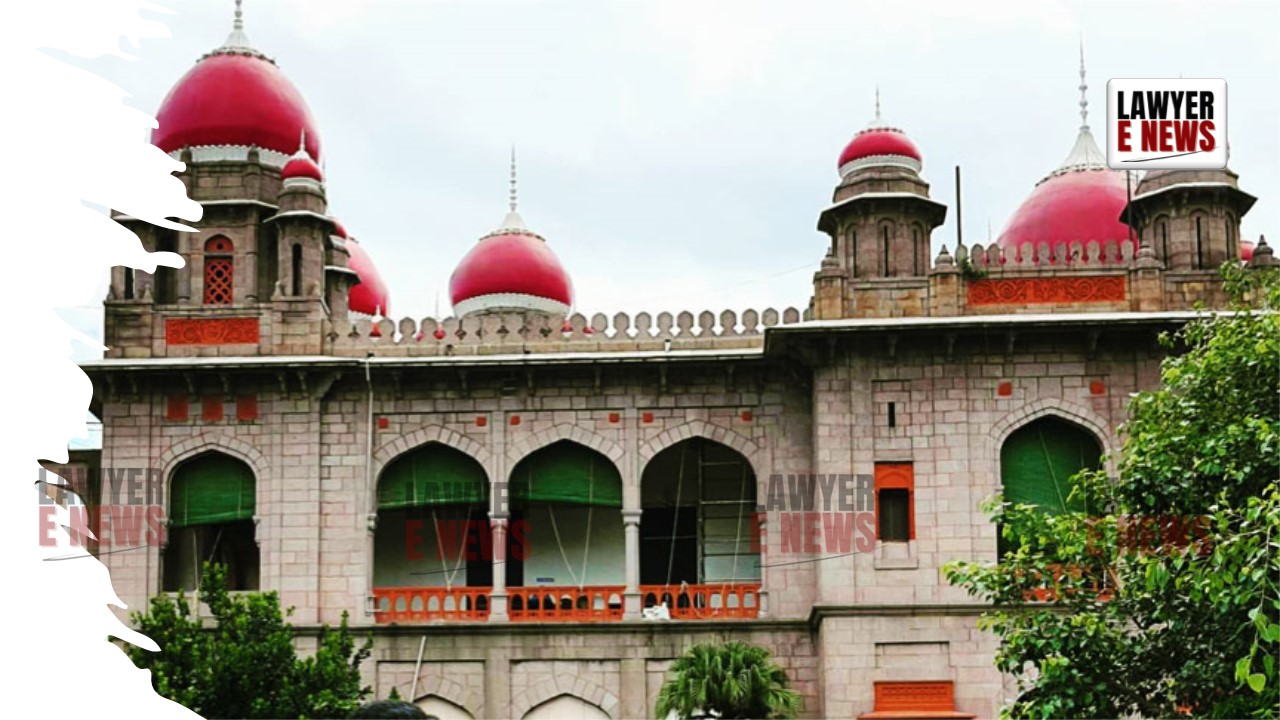
Telangana High Court Directs TS GENCO to Fill 42 Vacant Assistant Engineer Posts from 2015 Notification

09 October 2024 9:29 PM

By: Deepak Kumar


Decision Not to Fill Vacancies Due to Surplus Staff Unjustified: Unfilled Posts Required for New Recruitment, Telangana High Court in T. Saritha v. The Telangana State Power Generation Corporation (TS GENCO) directed TS GENCO to consider the appointment of the petitioners for 42 unfilled Assistant Engineer (Electrical) vacancies from a 2015 recruitment notification. The court found TS GENCO’s decision not to fill the vacancies, citing surplus staff, to be unjustified, especially since the corporation included the unfilled posts in a new recruitment drive in 2023.

The petitioners applied for the post of Assistant Engineer (Electrical) in response to TS GENCO’s 2015 recruitment notification for 413 vacancies. Despite securing high marks in the written exam, they were not appointed, as many vacancies remained unfilled. TS GENCO later issued a resolution in 2017 stating that there was no need for further recruitment, claiming surplus employees. However, in 2023, TS GENCO issued a fresh notification to fill 187 posts, including 42 carried forward from the 2015 notification.

Inconsistent Recruitment Stance: The court found that TS GENCO’s argument of surplus staff contradicted its decision to carry forward the unfilled vacancies to the 2023 recruitment process. This inconsistency rendered the earlier resolution to halt recruitment unreasonable​.

Right to Appointment: The court emphasized that while the petitioners did not have an absolute right to appointment, they had a legitimate expectation based on their merit and the unfilled vacancies. TS GENCO’s refusal to complete the recruitment process was deemed arbitrary​.

Failure to Operate Merit List: TS GENCO's failure to exhaust the merit list multiple times, unlike other corporations, was criticized by the court, which noted that the petitioners would have been appointed had the corporation followed the standard procedure​.

The Telangana High Court allowed the writ petitions and directed TS GENCO to consider the petitioners for appointment to the 42 unfilled Assistant Engineer posts within six weeks. The corporation was instructed to base the appointments on the petitioners’ merit and roster points from the 2015 recruitment​.

This judgment reinforces the principle that public sector employers must act transparently and reasonably in recruitment processes. The court's ruling ensures that qualified candidates are not arbitrarily denied appointments due to administrative inconsistencies.

Date of Decision: October 4, 2024

T. Saritha v. The Telangana State Power Generation Corporation​.

Latest Legal News