-
by sayum
24 August 2026 3:22 PM







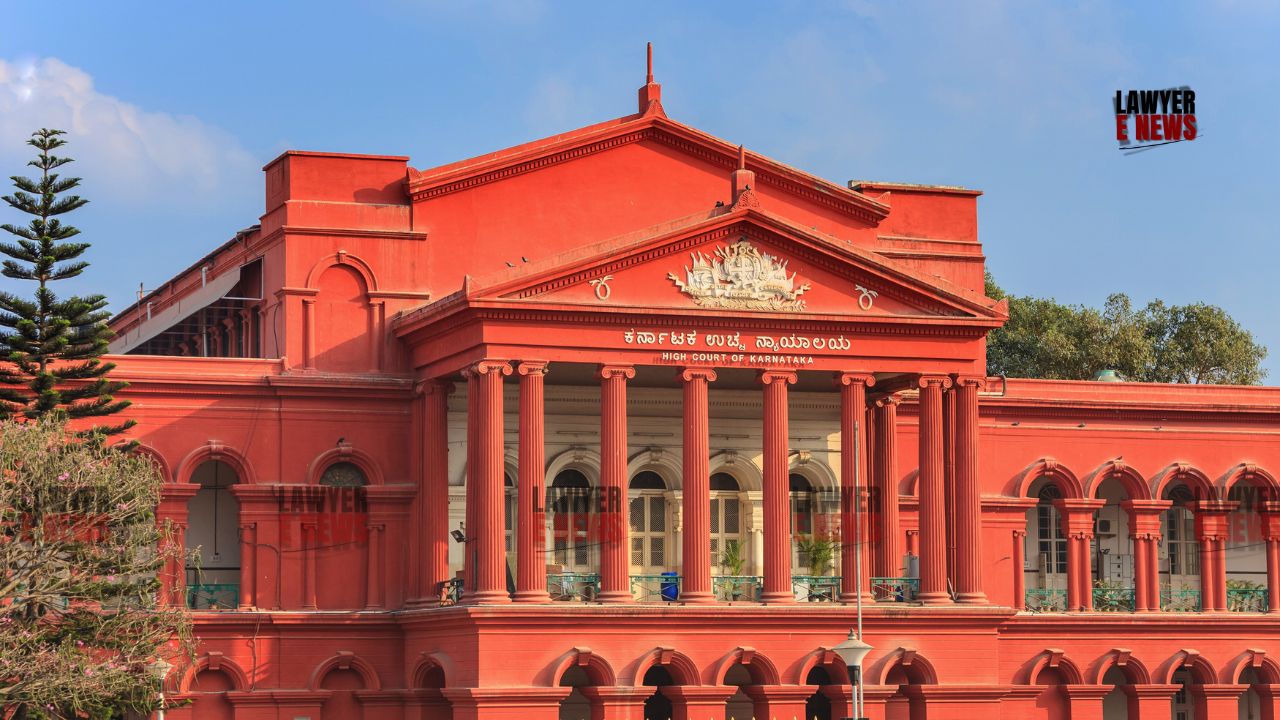
“Once there is an unequivocal apology and withdrawal of allegations, continuation of suspension serves no purpose” – In a significant ruling Karnataka High Court exercised its writ jurisdiction under Article 226 of the Constitution to quash the suspension of Sri Teshee Venkatesh, a member of the Karnataka Film Chamber of Commerce, observing that “courts must prevent unnecessary precipitation of disputes when parties are willing to resolve differences with sincerity and regret.”
Justice B. M. Shyam Prasad, while disposing of Writ Petition No. 38775 of 2025, held that though disputes regarding membership suspensions of societies could typically be addressed under Section 9 of the Code of Civil Procedure, the “existence of an alternative remedy is not an absolute bar” to constitutional relief, particularly “when equities favour intervention and the impugned decision is disproportionate in the given facts.”
Court Intervenes to Prevent “Precipitation” Amidst Ongoing Elections
The petitioner, a suspended member of the Film Chamber, was aggrieved by an order placing him under suspension pending an internal inquiry. The reason, as per the petitioner's counsel Sri Vivek Subba Reddy, stemmed from complaints of financial irregularities raised by the petitioner and his conduct in an online meeting, where he was “loud”.
In a crucial turn, the petitioner addressed a formal representation (Annexure-J), offering an unconditional apology, expressing regret, and conveying his intent not to precipitate the matter further. The primary legal issue before the Court was whether it should grant relief in its writ jurisdiction or direct the petitioner to seek recourse through civil litigation under Section 9 CPC.
“Existence of Alternative Remedy No Bar When Suspension is Disproportionate”
The Court noted the petitioner’s unequivocal withdrawal of his allegations and the absence of any denial about making them. It acknowledged the fourth respondent’s (the Chamber’s) concern that the apology could not be accepted immediately due to the pending elections and the appointment of a Returning Officer, but held that such procedural developments cannot insulate a suspension order from judicial scrutiny.
“This Court is of the view that the discretion must be exercised under Article 226… quashing the decision to keep the petitioner under suspension but holding the petitioner to the undertaking that he will not repeat making unsubstantiated allegations,” the Court observed.
Petitioner Bound to Undertaking, Respondents Free to Act if Future Cause Arises
While quashing the suspension, the High Court made it explicit that the petitioner is bound by his representation, wherein he not only expressed regret but also undertook not to repeat any unsubstantiated allegations. The Court clarified that if any future conduct warranted action, the respondents would be at liberty to proceed strictly in accordance with law.
This nuanced balancing by the Court underscores its judicial discretion in writ proceedings, recognizing both the petitioner's remorse and the respondents’ governance concerns, but refusing to allow continued suspension in the face of voluntary withdrawal and apology.
Elections Do Not Justify Indefinite Suspension
A notable aspect of the Court’s reasoning was its rejection of the Chamber’s submission that the ongoing electoral process prevented reinstatement. The Court held:
“Appointment of Returning Officer and pendency of election process not a valid ground to indefinitely continue suspension when equities favour intervention.”
This affirms the principle that election-related formalities in societies cannot be used as shields to justify executive actions, particularly where constitutional remedies are sought against disproportionate measures.
A Measured Use of Writ Jurisdiction in Internal Society Disputes
The Karnataka High Court’s judgment in Sri Teshee Venkatesh v. State of Karnataka & Ors. reaffirms that Article 226 remains a potent tool of equitable justice, especially in cases involving suspension of membership in associations or societies, where the facts do not justify continuation of punitive action once disputes are retracted.
In quashing the suspension, the Court has preserved the disciplinary autonomy of societies while ensuring that such powers are not exercised in excess or without justification. This judgment may guide future litigants and societies alike on the interplay between internal governance and judicial review.
Date of Decision: 20.01.2026
Case Title: Sri Teshee Venkatesh v. State of Karnataka & Others