-
by sayum
17 August 2026 3:17 PM







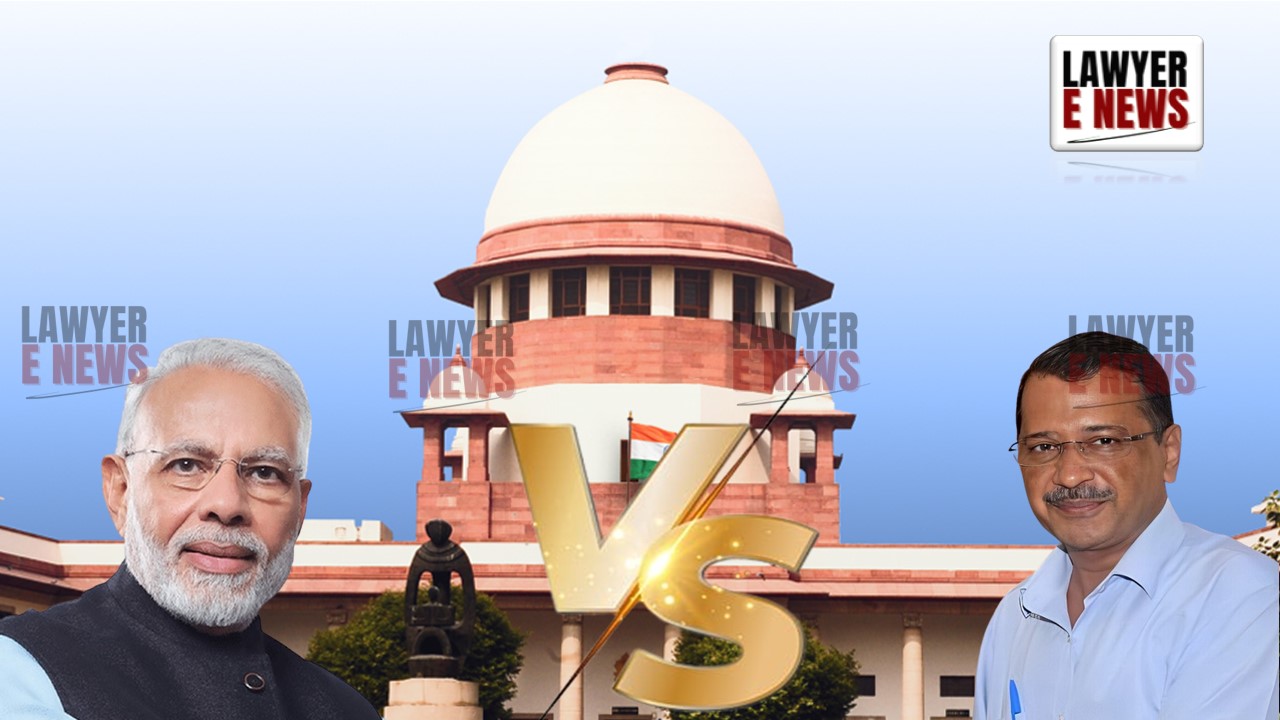
Today, on October 21, 2024, The Supreme Court refused to interfere with the summons issued to Arvind Kejriwal, the Delhi Chief Minister and Aam Aadmi Party (AAP) leader, in a defamation case filed by Gujarat University. The case pertains to remarks made by Kejriwal regarding Prime Minister Narendra Modi's educational qualifications. The summons, issued by a Gujarat trial court, was challenged by Kejriwal, but the Supreme Court dismissed his Special Leave Petition (SLP), aligning with a similar rejection of a plea by AAP MP Sanjay Singh in the same matter.
"We Must Be Consistent": Supreme Court Declines to Intervene
A Bench comprising Justice Hrishikesh Roy and Justice SVN Bhatti stated that they were not inclined to interfere with the summons, emphasizing the need for consistency in their approach. The Bench remarked, "We must be consistent with that approach. Having regard to that view, we would not like to entertain the present plea. The same is dismissed." The Court also clarified that it had not expressed any opinion on the merits of the case, leaving all contentions open.
The defamation case arose after Gujarat University filed a complaint against Kejriwal and Sanjay Singh for allegedly making sarcastic and derogatory remarks regarding Prime Minister Modi's degree during press conferences and on social media. These remarks followed the Gujarat High Court's ruling in March 2023, which set aside an earlier Central Information Commission (CIC) order that sought details of PM Modi's educational qualifications.
The Gujarat Metropolitan Court had issued summonses to Kejriwal and Singh in April 2023. Both leaders then filed revision applications challenging the summonses in the sessions court, which were subsequently dismissed. They approached the Gujarat High Court, which also dismissed their petitions, prompting them to take the matter to the Supreme Court.
Senior Advocates Abhishek Manu Singhvi and Vikram Chaudhri appeared for Kejriwal, arguing that his statements regarding PM Modi's degree did not amount to defamation. Singhvi contended that merely seeking information about a public figure’s educational qualifications should not be construed as defamatory. He requested time to submit further details differentiating Kejriwal's statements from those of Sanjay Singh, who had also been summoned in the same case.
Solicitor General Tushar Mehta, representing Gujarat University, argued against granting any relief, stating that Kejriwal had defamed the university by questioning its integrity in a press conference following the Gujarat High Court's decision. He further argued that Kejriwal had a history of making defamatory statements and later retracting them, referencing prior defamation cases.
In February 2024, the Gujarat High Court dismissed the petitions filed by Kejriwal and Sanjay Singh seeking to quash the summonses. The High Court, in its order, stated that at the stage of summons, no defense could be considered, and there was no merit in the petitioners' argument. It also held that the Gujarat University’s defamation case was valid and based on prima facie evidence of defamatory remarks.
While dismissing Kejriwal’s petition, the Supreme Court reiterated that it had not expressed any opinion on the substantive merits of the defamation case. The Court emphasized that Kejriwal's plea for quashing the summons could not be entertained at this stage, given its earlier decision to dismiss a similar plea by Sanjay Singh.
Earlier in April 2024, the Supreme Court had similarly refused to interfere with the summons issued to Sanjay Singh in the same defamation case. Both Kejriwal and Singh had targeted Gujarat University with statements questioning the authenticity of Prime Minister Modi’s degree, leading to the legal proceedings.
Arvind Kejriwal v. Piyush M. Patel & Anr.
Date of Order: 21-Oct-2024