-
by sayum
17 August 2026 3:17 PM







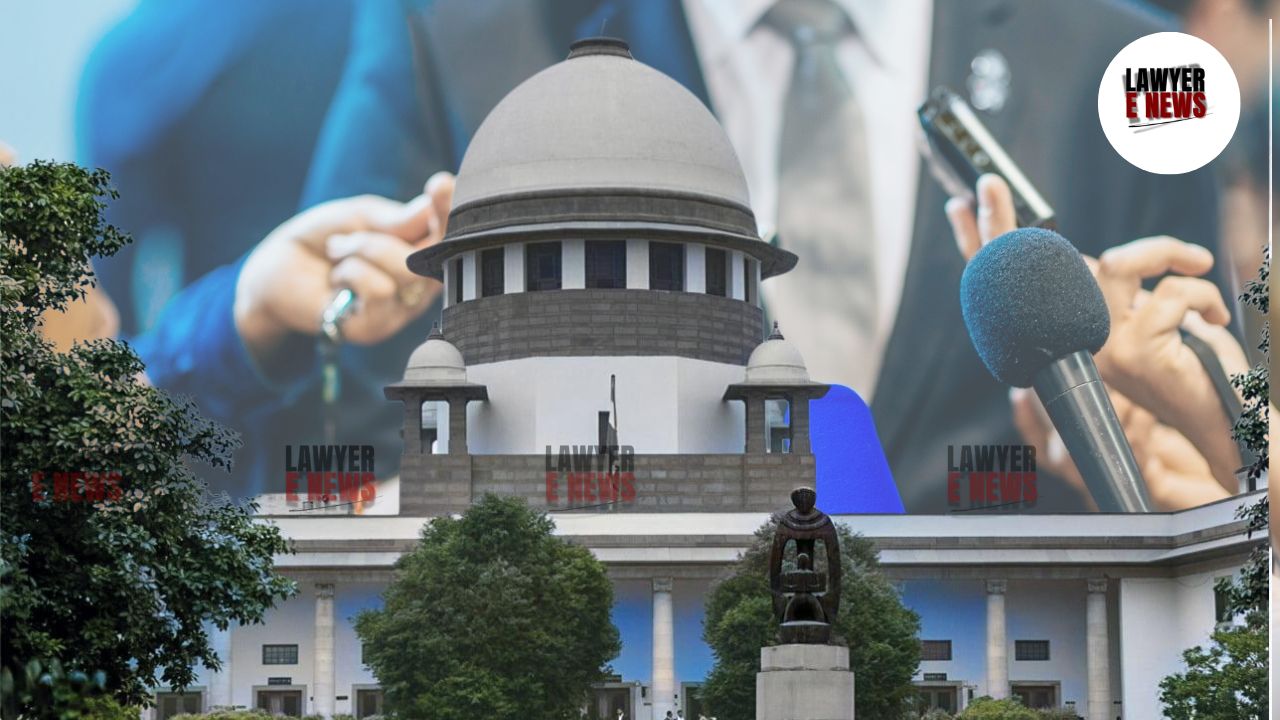
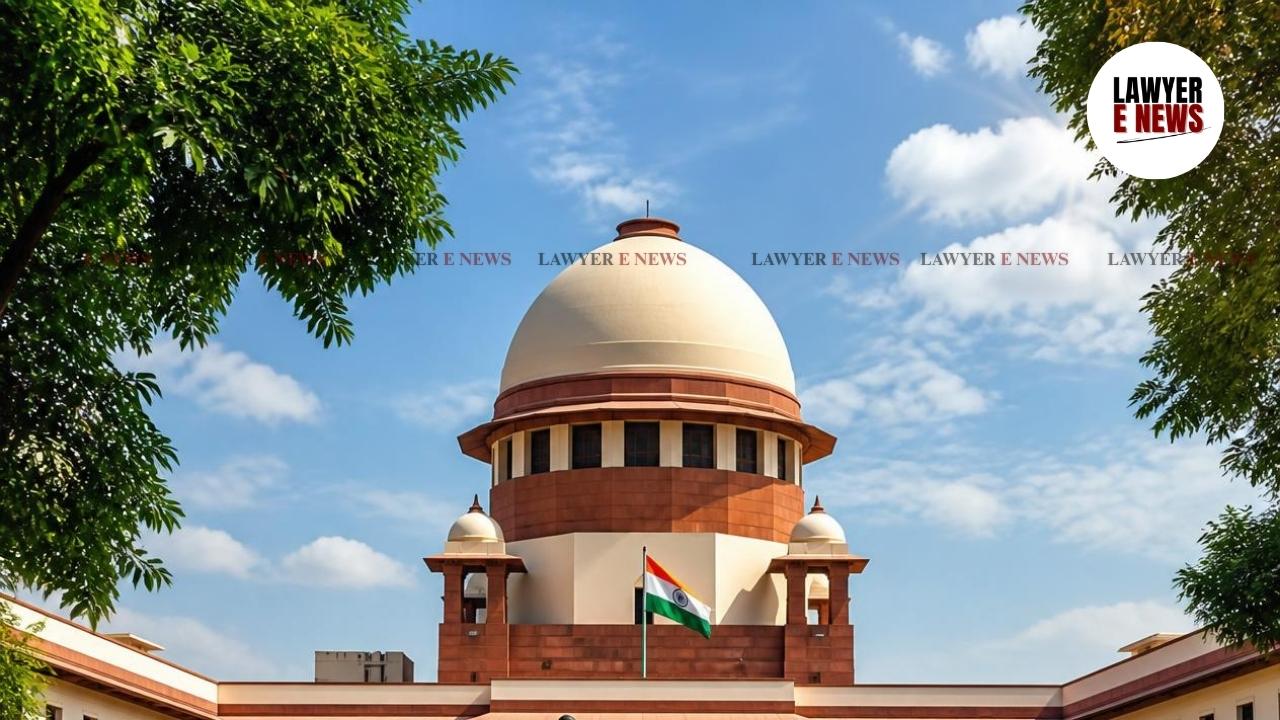
Today, On October 21, 2024, the Supreme Court of India expressed serious concerns over the dual professional roles held by Advocate Mohd. Kamran, who is simultaneously working as a freelance journalist while also practicing as a lawyer. The Court raised ethical questions about whether an individual can hold both roles simultaneously, given the potential conflict between the two professions.
Kamran had initiated a defamation case against former BJP MP Brij Bhushan Sharan Singh, which led to the Court scrutinizing his professional conduct. The Bench, comprising Justice Abhay S. Oka and Justice Augustine George Masih, took issue with the fact that Kamran was publicly identifying as both a freelance journalist and an advocate.
"How Can a Member of the Bar Claim to Be Both a Freelance Journalist and an Advocate?": Supreme Court
During the hearing, Justice Oka remarked on the inappropriateness of holding both titles, questioning how an advocate could ethically balance the dual responsibilities of journalism and legal practice. He emphasized the professional conflict inherent in Kamran’s roles and questioned why the Bar Council had not responded to the issue yet.
"How can a member of the Bar claim to be both a freelance journalist and an Advocate? This is highly unprofessional," Justice Oka said, stressing that Kamran must make a choice between the two professions.
The Bench directed Kamran’s counsel to seek instructions from the petitioner on his future course of action, remarking that he would need to decide whether to continue as a lawyer or pursue journalism.
"He has to make a statement; either he has to be an Advocate or a freelance journalist. He can't have it both ways. You please take instructions," the Court told Kamran’s counsel.
Supreme Court Directs Bar Council of India and UP Bar Council to Address the Issue
The Court's concerns date back to an earlier order issued on July 29, 2024, when the Bench first flagged Kamran’s dual role and directed the Registry to issue a fresh notice to both the Bar Council of India (BCI) and the Bar Council of Uttar Pradesh. The order required the Bar Councils to examine whether Kamran’s conduct violated the rules of professional ethics for lawyers.
The Court reiterated this order, emphasizing that the issue needed further scrutiny. The matter is now returnable on November 29, 2024, by which time the Bar Councils are expected to provide clarity on Kamran’s professional standing.
"As per the order dated 29.07.2024, Registry to issue fresh notice to BCI and Bar Council of State of Uttar Pradesh, returnable on November 29," the Court directed.
Ethical Implications of Dual Roles: Court Stresses Clarity from Bar Councils
The Bench made it clear that Kamran’s decision on whether to continue as a lawyer or a journalist would have implications for the Bar Council’s disciplinary action. Justice Oka remarked that if Kamran chose one profession, the Bar Council’s inquiry into his conduct might not be necessary.
"If you are able to make that statement, the issue of the Bar Council to deal with your conduct will not arise," Justice Oka noted.
The Court also recalled its July 29 order, where it had directed the Registry to forward a copy of Kamran’s complaint, as well as Annexure ‘P-8,’ to the State Bar Council of Uttar Pradesh and the Bar Council of India for taking appropriate action. The Court had expressed concern over Kamran’s claim in his complaint that he was both a practicing Advocate and a freelance State Accredited Journalist.
The Court observed that this dual role raises fundamental questions about professional ethics, and both the State Bar Council and the BCI would need to examine whether this was permissible under the rules governing legal practice.
Defamation Case Against Former BJP MP
Kamran had filed a defamation case against former BJP MP Brij Bhushan Sharan Singh, which initially brought his professional roles into question. In its earlier order, the Supreme Court had already expressed unease over the ethical implications of Kamran’s simultaneous involvement in legal practice and journalism. The Bar Councils have now been tasked with investigating whether such conduct is allowed under the current Bar Council of India Rules.
Kamran to Choose Between Advocacy and Journalism
The Supreme Court has made it clear that Advocate Mohd. Kamran cannot continue in both roles of a freelance journalist and practicing lawyer, citing ethical concerns. With the matter now returnable on November 29, 2024, Kamran’s decision and the Bar Councils' stance on his conduct will be crucial in determining whether further disciplinary action is necessary.
Mohd. Kamran v. State of Uttar Pradesh & Ors.
Case No.: SLP(Crl) No. 9615/2024; Diary No. 28200/2024
Date of Hearing: October 21, 2024
Next Hearing Date: November 29, 2024