-
by sayum
17 August 2026 3:17 PM







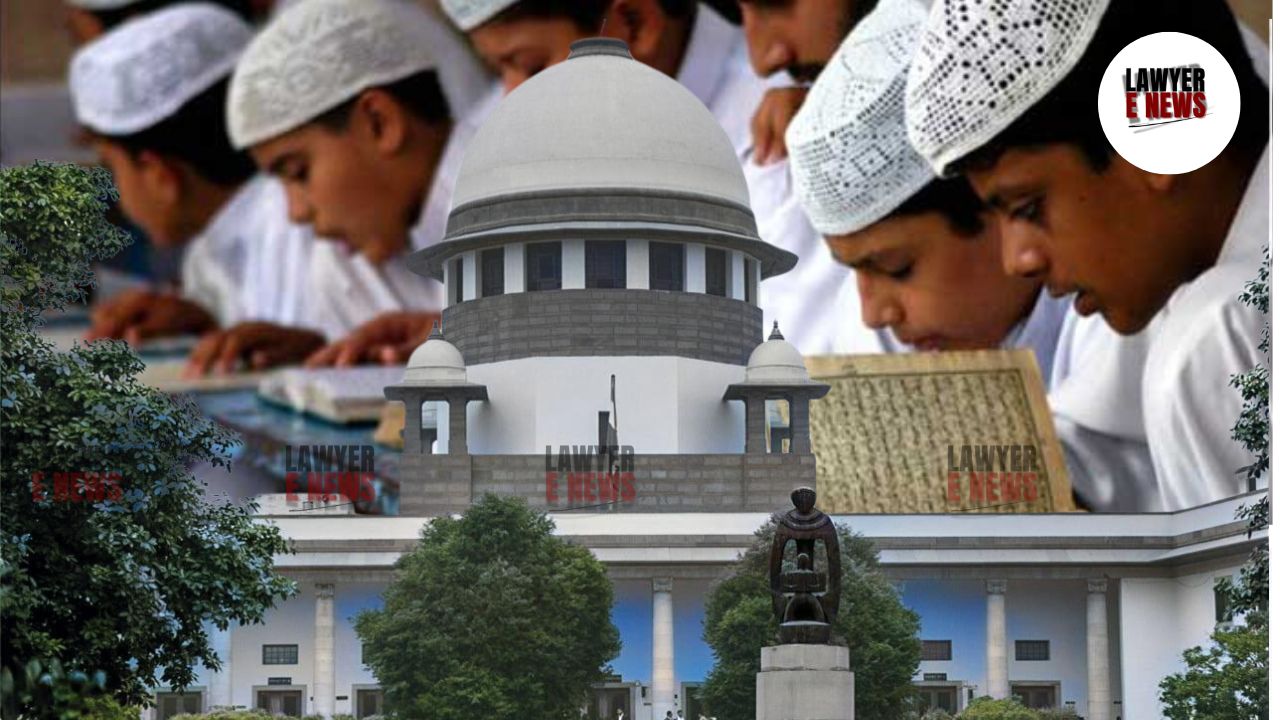
Today, on 21 Oct. 24, Supreme Court granted Interim relief to Jamiat Ulema-I-Hind as SC stops Union and States from withdrawing Madrassa recognition over RTE compliance. Supreme Court, led by Chief Justice DY Chandrachud, restrained the Union Government and States from enforcing NCPCR’s orders to withdraw recognition of non-compliant Madrassas and inspect them for adherence to the Right to Education (RTE) Act, 2009. The interim order came in response to a writ petition filed by Jamiat Ulema-I-Hind, challenging the constitutional validity of the directives issued in June 2024. The petition argues that the actions violate the religious minorities' rights under Article 30 of the Constitution.
The bench, led by Chief Justice DY Chandrachud and comprising Justices JB Pardiwala and Manoj Misra, passed the order while hearing a writ petition filed by Jamiat Ulema-I-Hind, an Islamic clerics' organization, challenging NCPCR's actions.
In June 2024, the NCPCR issued a series of letters to the Chief Secretary of Uttar Pradesh and the Ministry of Education, urging them to withdraw recognition from Madrassas not adhering to RTE standards and to conduct inspections. The NCPCR further recommended that a separate category be created to track all Madrassas—recognized, unrecognized, and unmapped—through the UDISE system, with instructions not to extend the UDISE system to Madrassas.
In response, the Uttar Pradesh Chief Secretary and the Government of Tripura followed up with instructions to investigate Madrassas admitting non-Muslim children and ensure their transfer to regular schools.
The petitioner contended that these directives violated the constitutional rights of religious minorities under Article 30, which guarantees the right to establish and administer educational institutions.
The Supreme Court, in its order, restrained any further action based on the NCPCR's communications dated June 7 and June 25, as well as subsequent orders issued by Uttar Pradesh, the Union Government, and the Government of Tripura.
The petitioner was represented by AoR Fuzail Ahmed Ayyubi, and the court granted permission to implead all States and Union Territories in the ongoing petition.
JAMIAT ULEMA I HIND v. NATIONAL COMMISSION FOR PROTECTION OF CHILD RIGHTS AND ORS.
Order will upload soon