-
by sayum
02 November 2026 1:47 PM







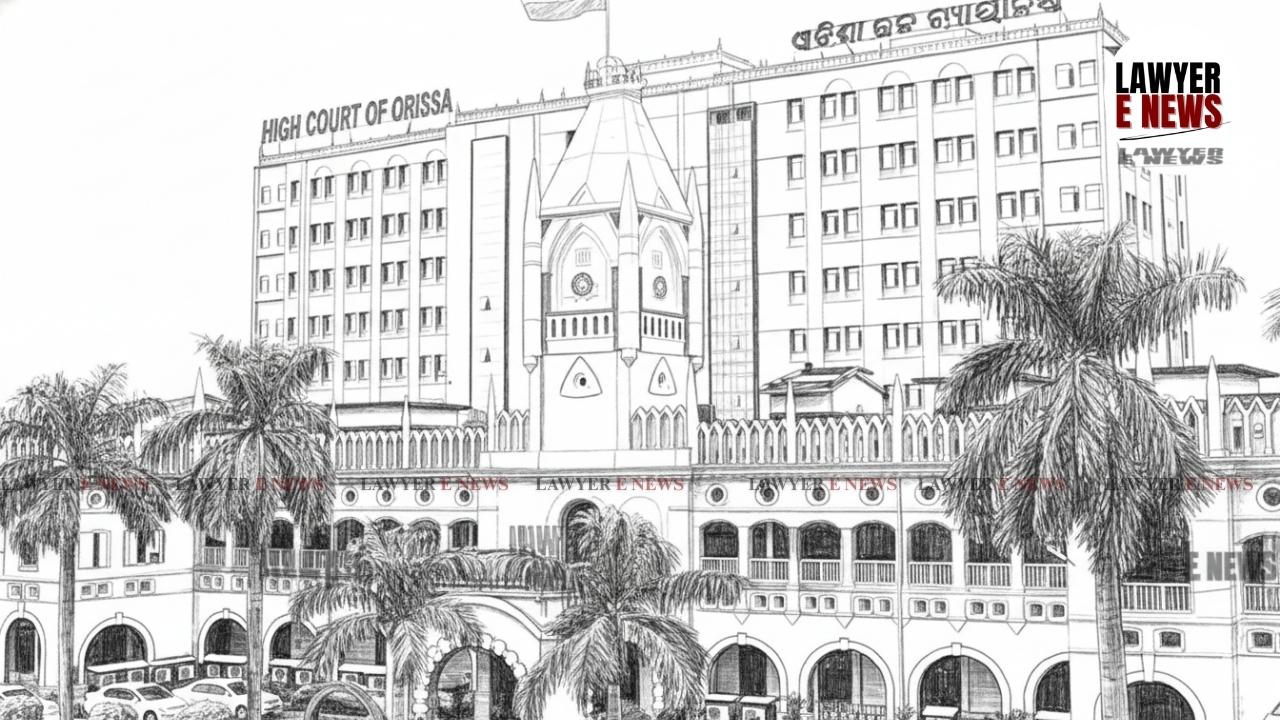
"It is held that the present petitioners are bound by the modified preliminary decree passed by the learned trial court in terms of the decree of this Court dated 12.12.1994; having stepped into the shoes of the predecessor, who was/were party before this Court, present petitioners cannot have a better right so as to challenge the order in the F.A. and the resulting decree which have attained finality as they have never been challenged before the higher forum," Orissa High Court
Reiterating that supervisory jurisdiction under Articles 226 and 227 of the Constitution of India cannot be utilized to collaterally reopen a preliminary decree settled by a Division Bench, the Orissa High Court held that legal heirs stepping into the shoes of original litigants cannot claim higher rights to contest a decree that has attained finality. Justice Mruganka Sekhar Sahoo, while dismissing a civil miscellaneous petition on October 29, 2026, ruled that a Single Bench cannot disturb a compromised preliminary decree affirmed by a Division Bench decades earlier. The Court additionally affirmed that an abatement under Order 22 CPC cannot be set aside when the applicants had patent knowledge of the parties' demise from pending trial court records but belatedly filed substitution petitions without sufficient cause.
The dispute originated from a partition suit filed in 1975 in Title Suit No. 2/2 of 1975-76, which reached the High Court in First Appeal No. 213 of 1977 and was disposed of by a Division Bench on November 14, 1994, based on a compromise petition. Pursuant to directions, the trial court redrew the preliminary decree and proceeded with final decree proceedings, where it accepted the Civil Court Commissioner's report in part and directed a fresh writ for remaining portions, noting that it could not travel beyond the preliminary decree. Challenging the interlocutory orders of the trial court, the successors-in-interest of the original defendant approached the High Court under supervisory jurisdiction.
Whether a Single Judge exercising supervisory jurisdiction under Articles 226 and 227 of the Constitution can revisit or reopen a partition decree drawn pursuant to an order of a Division Bench that has attained finality.
Whether abatement of proceedings can be set aside and delay condoned under Order 22 CPC when the applicants had active knowledge of the deaths through trial court proceedings but delayed substitution before the High Court for over two years.
The High Court began by addressing the severe delay in seeking substitution and setting aside of abatement in the supervisory proceedings. The Court noticed that several parties, including the original plaintiff and defendants, had passed away during the pendency of final decree proceedings before the trial court, where substitution applications were actively litigated and allowed as early as 2023 and 2024.
Knowledge of death in trial court precludes plea of ignorance in supervisory proceedings under Order 22 CPC.
The Bench rejected the stance of the petitioners claiming delayed knowledge via a memo filed under Order 22 Rule 10A CPC. The Court highlighted that the petitioners were fully participating before the trial court when the substitution of the deceased parties was effected, rendering their belated application before the High Court unmerited.
"Before the trial Court, the present opposite parties have been substituted by filing application. Therefore, the demise of the said parties is well within the knowledge of the petitioner. Before this Court in the CMP, I.A. No.1860 of 2026 was filed on 23.09.2026 which is almost after two years of filing of the I.A. before the trial court for substitution. Therefore, the delay is filing the I.A. cannot be condoned. Accordingly, the abatement cannot be set aside."
Supervisory jurisdiction cannot be exercised to destabilize decrees settled by a Division Bench.
Addressing the core challenge to the partition proceedings, the Court observed that the grievance raised by the petitioners essentially aimed at reopening the preliminary decree formulated pursuant to the Division Bench order dated November 14, 1994, in First Appeal No. 213 of 1977. The Bench observed that coordinate benches had previously dismissed multiple recall and modification petitions filed in 2013 and 2015 seeking to disturb the sealed decree.
The Court stressed that the petitioners, who stepped into the shoes of the original defendant, cannot maintain a better right or higher standing than their predecessor. Since the predecessor was bound by the compromise decree that remained unchallenged before any higher judicial forum, subsequent legal heirs are equally bound by the modified preliminary decree.
"The contentions of the petitioners in the present case have to be and are rejected as it has the effect of revisiting/redrawing the decree that is pursuant to order dated 14.11.1994 passed by the Division Bench of this Court in the F.A. No.213 of 1977."
The High Court consequently dismissed the petition, ruling that the final decree court committed no error in adhering strictly to the preliminary decree without permitting parties to expand or modify settled shares.
Date of Decision: October 29, 2026