-
by sayum
23 October 2026 1:16 PM







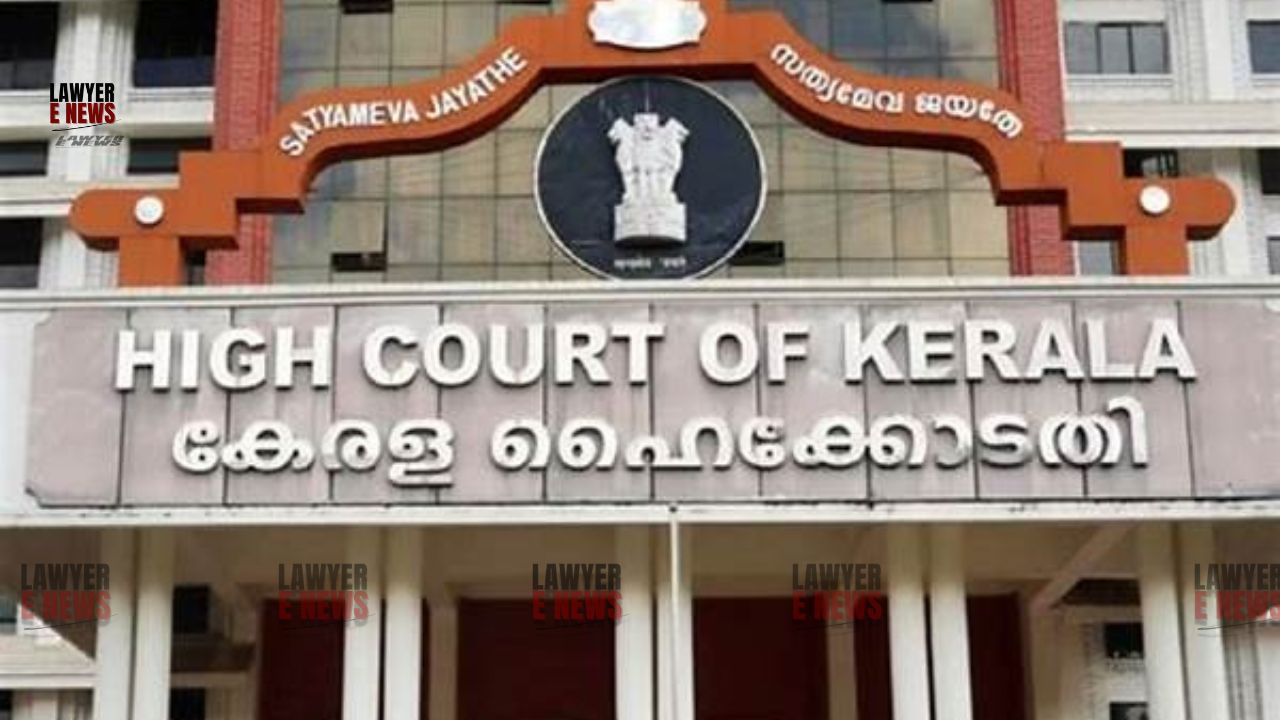
"The suit is upon dishonoured cheques, the liability of which is statutory, under Sections 30 and 37 of the Negotiable Instruments Act; suit is not on the original transaction." Kerala High Court, in a significant ruling, held that a suit for money based on dishonoured cheques is maintainable independently of the underlying original transaction, as the liability arises statutorily under the Negotiable Instruments Act.
A division bench comprising Justice Sathish Ninan and Justice P. Krishna Kumar further clarified the limits of liability for non-signatory defendants and the application of the Limitation Act, 1963.
The plaintiff, a businessman, initiated a suit for recovery of money against two defendants, who are husband and wife, alleging non-payment of a debt for which several post-dated cheques were issued. The defendants contended that the cheques were issued as security by a business entity and denied any personal liability, further arguing that the suit was barred by limitation. The trial court decreed the suit in favor of the plaintiff, holding the defendants liable for the claim.
The court was tasked with determining whether the defendants were personally liable for the dishonoured cheques, whether the suit was barred by the period of limitation under the Limitation Act, 1963, and whether a non-signatory partner could be held liable for the cheque amount.
Establishment of Statutory Liability
The court rejected the appellants' argument that the plaintiff was required to prove the original transaction behind the issuance of the cheques. Referring to Sections 30 and 37 of the Negotiable Instruments Act, the bench emphasized that once the execution and issuance of the cheques are admitted or proved, the liability becomes statutory. The court noted that the defendants failed to provide evidence of the existence of the alleged "company," and their admission regarding the cheques' issuance was sufficient to establish liability.
Liability of Non-Signatory Defendants
Regarding the liability of the second defendant, the court adopted a strict interpretation of the law of agency and liability under the Negotiable Instruments Act. Since the first defendant was the sole signatory on the instruments, the bench held that there was no material evidence to fasten liability upon the second defendant. The court consequently set aside the decree against the second defendant, ruling that her personal liability could not be established solely based on the dishonoured cheques signed by her husband.
Court Clarifies Limitation Principles
The bench meticulously examined the timeline of the dishonour memos against Article 40 of the Limitation Act, 1963, which prescribes a three-year period for filing a suit on a dishonoured instrument. Upon finding that the claim concerning one specific cheque (Ext.A10) was initiated beyond this statutory three-year window, the court ruled that portion of the claim to be time-barred. However, for the remaining cheques, the court found the suit to be within the limitation period, taking into account the reopening of the civil courts after the summer vacation.
Bold Pull-Quote on Limitation
"The claim under Ext.A10 cheque having been initiated beyond three years from it dishonour, is barred by limitation."
The High Court partially allowed the appeal. It set aside the trial court's decree against the second defendant, effectively dismissing the suit against her. Regarding the first defendant, the court modified the decree, deducting the amount associated with the time-barred cheque, while upholding the trial court's order on interest at 9% per annum from the date of the suit until the decree, and 6% per annum thereafter.
Date of Decision: 02 September 2026