-
by sayum
05 August 2026 3:07 PM







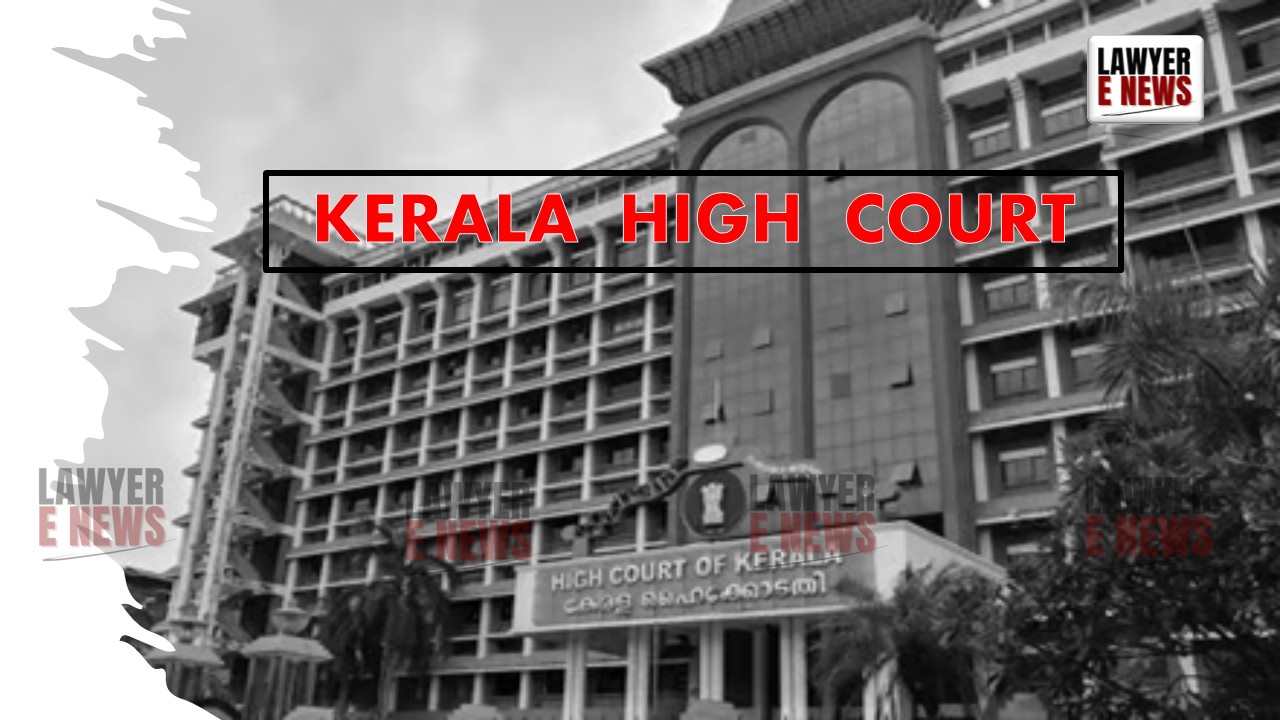
“Mere Payment of Fine Cannot Justify Subletting and Encroachment in Sabarimala”: In a significant ruling on the accountability of kuthaka (lease) holders in Sabarimala pilgrimage centres, the Kerala High Court on 15th July 2025 in SSCR No.4 of 2025, issued a stern direction to the Travancore Devaswom Board (TDB) to initiate strict action against a kuthaka holder who sub-leased the stall in violation of tender conditions and encroached upon additional space at Pamba Manappuram during the Mandalam-Makaravilakku festival season of 1200 M.E. (2024-25).
The Division Bench comprising Justice Anil K. Narendran and Justice Muralee Krishna S. passed the order while considering the Special Commissioner's Report regarding serious irregularities in the operation of Stall No.113 at Pamba.
“Violation of Tender Conditions Cannot Be Compounded by Paying Rent for Encroached Area”
The primary observation of the Court centered around the grave misuse of the kuthaka rights, whereby the additional 7th respondent, Shri. Syam Sasidharan Nair, though allotted 20 sq. meters (4x5m), had divided and sub-leased the stall to two different persons, namely Shri. Arun Suresh and Shri. Baiju, in clear breach of tender norms.
The Court categorically held:
“From the submissions... we notice that now the extra space occupied by the additional 7th respondent has been evicted, and he paid the ground rent for that area. The kuthaka right granted to the 7th respondent was to run the shop exclusively within an area specified in the agreement. The 7th respondent has absolutely no right to use more area than permitted and sublease portions of the same to 3rd persons who are not parties to the agreement.”
Rebuking the lenient approach of simply recovering excess rent, the Court asserted:
“The act of the 7th respondent is of the nature that has to be seriously viewed, and it cannot be compounded by mere collection of an additional amount for the space illegally occupied by him.”
The suo motu proceedings were initiated based on the report of the Superintendent of Police, Devaswom Vigilance Wing, following a reference from the Duty Magistrate, Pampa, regarding rampant irregularities. It was discovered that Stall No.113, auctioned for ₹14.20 lakh to Shri. Syam Sasidharan Nair, was illegally expanded beyond permissible limits and divided into two portions, operated separately by different individuals.
Despite the stall holder’s claim of a partnership with “Suresh,” the Court found no such disclosure was made in the tender documents, observing:
“The additional 7th respondent, while participating in the tender, did not disclose the details of Arun Suresh, whom the additional 7th respondent claims as his partner… The contention… is not believable.”
Court Relies on Previous Precedents on Kuthaka Violations:
Citing earlier binding judgments, including Sreekumar V. v. Travancore Devaswom Board [2015 (2) KHC 714], and Suneesh K.S v. Travancore Devaswom Board [ILR 2022 (1) Ker.1091], the Court emphasized strict compliance with tender conditions. The Court reiterated:
“No licensee shall have the right to re-auction or sub-let the plot to a third party… the licensee should personally conduct the business in the stall.”
Referring to Sreekumar V, the Court recalled:
“The auction shall be conducted in the presence of the Chief Vigilance Officer… No bidder shall be permitted to bid for more than one plot… No licensee shall have the right to re-auction/sublet the plot.”
The Court also highlighted the statutory obligations under Clause Nos. 5, 7, 19, 26, and 33 of the 2024-25 tender guidelines, which unequivocally prohibit sub-leasing and encroachments.
Disposing of the Special Commissioner’s Report, the High Court directed:
“This SSCR is disposed of directing the Travancore Devaswom Board to take appropriate action against the 7th respondent for violation of tender conditions, in accordance with law, within two months from the date of receipt of a certified copy of this order.”
Further, the Court ordered structural reforms and vigilance measures:
“The Travancore Devaswom Board is further directed to be more vigilant in the matter of violation of tender conditions by the kuthaka holders and to direct its officials concerned to conduct periodical inspections of the stalls of Kuthaka holders, to find out the violations, if any, and to take timely action.”
The Kerala High Court reiterated its strict stance on preserving the sanctity of Devaswom properties and upholding transparency in the auction of stalls during the Sabarimala pilgrimage season. The ruling affirms that mere payment of excess rent does not absolve the kuthaka holders of liability when serious breaches like sub-letting and encroachments are committed.
The judgment ensures robust accountability mechanisms in the administration of Sabarimala pilgrimage management, safeguarding public resources against commercial exploitation.
Date of Decision: 15.07.2025