-
by sayum
25 August 2026 12:32 PM







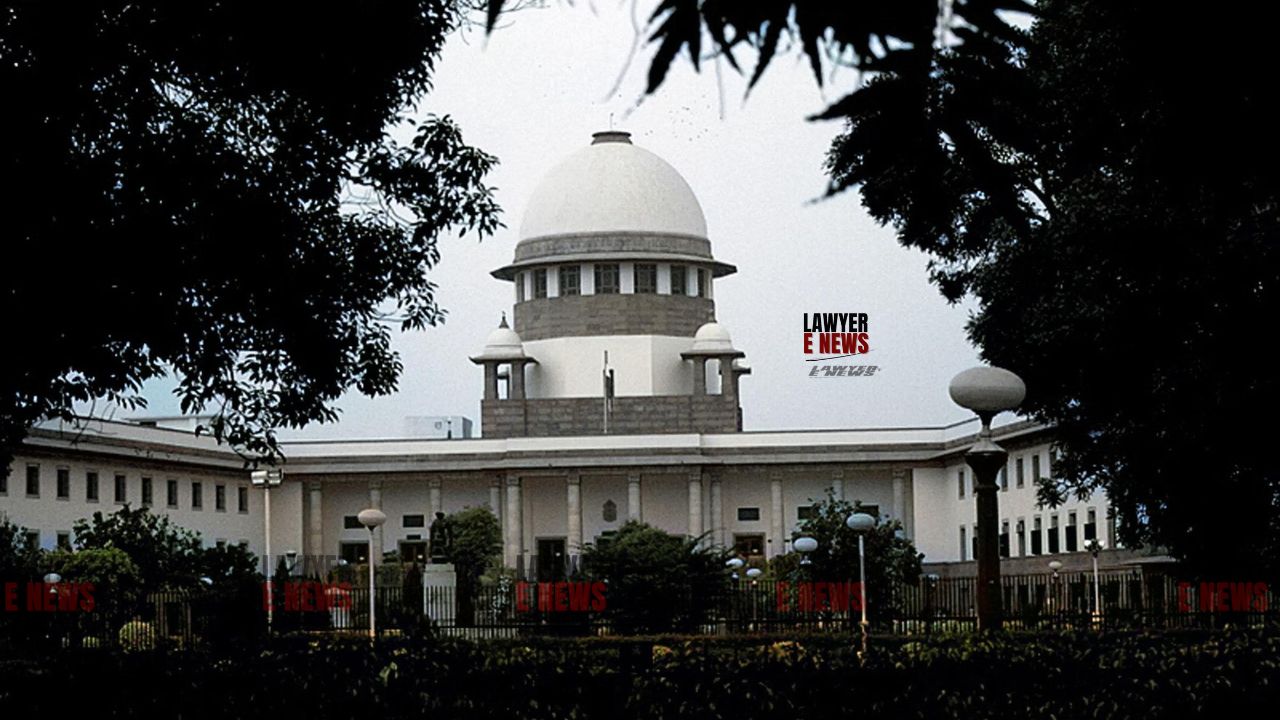
“Failure to file under Sections 37-A or 38 within 30 days is fatal to any challenge of sale under the Revenue Recovery Act”— Supreme Court of India refusing to interfere with the auction of ancestral property conducted under the Tamil Nadu Revenue Recovery Act, 1864. The Court held that a belated writ petition filed four years after the auction, without availing the statutory remedy under Sections 37-A or 38, was barred by limitation, and that pendency of writ proceedings or interim orders do not suspend statutory obligations.
The case was decided by a Division Bench comprising Justice Satish Chandra Sharma and Justice Vipul M. Pancholi, who affirmed the concurrent decisions of the Madras High Court in the writ petition, writ appeal, and review application filed by the legal representatives of Kolanjiammal, widow of late Ramaswamy Udayar, whose arrears had triggered the recovery action.
“Auction conducted in 2005 and confirmed in 2008 cannot be questioned in 2012—Finality of Sale Cannot Be Undone Without Proof of Fraud”
The judgment centres around a public auction held on 29.07.2005, initiated to recover dues arising out of an ex parte decree passed in 1987 against the appellant’s husband, Ramaswamy Udayar, who had defaulted on payments for arrack shop licences during 1972-73. The confirmation of sale was delayed until 23.07.2008 due to interim orders in a writ petition filed by the appellant.
Despite participating in proceedings and depositing approximately Rs. 3.41 lakhs under High Court directions, the appellant did not invoke Sections 37-A or 38 of the Revenue Recovery Act within 30 days of the auction. These provisions specifically allow for setting aside an auction sale either by depositing the entire arrears (Section 37-A) or by proving material irregularity or fraud (Section 38).
Rejecting the argument that pending writ proceedings excused this omission, the Court categorically held:
“The stay on confirmation of sale did not suspend the statutory requirement to apply under Section 37-A or 38.”
The Court clarified that interim protection against confirmation did not preclude the obligation to file a challenge within the statutory period, stating:
“The appellant’s failure to avail herself of the specific statutory mechanism cannot be excused merely because parallel proceedings were pending before the High Court.”
“Payments made during writ proceedings do not cure failure to file under Revenue Recovery Act”— Court refuses to substitute compliance
The appellant had argued that her substantial deposits made during the pendency of the writ petition satisfied the recovery amount and should be treated as compliance with Section 37-A. This contention was flatly rejected. The Court observed that:
“These payments, though made in good faith, cannot retrospectively validate non-compliance with the statutory requirement.”
The Bench noted that under Section 37-A, both deposit and a formal application within 30 days are indispensable conditions, and the appellant’s failure to do so made her challenge legally untenable.
“Rights of Auction Purchaser Become Absolute Upon Confirmation—Sale Cannot Be Disturbed Without Fraud or Irregularity”
Reaffirming the settled legal position in Valji Khimji v. Official Liquidator, (2008) 9 SCC 299, the Court observed:
“Once the sale is confirmed by that authority, certain rights accrue in favour of the auction-purchaser, and these rights cannot be extinguished except in exceptional cases such as fraud.”
In the present case, the auction purchaser (respondent no. 4) had paid the entire consideration on the day of the auction. The sale was confirmed in 2008, a sale certificate was issued, and the property was registered and sold to bona fide purchasers. No fraud or irregularity was ever pleaded or proved. Therefore, the Court found the challenge wholly infructuous and dismissed it.
“No Illegality in Using Revenue Recovery Mechanism—Ex Parte Civil Decree was Validly Enforced”
The appellant further contended that the 1987 ex parte decree should have been enforced through civil execution under the CPC and not via revenue recovery proceedings. This was roundly rejected by the Court, which held that:
“Once the arrears were certified as recoverable under the provisions of the Revenue Recovery Act, the authorities were empowered to proceed with recovery through revenue processes.”
The Court also dismissed the appellant’s reliance on Article 112 of the Limitation Act, holding that the decree had attained finality and the recovery was not time-barred.
“Review Cannot Be an Appeal in Disguise—No Error Apparent in High Court’s Judgment”
The appellant’s review petition before the Madras High Court was also dismissed, with the Supreme Court upholding the reasoning. Relying on Lily Thomas v. Union of India and Parison Devi v. Sumitri Devi, the Court held:
“A review proceeding cannot be treated as an appeal in disguise. The findings of the High Court are based on a comprehensive appreciation of facts and law.”
The Supreme Court found no perversity in the High Court’s concurrent judgments in the writ petition, appeal, and review, which had all found the challenge to be delayed, procedurally defective, and legally barred.
No Interference Warranted in a Sale Long Concluded and Legally Perfected
In conclusively rejecting the appeal, the Supreme Court ruled:
“In light of the above detailed analysis, the impugned judgment dated 07.08.2009 and the impugned order dated 06.01.2011 passed by the High Court of Judicature at Madras are upheld and the present appeal is hereby dismissed.”
The Court thus confirmed that statutory remedies under the Revenue Recovery Act must be pursued within time, and judicial intervention under Article 226 is not available to resurrect abandoned remedies after years of delay, particularly when no fraud or illegality is proven.
Date of Decision: 14 November 2025