-
by sayum
25 August 2026 11:12 PM







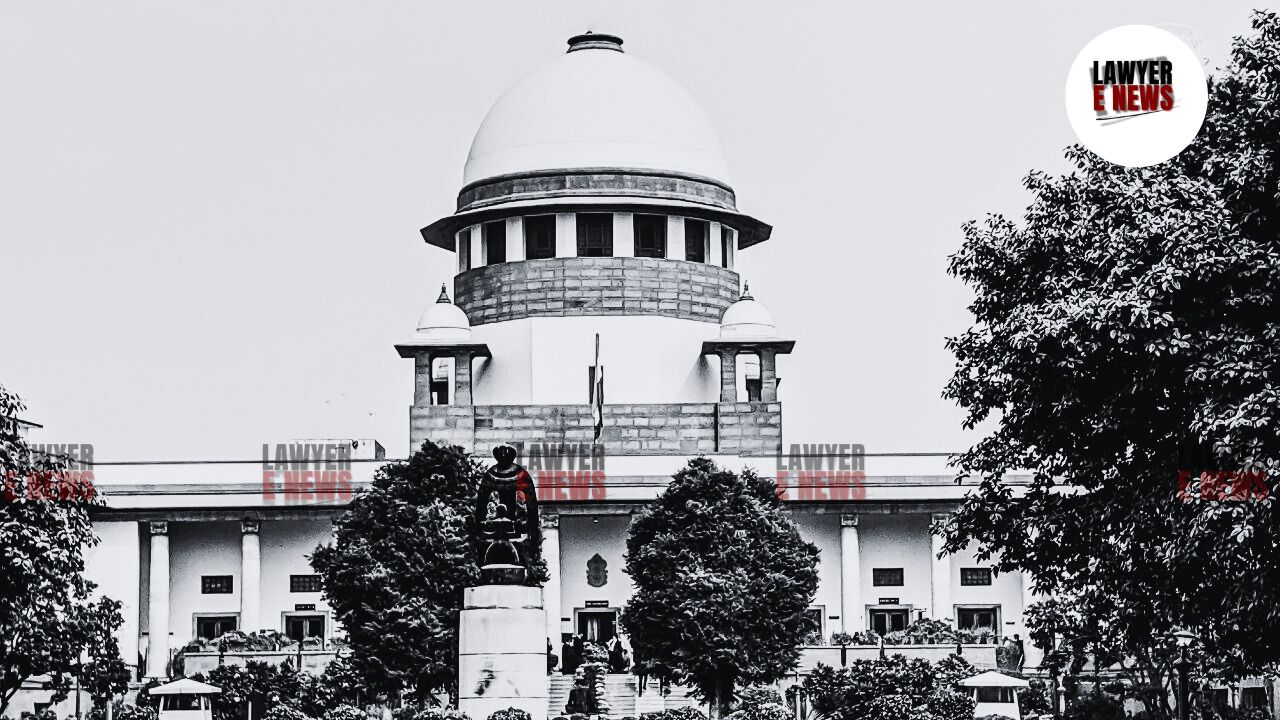
The Supreme Court of India, in a reportable judgment, declaring that the 2018 selection process for promotion of Assistant Professors to Associate Professors at NIT Kurukshetra stood legally validated by Statute 9 of the 2023 Amendment Statutes, which was retrospective and clarificatory in nature.
“Statute 9...had the effect of clarifying/explaining that the recruitment drive...stands validated,” held the Bench comprising Justice Dipankar Datta and Justice Augustine George Masih, rejecting the High Court’s view that the amendment was prospective and that a fresh recruitment was necessary.
The Court ruled that the appellants were entitled to notional appointment with effect from a date post November 27, 2018, subject to approval by the Board of Governors, but without any financial or experiential benefit.
“Legislature Can Cure Defects but Not Overrule Courts—This Was a Valid Correction, Not an Overreach”: SC Clarifies Separation of Powers in Statute 9 Dispute
The controversy arose from a one-time executive relaxation issued by the Ministry of Human Resource Development on October 6, 2017, which waived the requirement of a minimum three years’ AGP ₹8000 for promotion to Associate Professor. The relaxation aimed to address faculty stagnation and was applied across all National Institutes of Technology (NITs), except NIT Kurukshetra and NIT Jalandhar due to pending litigation.
While the appellants were selected under Advertisement No. 03/2018 and recommended for appointment, legal proceedings prevented the final appointments. The High Court had previously held the executive relaxation to be contrary to the First Statutes, but in 2023, the Government of India amended the Statutes to formally incorporate the relaxation through Statute 9, approved by the President of India as Visitor of the Institutes.
Despite this legislative correction, the High Court again halted the process, holding that the amendment could not revive a past process. The Supreme Court disagreed, observing that “if a judgment...holds an executive action bad due to procedural defect(s), the legislature/executive may cure the defect...and such curing would not amount to overreaching the judgment.”
The Court noted that the amendment was neither arbitrary nor designed to overrule judicial authority. Rather, it removed the defect identified by the earlier judgment—namely, that the 2017 relaxation lacked statutory backing.
“Clarificatory Statutes Are Presumed Retrospective Unless Stated Otherwise—This Was Not a New Law, But a Legal Explanation”: SC on Validating Legislation
Emphasising the principles of statutory interpretation, the Court invoked the decision in RBI v. Peerless General Finance (1987) and explained that statutes must be read “with the glasses of the statute-maker, provided by such context” and must advance the purpose for which they were enacted.
The Court categorically declared:
“The most effective way to interpret the 2023 Statutes is to align its context with the purpose... Statute 9 was introduced to clarify and validate the 2018 recruitment drive, not to reopen future appointments.”
Rejecting the High Court’s prospective interpretation, the Supreme Court held:
“Clarificatory statutes are presumed retrospective...unless otherwise stated. The 2023 amendment, particularly Statute 9, had the express purpose of restoring the benefits of the 2017 one-time relaxation, and enabling NIT Kurukshetra to do what all other NITs had already done.”
Thus, the Court held that the fresh recruitment mandated by the High Court was contrary to the legislative intent and effectively nullified the clarificatory statute.
“Notional Promotion Is Not a License for Retrospective Experience or Back Pay”: Court Limits Relief While Upholding Selection Validity
While granting relief to the appellants, the Supreme Court drew a distinction between legal entitlement and actual benefit. Referring to its earlier decisions in Union of India v. M. Bhaskar (1996) and Ravi Oraon v. State of Jharkhand (2025), the Court ruled:
“Notional promotions are given to take care of some injustice...but a person so promoted cannot gain experience from the date of notional promotion; it has to be from the date of actual promotion.”
Accordingly, the Court ordered that:
“Those appointed shall not be entitled to claim any arrear financial benefit or experiential credit for promotion...but shall be treated as Associate Professors from the date of notional appointment for the purpose of service continuity and terminal benefits.”
The Board of Governors of NIT Kurukshetra was directed to consider and implement these appointments within one month from the judgment date. The Court made it clear that Statute 9’s relaxation stands exhausted after this recruitment, and no fresh claims can be raised under it.
This judgment by the Supreme Court is a landmark affirmation of the doctrine of validating legislation and clarifies that while courts protect the law, legislatures can cure legal defects, provided they do not intrude upon judicial decisions. The decision also reinforces that statutory amendments that explain or clarify earlier provisions are not only lawful but often necessary to resolve administrative impasses.
In holding that Statute 9 was clarificatory, retrospective, and constitutionally valid, the Court protected the rights of faculty members whose promotions had been stalled for seven years, without opening the floodgates to others who had not participated in the 2018 process.
By balancing judicial discipline, legislative competence, and administrative justice, the Court closed a chapter of prolonged uncertainty for NIT Kurukshetra and delivered a clear message: “context, purpose and legislative clarity cannot be set aside by a narrow reading of statute timelines.”
Date of Decision: 29 October 2025