-
by sayum
02 November 2026 1:46 PM







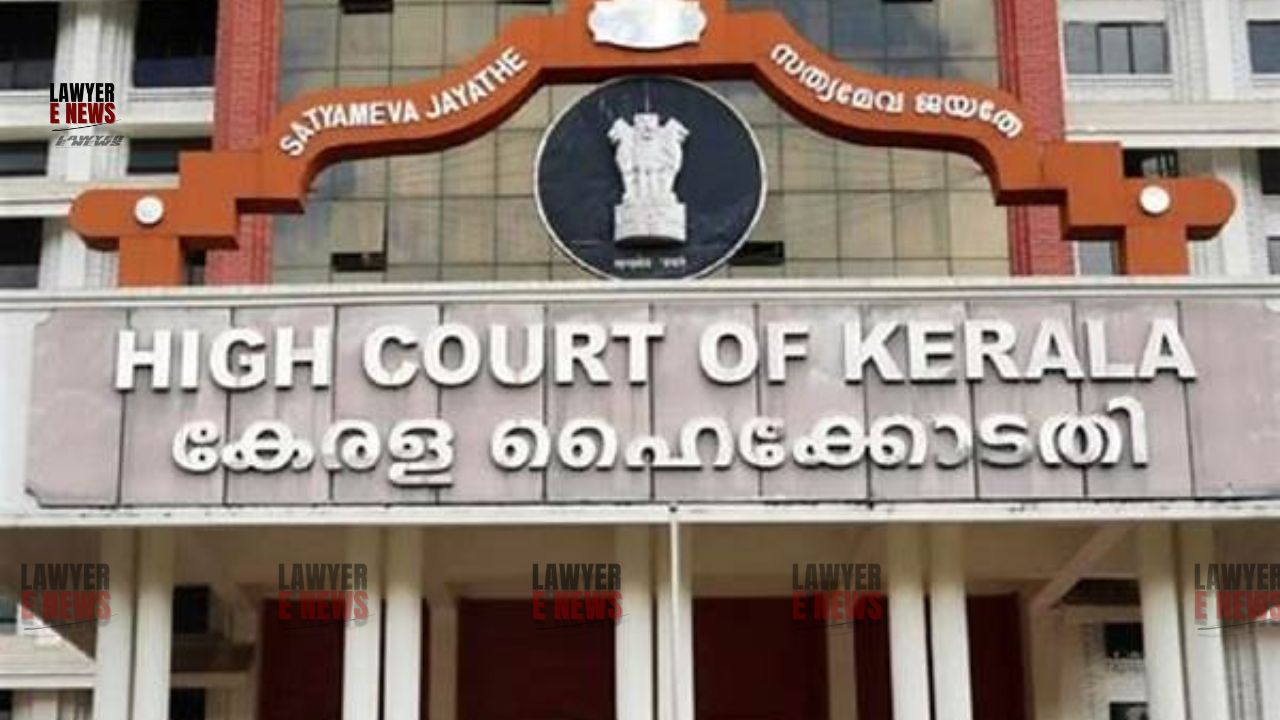
Kerala High Court held on Friday that the State Government cannot abdicate or impermissibly delegate its obligation to finalise college staff fixation proposals to an affiliating university when specific judicial mandates require the Government itself to take the decision after affording a hearing to affected employees. A Division Bench comprising Justice Anil K. Narendran and Justice Muralee Krishna S. ruled that where previous binding judicial directions instructed the Government to implement staff pattern decisions, relegating that statutory duty to the Kerala University of Health Sciences, which subsequently approved appointments without hearing affected parties, violates natural justice and is liable to be quashed under Article 226 of the Constitution of India.
The appellant was appointed as a Tutor in the Department of Materia Medica at Sree Vidhyadhiraja Homoeopathic Medical College in 2003, with her service regularised and later approved by the University of Kerala in 2010. Following earlier rounds of litigation concerning the implementation of the Direct Payment System and staff patterns, this Court had directed the Government to take an expeditious decision on staff fixation proposals and commanded that all affected parties be given an opportunity to submit representations. Instead of deciding the proposal itself, the State Government relegated the scrutiny to the University, which then unilaterally altered the appellant’s effective entry date to 2006 on the pretext of Central Council of Homoeopathy norms and degraded her seniority below respondent tutors without granting her an opportunity of hearing.
Whether the State Government could lawfully delegate its judicially mandated obligation to scrutinise and implement staff fixation proposals to the affiliating University instead of deciding the matter itself.
Whether the University's subsequent approval of staff appointments and alteration of inter se seniority without affording an opportunity of hearing to affected teaching staff violated natural justice and binding Division Bench directions.
Government impermissibly bypassed previous judicial mandates by delegating staff fixation scrutiny
The Division Bench closely examined the earlier judgment in W.P.(C) No. 18669 of 2006, wherein specific directions were issued to the Manager to submit a proposal through the Principal and Controlling Officer, who was in turn required to forward it to the Government. The Court had explicitly ruled that the Government had to take action to implement its decision within two months, following which the University was merely to take a decision on approving appointments based on the Government’s staff fixation approval.
The Court noted that in subsequent appellate proceedings in W.A. No. 1684 of 2015, a Division Bench had explicitly clarified that prior to the Government finalising the proposal, all similarly situated persons must be afforded an opportunity to submit representations. The Bench observed that despite these clear directives, the State Government failed to carry out the exercise and instead shifted its responsibility entirely to the University via its order dated September 24, 2016.
University cannot decide staff approval behind the back of affected teachers
The Court observed that the affiliating University proceeded to pass the approval order dated August 4, 2018, solely based on the College Manager’s proposal and without providing any audience to the petitioner or other similarly situated incumbents. The Bench underscored that such unilateral approval, which effectively altered the entry date and seniority of the appellant without considering her objections, could not withstand judicial scrutiny.
Addressing the procedural default, the Bench held that the University’s order suffered from patent arbitrariness and non-compliance with judicial dictates. The Court emphasized that when a binding judgment mandates an opportunity of hearing to affected staff prior to finalisation, an authority cannot short-circuit the requirement by adopting the management's proposals without hearing the aggrieved educators.
Single Judge erred in dismissing writ petition on ground of non-joinder of all college incumbents
The Division Bench also overturned the Single Judge’s reasoning that the appellant's writ petition was unmaintainable because all incumbents of the college had not been impleaded. The Court clarified that the issues raised by the appellant primarily concerned her inter se seniority and the validity of staff approval in the Department of Materia Medica, which stood on an entirely distinct footing from other connected cases.
The Bench concluded that because the State Government delegated its primary duty contrary to the Court's previous directions and the University passed the consequential order without hearing all parties, both orders could not be sustained to the extent they affected the appellant and respondent tutors.
The High Court allowed the writ appeal, set aside the judgment of the Single Judge dated March 14, 2025, and quashed the Government Order dated September 24, 2016, and the University Order dated August 4, 2018, to the extent of the approval granted to the appointments and promotions of the appellant and respondent tutors. The Bench directed the State Government to reconsider the matter afresh strictly in compliance with previous judicial directions after affording an opportunity of hearing to all concerned parties.
Date of Decision: October 30, 2026