-
by sayum
24 August 2026 11:13 AM







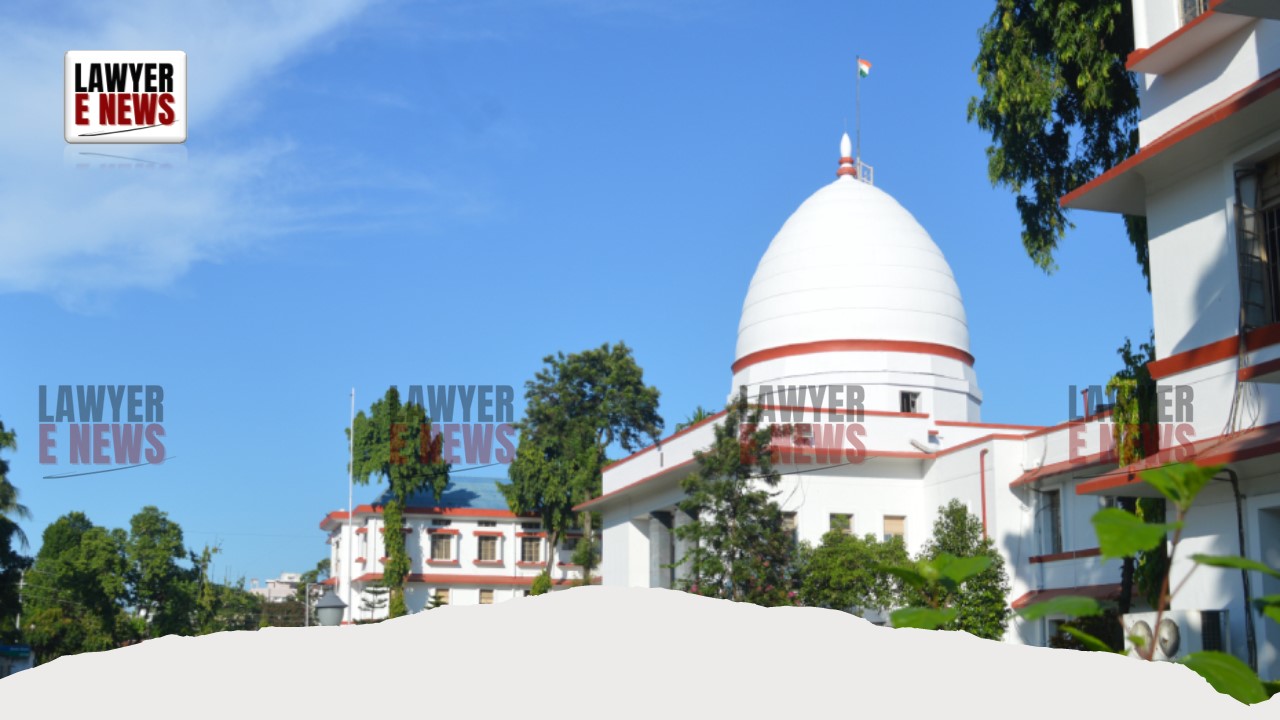
“Administrative delay in sanction and allotment of funds cannot defeat lawful entitlement of a citizen” – In a significant verdict reinforcing the accountability of the State in honouring admitted liabilities, the Gauhati High Court directed the Director General of Police, Assam, to release long-pending hire charges amounting to ₹6,65,004 due to a private vehicle owner whose Maruti Van was requisitioned by the police authorities for law and order duties.
Justice Kardak Ete observed: “Once liability is admitted, the State cannot withhold payment on the ground of pending sanction or non-receipt of funds. Administrative lapses cannot override a citizen’s lawful claim.”
Vehicle Requisitioned for Public Duty Under Assam Requisition Act, 1968 – No Dispute on Liability
The case involved requisition of the petitioner’s private Maruti Van by the Additional District Magistrate, Kamrup (Metro) for public service during multiple periods between January 2022 and December 2023, under the Assam Requisition and Control of Vehicles Act, 1968. The requisition order clearly stipulated that hire charges would be paid as per the Government Notification dated 06.02.2014, upon submission of bills.
The petitioner raised bills totalling ₹6,65,004, but payment remained pending except for a credited amount of ₹91,774 for one quarter. Despite repeated representations, the State failed to clear the remaining dues.
No Dispute on Entitlement – Delay Attributed to Sanction and Allotment Bottlenecks
Significantly, in its reply, the State did not dispute the amount claimed. The affidavit filed by the respondent authorities confirmed that the vehicle was requisitioned and the hire bills were genuine. It acknowledged:
“The petitioner has handed over declaration certificate with consent for ONE TIME SETTLEMENT i.e., deduction of 20% against 3 hire charge bills... The bills have been forwarded to Assam Police Headquarters... however, required sanction and allotment of funds is yet to be received.”
The break-up of dues indicated that the petitioner agreed to a 20% deduction on earlier bills, and the adjusted amounts were already submitted to the headquarters for sanction. Despite this, the authorities had failed to process the payment, citing non-receipt of sanctioned funds.
Admitted Dues Must Be Paid – Sanction Delay Not a Valid Defence
Rejecting the State’s plea for further delay, the Court held: “The respondents have not disputed the claim of the petitioner. Thus, I am of the considered view that the petitioner is entitled to be paid the amount claimed.”
It further ruled that once the State admits liability, it has no authority to delay payment based on internal administrative procedures such as fund approvals:
“Administrative inconvenience or internal sanction procedure cannot be used as a shield against constitutionally enforceable rights of a citizen to receive payment for services rendered.”
Mandamus Issued to DGP – Payment to Be Released Within 6 Months
Exercising writ jurisdiction, the Court issued a clear mandamus to the Director General of Police, Assam, directing: “The DGP, Assam shall take steps for release of the amount entitled to the petitioner after statutory deduction, within six months from the date of receipt of certified copy of this order.”
The Court also clarified that the ₹91,774 already paid shall be set off against the final amount payable.
A Firm Message Against Fiscal Apathy in Governance
This ruling reinforces that citizens cannot be left at the mercy of bureaucratic red tape, especially when the State requisitions private property for public purposes. The High Court has affirmed that the State, like any other legal entity, must honour its contractual and statutory obligations, and once liability is admitted, payment cannot be indefinitely withheld.
The decision will serve as a precedent for similarly placed individuals across the State, offering clarity on the State’s duty to pay requisition hire charges timely under the Assam Requisition and Control of Vehicles Act, 1968.
Date of Decision: 19.01.2026