-
by sayum
27 July 2026 3:39 PM








"It is settled that for claiming an equitable relief such as that of specific performance, the conduct of the party claiming it must be beyond reproach. This includes that the plaintiff approaches the Court on time, which does not merely mean within the period of limitation itself but also promptly with diligence and equitability," Supreme Court, in a significant ruling dated June 23, 2026, held that a suit for specific performance filed after an unexplained long delay—even if within the prescribed period of limitation—can reflect a lack of continuous readiness and willingness on the part of the plaintiff.
A bench comprising Justice Prashant Kumar Mishra and Justice N.V. Anjaria observed that the discretionary relief of specific performance is rooted in equity and requires the claimant to act with promptitude and "beyond reproach." The Court noted that waiting until the end of the limitation period to seek legal recourse often undermines the statutory mandate of continuous readiness.
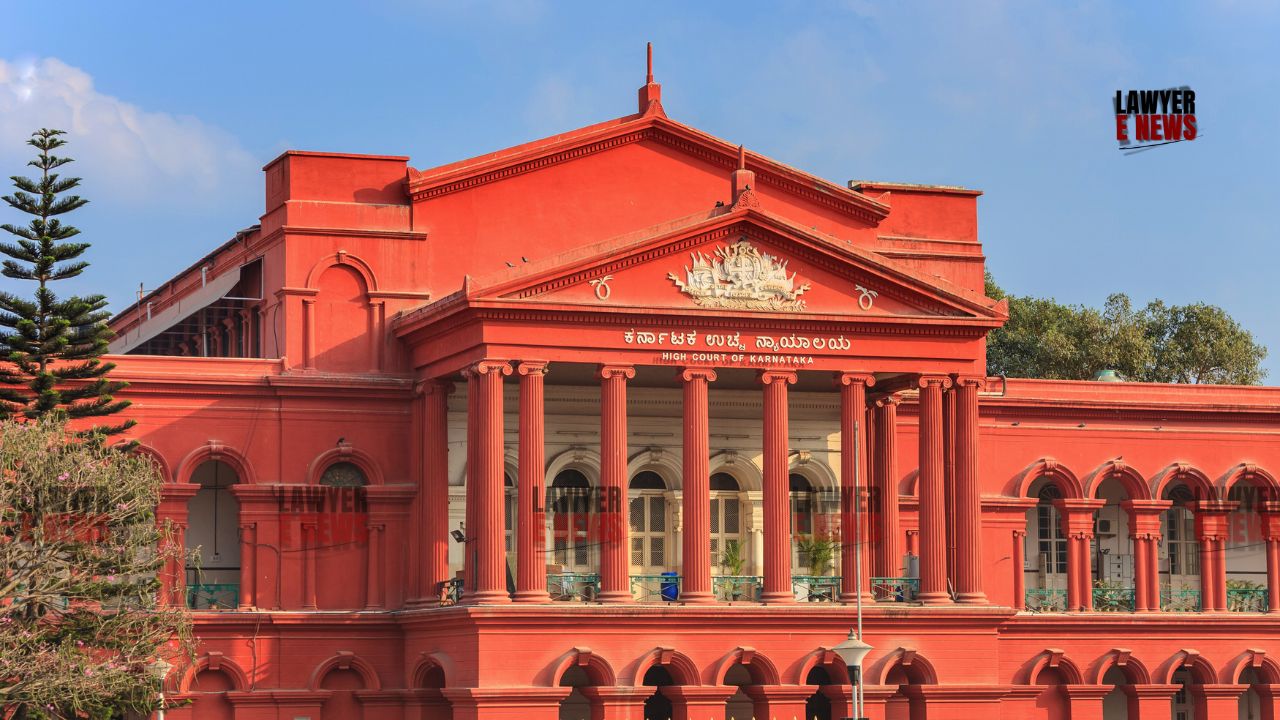
The dispute arose from an agreement to sell executed on December 20, 1990, for a vacant site in Mysore, where the original plaintiff (Mohammed Khaleel) paid earnest money but later insisted on conditions regarding an approach road. While the Trial Court decreed the suit in favor of the plaintiff's legal representatives, the High Court of Karnataka reversed the decree, citing a failure to prove readiness and willingness and an unexplained delay of two years and nine months in filing the suit. The matter eventually reached the Supreme Court through a civil appeal filed by the legal representatives of the deceased plaintiff.
The primary question before the court was whether the High Court was correct in concluding that the appellant-plaintiff failed to establish his readiness and willingness to perform his obligations under the contract. The Court was also called upon to determine whether the delayed filing of the suit for specific performance, despite being within the three-year limitation period, undermined the plaintiff's claim to equitable relief.
Statutory Mandate of Readiness and Willingness
The Court began by analyzing Section 16(c) of the Specific Relief Act, 1963, emphasizing that a person seeking specific performance must specifically aver and prove continuous readiness and willingness. The bench clarified the distinction between the two terms, noting that ‘readiness’ refers to financial capacity, while ‘willingness’ reflects the conduct and intention of the party.
Readiness Refers To Financial Capacity While Willingness Reflects Conduct
Both conditions must be met cumulatively to sustain a claim for specific performance. The Court relied on its previous ruling in N.P. Thirugnanam (Dead) by LRs. v. Dr. R. Jagan Mohan Rao, observing that the amount of consideration must be proved to be available right from the date of execution till the date of the decree. The bench noted that the plaintiff's conduct prior and subsequent to the filing of the suit is material in adjudging this requirement.
Financial Readiness Must Be Proven For The Relevant Period
Addressing the appellants' reliance on Fixed Deposit Receipts (FDRs) to show financial capacity, the Court pointed out that the documents were generated years after the suit was instituted in 1993. The bench observed that availability of funds must be proved with reference to the relevant point of time—namely, within the stipulated period for performance or at the time of filing the suit—and not by relying on documents created long after the litigation commenced.
FDRs Generated Years After Filing Suit Do Not Establish Financial Capacity
The Court further noted that the plaintiff had remained "passive" regarding statutory requirements, such as obtaining permission under the Urban Land (Ceiling and Regulation) Act (ULCRA). By waiting for the defendant to take all steps while failing to furnish necessary affidavits, the plaintiff failed to demonstrate the proactive conduct required under the law.
Impact of Unexplained Delay on Equitable Relief
Turning to the core issue of delay, the Court held that approaching the court at a "belated stage" is a critical factor in refusing discretionary relief. The bench emphasized that the three-year limitation period provided by the Limitation Act does not grant a license to the purchaser to wait indefinitely before seeking performance.
Suit Filed At The Fag End Of Limitation Period Disentitles Plaintiff To Relief
The Court observed that although the suit was filed within the period of limitation, the laches of two years and nine months after the defendant’s refusal was critical. Relying on K.S. Vidyanadam v. Vairavan, the Court noted that in agreements relating to immovable property, time-limits stipulated by parties cannot be ignored with impunity. The bench held that courts must "frown upon suits which are not filed immediately after the breach/refusal."
Promptitude Is A Sine Qua Non For Grant Of Specific Performance
The Court highlighted that the first legal notice was issued in April 1991, following which the defendant gave a categorical refusal to perform. Despite this clear breach, the plaintiff chose to file the suit only in December 1993. The bench held that such conduct reflects a lack of continuous readiness and willingness, which is a "sine qua non" for the grant of specific performance.
The Supreme Court concluded that the appellants failed to demonstrate their readiness and willingness and failed to approach the Court with "quite promptitude." The bench affirmed the High Court's decision, stating that the discretionary relief of specific performance cannot be granted in such cases. Consequently, the appeal was dismissed, and the dismissal of the suit for specific performance was upheld.
Date of Decision: June 23, 2026