-
by sayum
27 July 2026 3:39 PM








"The availability of funds must be proved with reference to the relevant point of time and not by relying upon financial documents generated long after the filing of the suit," Supreme Court, in a significant ruling dated June 23, 2026, held that a plaintiff seeking specific performance must demonstrate continuous readiness and willingness from the date of the agreement until the decree is passed.
A bench comprising Justice Prashant Kumar Mishra and Justice N.V. Anjaria observed that financial documents produced several years after the institution of a suit cannot be used to establish financial capacity at the time the contract was meant to be performed. The Court emphasized that the relief of specific performance is equitable and discretionary, requiring the claimant's conduct to be "beyond reproach."
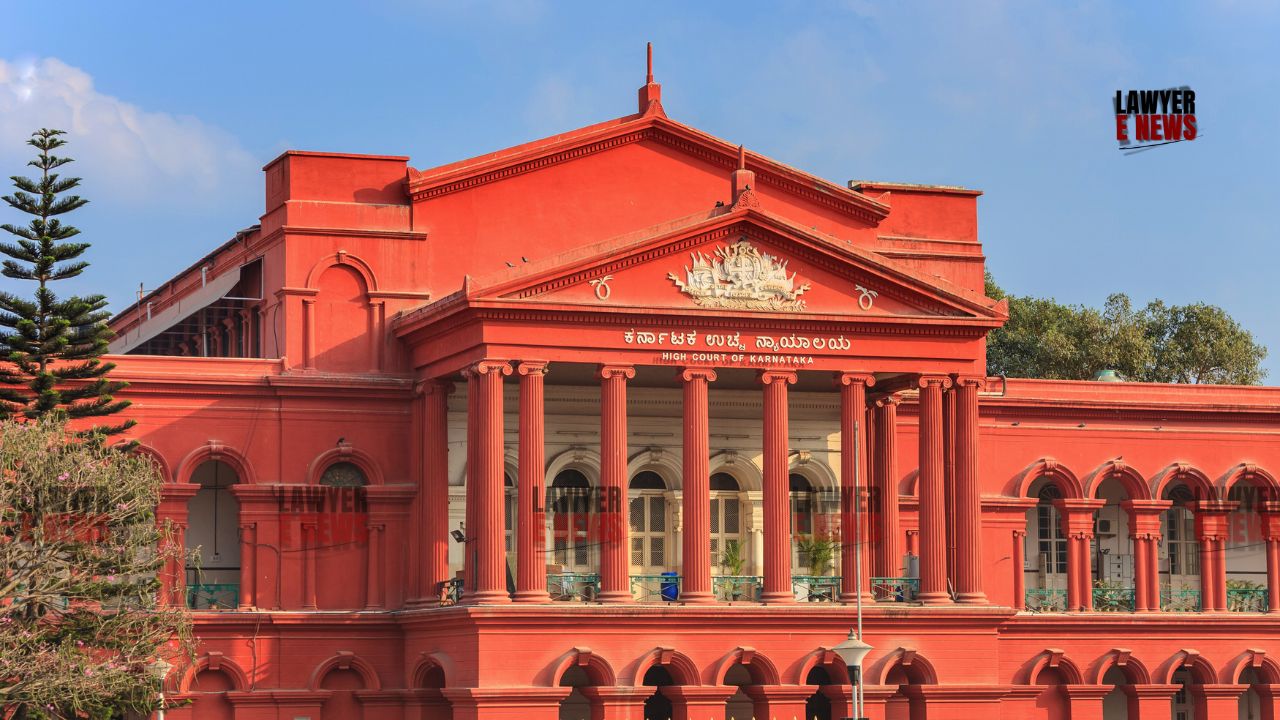
The dispute arose from an agreement to sell executed in December 1990 between the original plaintiff, Mohammed Khaleel, and the respondent, Jayamma, for a vacant site in Mysore. While the Trial Court originally decreed the suit for specific performance in favor of the plaintiff, the High Court of Karnataka reversed this decision. The High Court found that the plaintiff had failed to prove his readiness and willingness to perform his part of the contract and noted a significant delay in filing the suit.
The primary question before the court was whether the High Court was correct in concluding that the plaintiff failed to establish continuous readiness and willingness under Section 16(c) of the Specific Relief Act, 1963. The Court also considered whether the delay of nearly three years in filing the suit, though within the limitation period, undermined the plaintiff's claim for equitable relief.
Statutory Mandate Of 'Readiness And Willingness'
The Court analyzed the requirements of Section 16(c) of the Specific Relief Act, noting that it requires a person seeking specific performance to specifically aver and prove continuous readiness and willingness. The bench clarified that "readiness" refers to financial capacity, while "willingness" reflects the conduct and intention of the party to perform the contract. Both conditions must be satisfied cumulatively for a court to grant the relief.
Continuous Readiness As A Condition Precedent
Referring to established precedents like N.P. Thirugnanam v. Dr. R. Jagan Mohan Rao, the Court reiterated that continuous readiness and willingness is a condition precedent for the grant of specific performance. The bench observed that the court must take into consideration the conduct of the plaintiff both prior and subsequent to the filing of the suit. It was noted that the plaintiff must prove he had the necessary consideration available right from the date of execution till the date of the decree.
"The continuous readiness and willingness on the part of the plaintiff is a condition precedent to grant the relief of specific performance."
Financial Capacity Must Be Proven For The Relevant Period
In the present case, the appellants argued they possessed sufficient funds through four Fixed Deposit Receipts (FDRs). However, the Court observed that these FDRs were dated between 1999 and 2001, whereas the suit was instituted in 1993 based on a 1990 agreement. The bench held that these documents did not establish financial readiness during the "relevant period," which covers the time from the agreement's execution to the filing of the suit.
Court Rejects Reliance On Post-Dated Financial Evidence
The bench emphasized that while it is not mandatory to physically deposit money in court, there must be reliable evidence of fund possession at the time of the transaction. The Court stated that the High Court rightly observed that availability of funds must be proved with reference to the point of performance. Relying on documents generated years later is insufficient to satisfy the statutory requirement of showing the plaintiff was ready at the time of the breach.
"Availability of funds must be proved with reference to the relevant point of time and not by relying upon financial documents generated long after the filing of the suit."
Conduct Regarding Regulatory Clearances
The Court also addressed the issue of obtaining permission under the Urban Land (Ceiling and Regulation) Act (ULCRA). It noted that while both parties were responsible for the process, the plaintiff remained passive and failed to furnish necessary affidavits. Such "passive" conduct was cited as further evidence that the plaintiff failed to prove his continuous readiness and willingness to move forward with the sale deed registration.
Impact Of Unexplained Delay On Equitable Relief
On the aspect of delay, the Supreme Court noted that the plaintiff filed the suit only on December 20, 1993, which was nearly two years and nine months after the defendant had categorically refused to perform the contract in April 1991. The Court held that for equitable relief, a plaintiff must approach the court with "quite promptitude." Filing a suit at the "fag end" of the limitation period without a valid explanation reflects a lack of genuine willingness.
Discretionary Relief Requires Promptness and Diligence
Citing Rajesh Kumar v. Anand Kumar, the Court remarked that the period of limitation being three years does not mean a purchaser can wait indefinitely. The bench observed that courts frown upon suits that are not filed immediately after the breach or refusal. The conduct of a plaintiff who waits for years to institute legal proceedings is a crucial factor that disentitles them from the discretionary and equitable relief of specific performance.
"The conduct of the appellant/plaintiff, in our view, reflects lack of continuous readiness and willingness to perform his part of the contract, which is a sine qua non for the grant of relief."
The Supreme Court concluded that the appellants failed to demonstrate both financial readiness at the appropriate time and the necessary promptness in seeking legal recourse. Holding that the High Court's reversal of the trial decree was correct, the bench dismissed the appeal. It reaffirmed that specific performance cannot be claimed as a matter of right simply because a suit is filed within the limitation period if the twin mandates of readiness and willingness are not strictly proven.
Date of Decision: June 23, 2026