-
by sayum
27 August 2026 3:32 PM







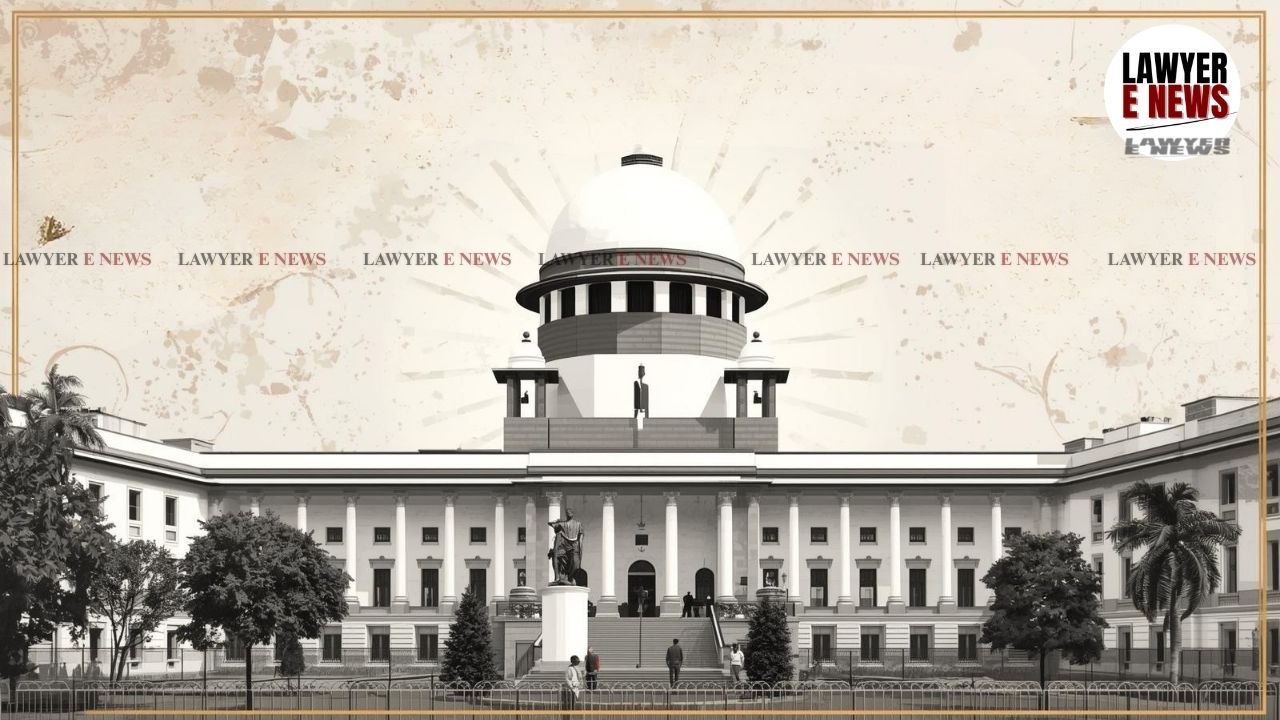
“Prolonged incarceration without trial causes grave prejudice” – Supreme Court of India set aside the Bombay High Court’s order denying bail to three appellants accused of conspiracy and tampering of evidence in a high-profile fatal motor accident case registered in Pune. A Bench of Justice B.V. Nagarathna and Justice Ujjal Bhuyan allowed the appeals in Ashish Satish Mittal v. State of Maharashtra, holding that prolonged pre-trial detention, especially when trial was yet to commence and nearly 100 prosecution witnesses remained to be examined, could not be justified by the seriousness of the allegations alone.
The apex court was hearing appeals arising out of three Special Leave Petitions challenging the High Court’s refusal to grant regular bail to individuals allegedly involved in replacing blood samples of juveniles following a deadly road crash. The FIR in question – No. 306 of 2024 – invoked a battery of penal provisions under the IPC (including Sections 304, 201, 467, 468), Prevention of Corruption Act, and the Motor Vehicles Act.
Appellants Not Accused of Causing the Accident: Supreme Court Focuses on Role and Delay in Trial
The Supreme Court made a significant distinction between the original offence and the alleged conspiracy that followed. The Bench noted,
“Insofar as the appellants… are concerned, no allegation or offence has been alleged against their wards.”
The appellants were parents and acquaintances of the juveniles sitting in the backseat of the car, and the core allegations against them pertained only to post-accident conduct—namely, facilitating or participating in the alleged replacement of blood samples.
One of the appellants was described as a “middleman” who allegedly paid ₹3 lakhs to an assistant of a doctor for swapping the samples. The actual driver, suspected to be a juvenile, is being tried before the Juvenile Justice Board.
The Court emphasised that continued incarceration—extending up to 18 months in some cases—would cause “grave prejudice” in the absence of trial progress. It observed that while the charges under Sections 467 IPC (forgery of valuable security) and under the Prevention of Corruption Act are serious,
“Seriousness of the charge alone cannot justify indefinite detention when trial is likely to be prolonged.”
Apprehensions of Witness Tampering Can Be Addressed with Conditions: SC
Responding to strong opposition from the State of Maharashtra and impleaded private parties who warned that release of the accused could derail the trial, the Supreme Court held that such concerns can be managed with appropriately strict bail conditions.
“The appellants shall not contact the witnesses directly or indirectly… Any infraction of the conditions shall entail cancellation of bail,” the Court ordered.
The judgment reflects a balanced application of bail jurisprudence, which requires courts to weigh not just the gravity of charges but also the status of trial, length of custody, and the principle of presumed innocence.
SC Directs Release on Bail with Stringent Safeguards
The appeals were allowed with the following operative directions:
With these directions, the Court disposed of all pending applications.
Date of Decision: 02 February 2026