Registration Of Nikah Not Compulsory Under Muslim Law: Gujarat High Court Orders AMC To Grant Family Pension To Widow Drugs and Cosmetics Act | Limitation Begins When Identity Crystallises, Not When Suspicion Arises: Supreme Court Revives Prosecution in Vaccine Misbranding Case Docket Pressure Cannot Dilute A Life Sentence: Supreme Court Sets Aside Suspension Of Murder Convicts’ Sentence 100 CPC | Second Appeal Is Not a Third Trial on Facts: Allahabad High Court Deterrent Effect Evaporates In Thin Air If Invoked After Fourteen Years: Bombay High Court Fixes ‘Reasonable Time’ For ESI Damages Dragging a Constable on the Bonnet During NSG Drill Not a Case for Liberal Bail: MP High Court Draws a Line on Assault Against Police on Duty No Absolute Bar Under Order XI Rule 1(5): Calcutta High Court Permits Additional Documents Even at Argument Stage in Undefended Commercial Suit If Power To Amend Is Not Read Into DV Act, It Would Defeat Its Very Purpose: Bombay High Court Upholds Amendment of Pleadings in Domestic Violence Proceedings When a Driver Knows Death Is Likely, It Is Not Mere Negligence: Kerala High Court Converts 304A Conviction to 304 Part II in 44-Death Bus Tragedy A Dying Declaration Cannot Become a Substitute for Proof: Karnataka High Court Acquits Husband in Dowry Death Appeal Once A Debtor–Creditor Relationship Is Born, The Right Of Redemption Cannot Be Defeated: Gujarat High Court Upholds Decree For Mortgage Redemption Eligibility Criteria Cannot Be Changed Midway: J&K High Court Upholds Quashing of Knitting Instructor Select List Victim Cannot Be a ‘Mute Spectator’ at Bail Stage in POCSO Cases:  Kerala High Court Sets Aside Bail Granted Without Notice Acquittal Does Not Automatically Mean Full Back Wages: Madhya Pradesh High Court Interprets FR 54-B Strictly Core Issue Is Purely Legal – No Need to Flood Rent Court with Irrelevant Documents: Madras High Court Refuses to Interfere Under Article 227 Income Tax | Abatement Is Not A Magic Wand: Orissa High Court Declines To Nullify Scrutiny Assessment Merely Because A Search Was Conducted Entertaining Writ Despite Section 18 Remedy Is In Teeth Of Supreme Court Law: Allahabad High Court Restores DRT Order In SBI SARFAESI Dispute Replacing ‘AR’ With ‘IE’ Cannot Erase Infringement: Delhi High Court Grants Injunction To Novartis Against ‘NOVIETS’ Section 348 BNSS Is To Discover Truth, Not To Protect Technical Omissions: Punjab & Haryana High Court Upholds Recall of Investigating Officer Without Section 65-B Certificate, the CD is Legally Non-Existent: Punjab & Haryana High Court Declines to Reopen SC/ST Case Cheque Bounce Law Is to Recover Money, Not to Fill Jails:  Punjab & Haryana High Court Wipes Out Conviction After Post-Conviction Compromise 138 NI Act | Once Signature Is Admitted, the Law Presumes Liability: Madhya Pradesh High Court Restores Conviction in Cheque Bounce Case Trial Court Cannot Record Mechanical Satisfaction on Child Witness Competency: Patna High Court Flags Serious Procedural Lapse Section 183 BNSS (164CrPC)  Cannot Be Converted Into A Tool For Endless Re-Statements:  Allahabad High Court Section 391 Cr.P.C. Is A Safety Valve Against Miscarriage Of Justice: Telangana High Court Reopens Door For Additional Evidence In NI Act Appeal Constructive Delivery Is Sufficient for Valid Hiba: Andhra Pradesh High Court Clarifies Essentials of Gift Under Mohammedan Law In Absence of Class I, Class II Heirs and Agnates, Cognate Shall Inherit : Punjab & Haryana High Court Revives Uterine Brother’s Right Fraud on Reservation Cannot Be Tolerated: Calcutta High Court Directs Immediate Cancellation of OBC Certificate of Elected Pradhan Interim Restraint Without Deciding Injunction Plea Cannot Continue: Karnataka High Court Steps In Under Article 227 Recurrent Delinquency in a Disciplined Force Justifies Dismissal: Calcutta High Court on Integrity Standards in BSF

Interim Restraint Without Deciding Injunction Plea Cannot Continue: Karnataka High Court Steps In Under Article 227

03 March 2026 2:15 PM

By: sayum


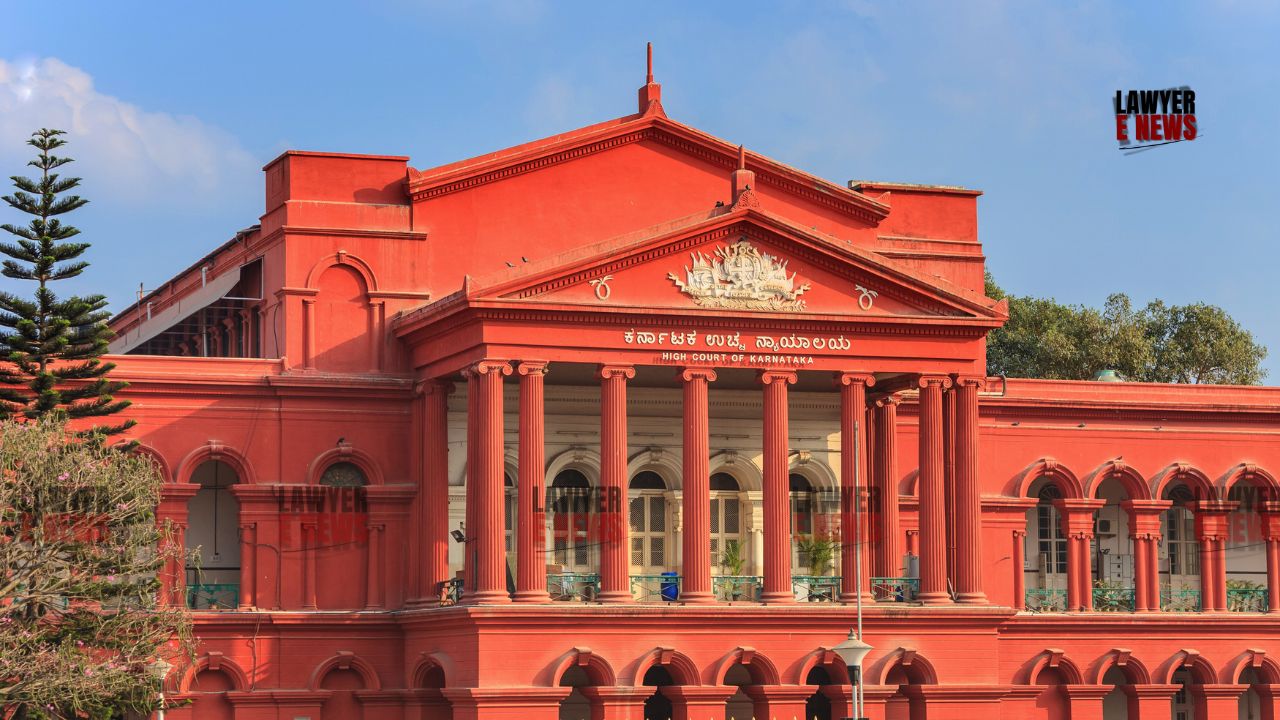
“Applications Under Order XXXIX Cannot Be Kept Pending While Rights Stand Frozen”, Karnataka High Court exercised its supervisory jurisdiction under Article 227 of the Constitution to correct a procedural irregularity committed by the Trial Court. Justice S.R. Krishna Kumar disposed of the writ petition with a direction to the Trial Court to decide pending applications for temporary injunction within one month, without being influenced by the impugned interim order.

The High Court held that when applications under Order XXXIX Rules 1 and 2 CPC are pending, the Trial Court cannot indefinitely continue an interim restraint affecting valuable property rights without adjudicating those applications on merits.

Interim Restraint Without Disposal of Injunction Applications

The petitioners, who were defendant Nos.30, 31 and 32 in O.S. No.1343/2023 pending before the VI Additional City Civil & Sessions Judge, Bengaluru, approached the High Court challenging an order dated 31.01.2026.

The grievance was straightforward yet significant. The plaintiffs had filed I.A. Nos.1/2023 and 2/2023 under Order XXXIX Rules 1 and 2 CPC seeking temporary injunction. The petitioners had already filed their written statement and detailed objections to the injunction applications. However, instead of deciding the applications on merits, the Trial Court directed the petitioners “not to alienate the suit property until further orders.”

Contending that such an order effectively granted interim relief without adjudication, the petitioners invoked Article 227 seeking supervisory correction.

Supervisory Jurisdiction Under Article 227: Correcting Procedural Irregularity

After hearing the learned Senior Counsel for the petitioners and perusing the material on record, the High Court noted that the injunction applications were still pending consideration and had not been disposed of.

The Court refrained from examining the merits of the rival claims but found it appropriate to intervene to ensure procedural propriety. Justice Krishna Kumar observed that since the applications under Order XXXIX were yet to be adjudicated, the proper course was to direct the Trial Court to decide them expeditiously after hearing both sides.

The High Court emphasized that interim directions affecting substantive rights cannot continue indefinitely without a reasoned adjudication on the pending injunction applications.

Time-Bound Direction: One Month for Decision

Without expressing any opinion on the merits or demerits of the case, the High Court disposed of the writ petition with a clear direction that the Trial Court shall consider and pass appropriate orders on I.A. Nos.1/2023 and 2/2023 on merits within one month from the next date of hearing, which stood posted on 28.02.2026.

Importantly, the Court directed that the Trial Court shall decide the applications “without being influenced by the findings or observations recorded in the impugned order or in the present order.”

All rival contentions were expressly kept open.

Given the limited nature of directions issued, notice to the respondents was dispensed with.

This order underscores a crucial procedural principle in civil litigation: applications for temporary injunction under Order XXXIX Rules 1 and 2 CPC must be decided on merits after hearing both parties. Courts cannot allow such applications to remain pending while continuing interim restraints that materially affect property rights.

By invoking its supervisory jurisdiction under Article 227, the Karnataka High Court ensured that procedural discipline is maintained and that interim measures do not substitute for adjudication.

Date of Decision: 26/02/2026

Latest Legal News