-
by sayum
24 August 2026 3:22 PM







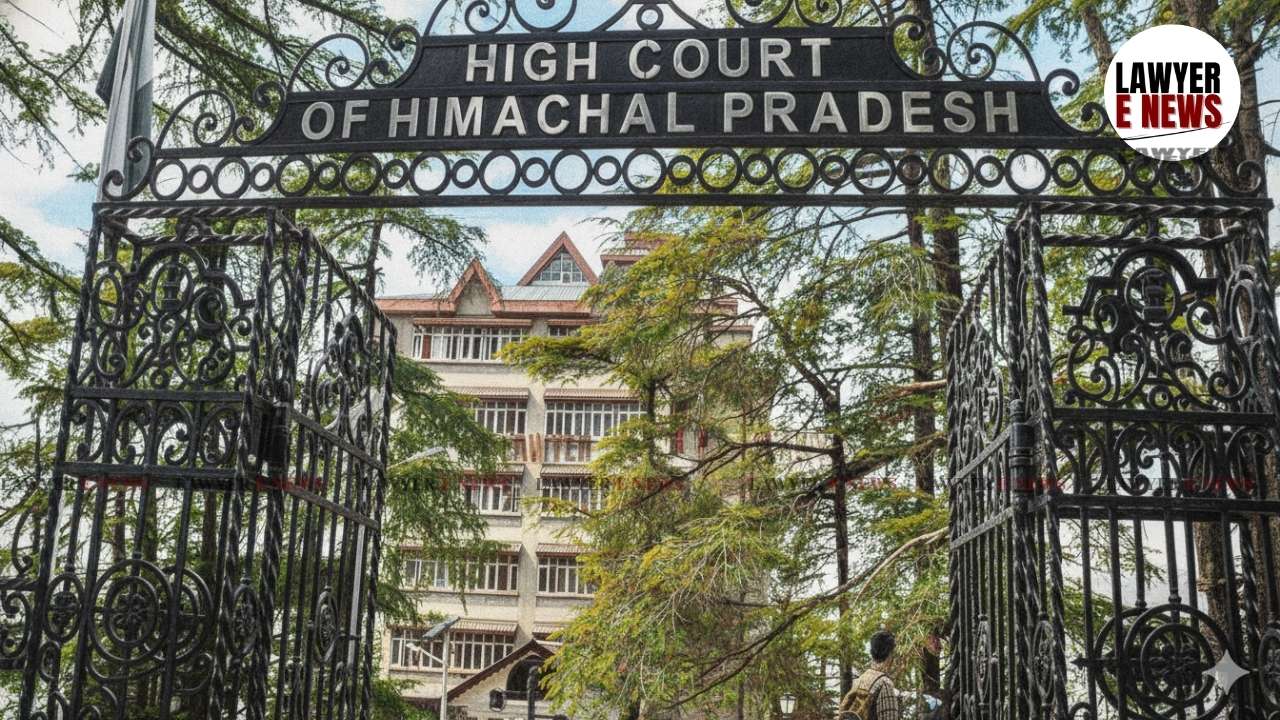
“Fence-sitters cannot be permitted to challenge seniority lists after decades of silence”— In a significant reaffirmation of settled principles of service jurisprudence, the Himachal Pradesh High Court dismissed a writ petition seeking to unsettle a seniority list issued three decades ago. Justice Ranjan Sharma rejected the petitioner’s challenge to a 1995 seniority list of Senior Assistants, holding that the claim was barred by delay, laches and acquiescence.
The Court found that the petitioner had waited over a decade to file a representation and nearly thirteen years to approach the judicial forum, and that such a belated challenge, made on the verge of retirement, could not be permitted to disrupt settled service positions. The Court also declined to entertain claims regarding military service benefits allegedly wrongfully granted to a private respondent, ruling that such rights, if ever disputed, should have been challenged contemporaneously.
“Seniority list circulated in 1995—challenge raised in 2006—petition filed in 2008—This is a classic case of delay, laches and acquiescence,” observed the Court
The petitioner, Nanak Chand Sharma, who joined service in 1972 and retired as Superintendent Grade-II in 2008, challenged the seniority of one Nanak Singh Arora, a junior in initial appointment, who was placed above him in the 1995 seniority list of Senior Assistants. The grievance was based on the claim that military service benefit was wrongly extended to Arora, which allegedly led to his accelerated seniority.
However, the petitioner first raised the issue through representation only in 2006, and approached the tribunal in 2008, a mere few weeks before retirement. The matter was later transferred to the High Court after abolition of the Himachal Pradesh Administrative Tribunal.
The Court firmly rejected the argument that the petitioner discovered the anomaly only in 2005. Holding this to be a convenient afterthought, the Court observed:
“The petitioner was promoted to Superintendent Grade-II in 2002 based on the very same seniority list he now seeks to challenge. His plea of belated knowledge in 2005 is wholly unconvincing and undermined by his own service record.” [Para 5(iii)]
“No fresh cause of action arises from rejection of representation”—Mere delay fatal in service matters
The Court reiterated settled law that mere filing of a representation does not revive a stale claim, nor does rejection of such representation furnish a fresh cause of action.
“Delay and laches must be examined from the date of the original cause of action, i.e., the issuance of the seniority list in 1995. Representations submitted in 2006 cannot revive a claim abandoned for over a decade.” [Para 5(v)]
Reliance was placed on authoritative Supreme Court precedents including Union of India v. M.K. Sarkar (2010) 2 SCC 59 and Union of India v. C. Girija (2019) 15 SCC 633, both of which emphasize that administrative inaction cannot justify revival of dormant rights.
Doctrine of Acquiescence Bars Petitioner's Claim
Highlighting the petitioner’s acceptance of promotions and failure to challenge the list in time, the Court invoked the doctrine of acquiescence, stating:
“A person having allowed his rights to remain dormant and enjoyed benefits under the impugned seniority list cannot be permitted to challenge it at the end of his service. Acquiescence virtually destroys the right of the person.” [Para 5(x)]
Citing the landmark ruling in Shiba Shankar Mohapatra v. State of Orissa (2010) 12 SCC 471, the Court underscored:
“Seniority lists which remain unchallenged for 3–4 years acquire finality and cannot be reopened thereafter. Courts must discourage fence-sitters who wake up only at retirement.” [Para 5(iv)]
The Court emphasized that public service cannot be subjected to administrative chaos by entertaining stale disputes that would disrupt long-standing seniority and promotion chains.
Military Service Benefit: Belated Challenge Rejected
As for the petitioner’s claim that the private respondent was ineligible for military service benefit under the 1972 Rules, the Court declined to entertain the issue, stating that such a claim was required to be raised at the time the seniority was assigned. More importantly, the Court held that:
“Instructions issued in 1983 cannot retrospectively override the statutory rights conferred under the Himachal Pradesh Demobilized Armed Forces Personnel (Reservation of Vacancies in the Himachal State Non-Technical Services) Rules, 1972.” [Para 7]
Since the orders granting the private respondent military service benefit still hold the field and have not been withdrawn, the Court saw no merit in allowing the petitioner to use a decades-old administrative instruction to reverse a statutory benefit.
Disruption of Settled Service Rights Not Permissible
The Court, summarising its reasons for dismissal, ruled:
“The petitioner having accepted promotions, remained silent for over a decade, and having retired in 2008, cannot now reopen settled seniority issues from 1995. The rejection order dated 21.11.2007 rightly denied him relief on grounds of delay and acquiescence.” [Para 8]
Date of Decision: 31 December 2025