-
by sayum
25 August 2026 6:19 AM







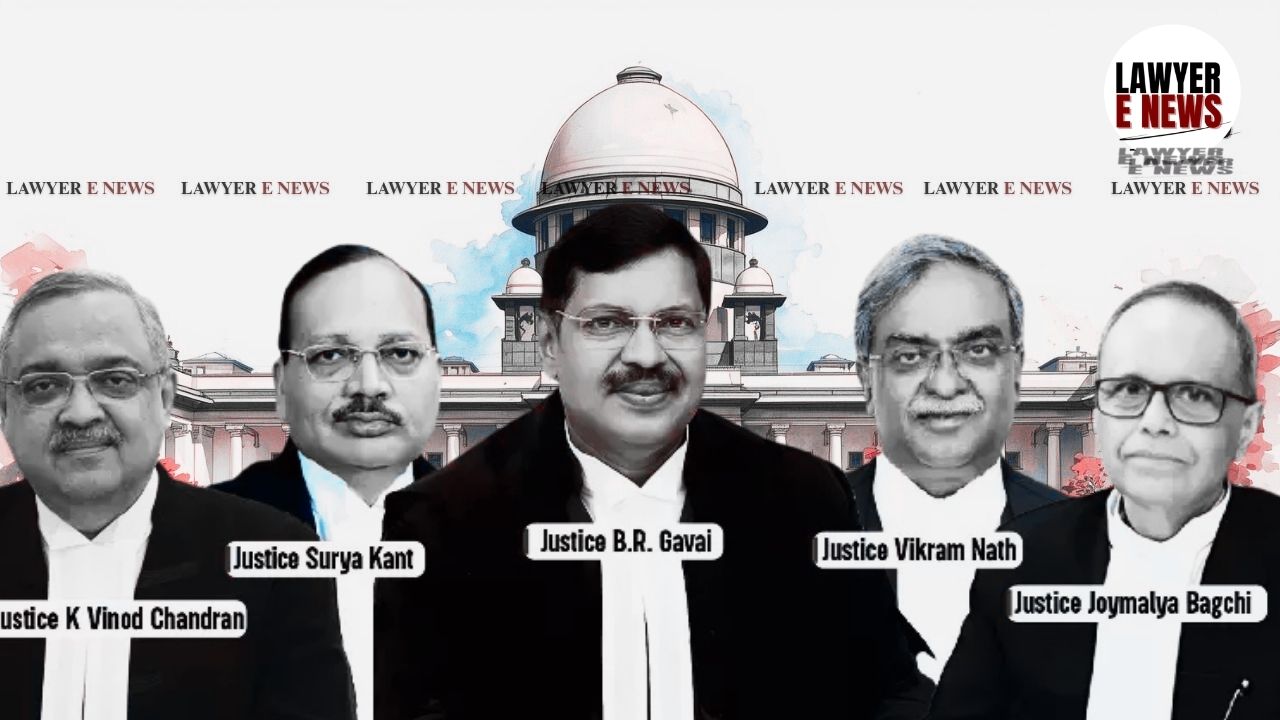
“Past service in lower judiciary is neither an intelligible differentia nor a valid ground to claim advantage in career progression within the Higher Judicial Service,” In a significant and far-reaching pronouncement, the Supreme Court of India, through its Constitution Bench judgment dated 19th November 2025 in All India Judges Association & Others v. Union of India & Others, decisively ruled that prior service in the lower judiciary as a Civil Judge (Junior or Senior Division) cannot be used as a basis for claiming preferential treatment in career advancement or seniority within the Higher Judicial Service (HJS).
Rejecting the suggestion that the long judicial experience of promotees (RPs and LDCE recruits) entitled them to additional weightage, seniority, or fast-tracked elevation, the Court held:
“Fixation in the Selection Grade and Super Time Scale within the HJS is based on the merit-cum-seniority within the cadre and cannot depend upon the length of service or performance in the lower rungs of the judiciary.” (Para 100(vi))
The Bench, comprising Chief Justice B.R. Gavai, and Justices Surya Kant, Vikram Nath, K. Vinod Chandran, and Joymalya Bagchi, clarified that merit and suitability must be evaluated within the HJS alone, and that **earlier service in the feeder cadre loses all relevance once an officer is inducted into the District Judge cadre.
“Earlier Judicial Service Cannot Be Dragged Forward to Tip the Scale in Higher Judicial Promotions”
The Court was dealing with the argument advanced by RPs and LDCE recruits that their years of toil in subordinate courts, often stretching over decades, should be given seniority benefits or quota preference while being considered for higher scales or administrative posts within the HJS.
This claim was squarely rejected:
“If at all the experience in the lower rungs of the judiciary is to be reckoned for determining seniority in HJS, there should be some compelling reason which stands the test of reasonableness... There is no basis to consider the previous experience as a Civil Judge as an intelligible differentia creating a reasonable classification.” (Para 64)
Relying on Constitution Bench precedents such as Triloki Nath Khosa, Roshan Lal Tandon, and Direct Recruit Class II Engineers’ Association, the Court affirmed that once an officer is recruited or promoted into the HJS, their career advancement must be based solely on their performance in that cadre, and not coloured by their past tenure in a different post.
“Experience in Lower Judiciary Is Not Superior to Bar Experience” – Court Clarifies Scope of Rejanish K.V. Decision
The Bench addressed an important misinterpretation of the recent judgment in Rejanish K.V. v. K. Deepa (2025), where it had allowed judicial officers to compete in direct recruitment exams for District Judges. Many Promotee Judges had argued that Rejanish K.V. equated judicial experience with Bar experience, and thus supported the idea of giving preferential treatment to those with long service in the subordinate judiciary.
The Court unequivocally clarified:
“Rejanish K.V., while permitting judicial officers to compete along with members of the Bar, did not observe that experience in judicial service is superior to that of a practising advocate, but only noticed that it is in no manner inferior.” (Para 40)
The Constitution Bench thus rejected the idea of judicial service being elevated in value for seniority purposes. It reiterated that experience at the Bar and in the judiciary are different but comparable, and that neither can be given overriding weight when it comes to progression within the HJS.
“Judicial Officers Must Prove Their Merit Anew in the Higher Judicial Service”
The Court was categorical in stating that promotions to Selection Grade, Super Time Scale, or Principal District Judge posts are not automatic consequences of past tenure. Instead, these must be earned on the basis of internal performance within the HJS:
“The consideration of merit is performance-based within the cadre of HJS... The fixation in higher grades is never dependent solely on seniority; merit and suitability are the norm.” (Para 47–49)
“The incumbents in the HJS having lost their ‘genetic blemish’ or so to say the ‘genetic adornment’ of experience in the lower cadre, will have to prove their merit in the HJS for further career advancement.” (Para 94)
The Court also emphasized that administrative posts such as Principal District Judge should not be allocated based on years of past service, but on leadership capability and suitability within the cadre.
“Creating Quotas or Bonus Seniority for Promotees Would Violate Equality” – Court Rejects Amicus Curiae’s Proposals
Several proposals put forth by the Amicus Curiae, including:
were categorically struck down by the Court as being contrary to Articles 14 and 16 of the Constitution.
“Suggestions as placed on record... would be counter-productive and would run against established norms of service jurisprudence, if the service in the lower cadre is reckoned for determining the seniority in the higher cadre.” (Para 91)
“Such proposals would result in sacrificing merit and would create disadvantage to Judicial Officers who are directly recruited to HJS.” (Para 92)
The Court stressed that creating a separate path based on prior service would only deepen the divide and diminish the legitimacy of merit-based selection.
“Multiple Avenues Already Exist for Promotees to Excel” – Court Dismisses Grievance as Policy Fatigue, Not Legal Injury
The Bench acknowledged that Promotees might feel that their journey to the HJS is longer and more arduous, but it observed that the judicial system already provides enough avenues for upward mobility, including:
“When such opportunities exist, the mere inability of certain officers to succeed... cannot furnish a valid basis for seeking preferential treatment within the HJS.” (Para 52)
“Career progression to the higher echelons of the judiciary is neither a matter of right nor of entitlement.”
The Court warned that judicial policy cannot be reshaped merely to assuage dissatisfaction or equalise effort, as that would damage institutional efficiency and fairness.
Date of Decision: 19 November 2025