-
by sayum
23 October 2026 1:16 PM








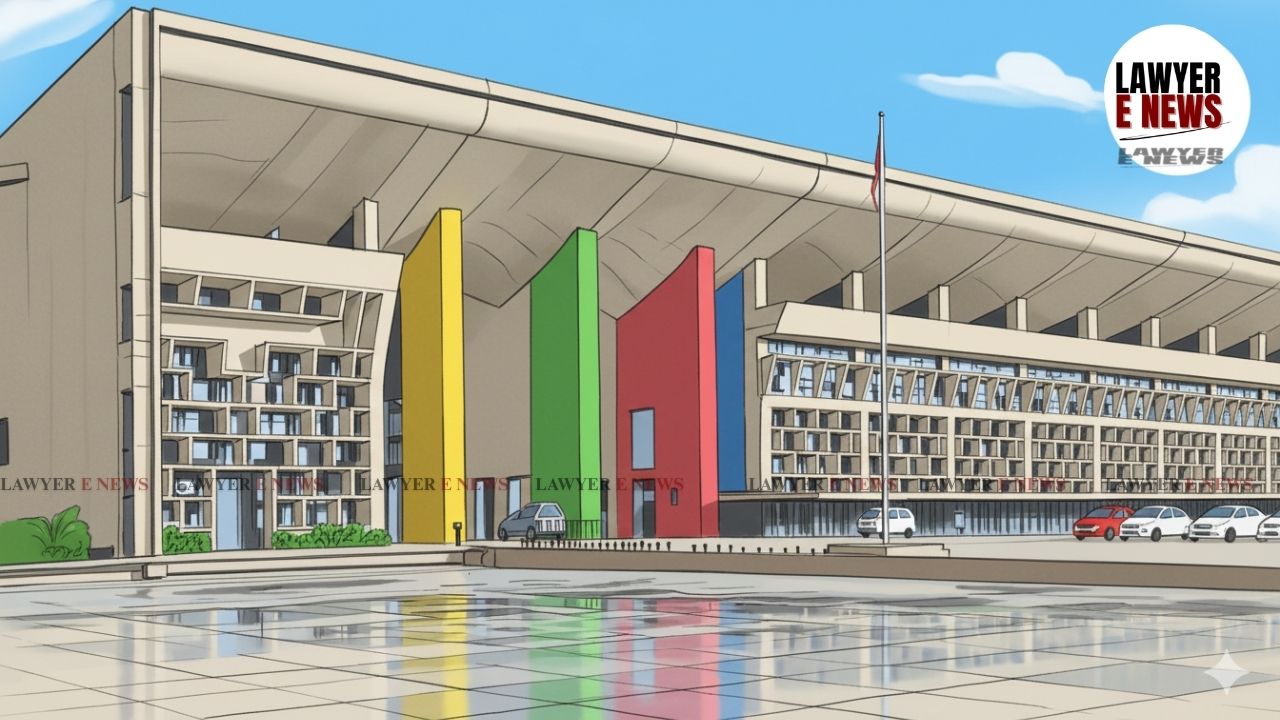
"The summary remedy of eviction under the Act of 2007 cannot be extended to a daughter-in-law who does not fall within the statutory definitions of 'children' or 'relative'." Punjab and Haryana High Court has ruled that authorities operating under the Maintenance and Welfare of Parents and Senior Citizens Act, 2007, lack the statutory jurisdiction to order the eviction of a daughter-in-law from a house owned by her father-in-law.
In a significant decision dated October 15, 2026, a Single Bench of Justice Kirti Singh set aside eviction orders issued by the Maintenance Tribunal and Appellate Authority against a woman, emphasizing that beneficial legislation cannot be extended beyond the legislative boundaries defined in the statute. The Court held that "the object of a beneficial enactment cannot justify an exercise of jurisdiction beyond the limits prescribed by the legislature."
The petitioner approached the High Court challenging the eviction order dated January 10, 2019, passed by the Maintenance Tribunal and upheld by the Appellate Authority on February 25, 2020, directing her and her husband to vacate the residential property owned by her father-in-law. The proceedings under the Senior Citizens Act had been initiated by her octogenarian father-in-law alleging threats and abusive conduct, even as parallel disputes under the Protection of Women from Domestic Violence Act, 2005, and Section 125 of the Code of Criminal Procedure remained pending.
The primary legal issue before the Court was whether authorities exercising summary jurisdiction under the Maintenance and Welfare of Parents and Senior Citizens Act, 2007, possess the authority to direct the eviction of a daughter-in-law from property owned by a senior citizen. The Court was also called upon to determine whether proprietary ownership alone empowers the Tribunal to order dispossession outside the statutory definitions.
Daughter-In-Law Falls Outside Definitions Of 'Children' And 'Relative'
Examining the statutory framework of the Senior Citizens Act, the Court highlighted that the legislature intentionally circumscribed the class of individuals against whom orders can be enforced under the enactment. Justice Kirti Singh observed that under Section 2(a) of the 2007 Act, the term "children" is specifically defined to include a son, daughter, grandson, and granddaughter, whereas Section 2(g) defines "relative" strictly with reference to the legal heir of a childless senior citizen.
The bench stressed that these explicit statutory definitions cannot be stretched or expanded merely because the daughter-in-law is married to the senior citizen's son. The Court observed that:
"The petitioner, being the daughter-in-law of respondent No.3, does not fall within the definition of 'children'. Nor can she, in the circumstances of the present case, be brought within the definition of 'relative', which is confined to a legal heir of a childless senior citizen. The fact that respondent No.4 is the son of respondent No.3 does not enlarge these statutory definitions so as to bring the petitioner within their ambit."
Division Bench Precedent Bars Summary Eviction Of Daughters-In-Law
The Single Bench anchored its findings on the Division Bench judgment of the High Court in Babu Lal Sharma v. Sushila Devi and others (decided on 15.12.2025 in LPA-701-2018), which categorically ruled that the summary remedy of eviction under the Senior Citizens Act cannot be invoked against a daughter-in-law. The Court underscored that while a senior citizen's desire to live peacefully in his own property is completely understandable, statutory tribunals cannot exceed the jurisdiction conferred by the parent Act.
The bench noted that if a senior citizen intends to seek the eviction of a daughter-in-law, the appropriate recourse lies before a competent civil court through a regular civil suit rather than a summary proceeding before the Maintenance Tribunal.
Ownership Alone Does Not Confer Summary Eviction Jurisdiction Under 2007 Act
Rejecting the argument that the senior citizen’s clear title over the property justified the eviction order under the Act, the Court clarified that proprietary ownership cannot confer extra-statutory authority on the Maintenance Tribunal.
The Court observed that:
"Consequently, the ownership of respondent No.3 over the property, though relevant to his proprietary rights, cannot by itself confer upon the authorities under the Act of 2007 a power to evict a person against whom the statutory remedy is unavailable."
Harmonisation With Protection Of Women From Domestic Violence Act
Addressing the interplay between the conflicting claims of the senior citizen and the daughter-in-law, the Court referred to the Supreme Court's landmark judgments in S. Vanitha v. Deputy Commissioner and Satish Chander Ahuja v. Sneha Ahuja. The bench noted that courts are duty-bound to harmonise the Senior Citizens Act, 2007, with the residence protections provided under the Protection of Women from Domestic Violence Act, 2005.
The Court explained that an owner's title cannot automatically extinguish a woman’s claim to a shared household, nor does a woman possess an absolute right to occupy the property irrespective of the lawful rights of its aged owner. The Court observed that:
"These decisions require the competing rights to be examined in the context of the respective statutory provisions, without treating the ownership of the property as automatically extinguishing a woman's claim to residence or, conversely, treating such a claim as an absolute right to occupy the property irrespective of the lawful rights of its owner."
Interim Floor-Sharing Arrangement Made Absolute Pending Competent Forum Orders
To protect the senior citizen and his wife from harassment while simultaneously preventing the homelessness of the daughter-in-law and her minor children, the Court sustained an interim residential arrangement previously devised on September 13, 2022. The High Court directed that the father-in-law and his wife shall exclusively occupy the ground floor, while the petitioner daughter-in-law shall reside on the first floor through a separate outside entrance without mutual interference.
The Court granted liberty to the senior citizen to approach the Magistrate dealing with the PWDV Act complaint to seek suitable alternate accommodation under Section 19(1)(f) of the PWDV Act. In view of the advanced age of the senior citizen, who is approximately 80 years old, the Court requested the Magistrate to decide any such application expeditiously and preferably within six months.
The High Court allowed the writ petition and quashed the impugned eviction orders dated January 10, 2019, and February 25, 2020, to the extent that they directed the eviction of the daughter-in-law. This ruling firmly reinforces the procedural boundary that senior citizens cannot utilize the summary provisions of the Maintenance and Welfare of Parents and Senior Citizens Act to dispossess a daughter-in-law, who must instead be sued under civil law or addressed under the Domestic Violence Act.
Date of Decision: October 15, 2026