-
by kapil
24 October 2026 9:41 AM







"The scheme of Chapter IX of the BNSS does not require the show cause notice to read like a judgment, but merely set out the substance of the information received by the SEM and the opinion formed thereof." Delhi High Court, in a significant ruling dated October 23, 2026, held that a writ court exercising jurisdiction under Article 226 of the Constitution of India will not interfere at the stage of issuance of a show-cause notice under Section 126 of the Bharatiya Nagarik Suraksha Sanhita, 2023 (BNSS) unless it is a case of "nil material, which would shock the conscience of the Court."
A Single Bench of Justice Subramonium Prasad observed that proceedings under Chapter IX of the BNSS are preventive and not punitive in nature, and the High Court cannot "sit on the arm-chair of the SEM to decide as to whether the material/information is sufficient or not."
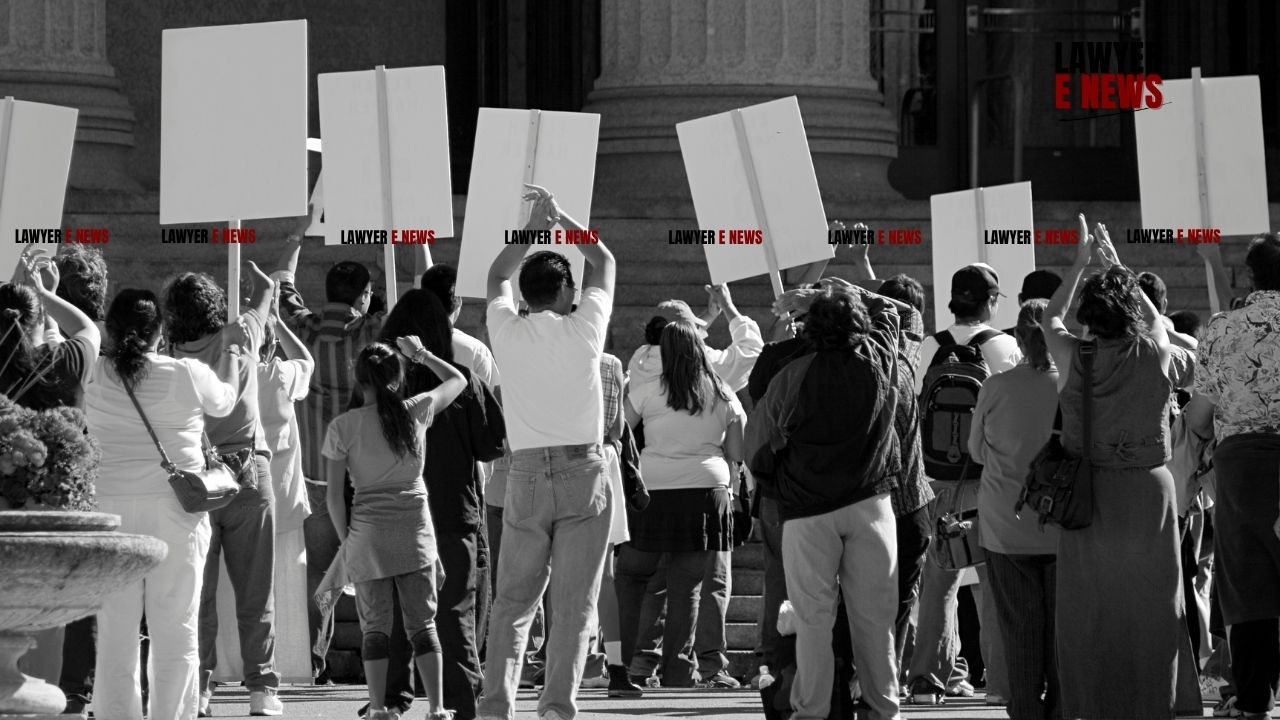
The petitioner, the National President of the All India Students' Association (AISA), challenged a show-cause notice dated October 17, 2026, issued by the Special Executive Magistrate (SEM), New Delhi District, under Sections 126 and 130 of the BNSS. The notice required her to show cause why she should not execute a personal bond of Rs. 10,000 with one surety in the like amount under Section 135(3) of the BNSS to keep the peace during the enquiry period. The notice was issued following her detention at Mandi House on October 16, 2026, during public protests concerning the Election Commission of India, allegedly in violation of prohibitory orders promulgated under Section 163 of the BNSS.
The primary question before the court was whether the High Court under Article 226 should quash a show-cause notice issued under Sections 126 and 130 of the BNSS on grounds of insufficient preliminary inquiry or reliance on police kalandara. The court was also called upon to determine whether a composite notice fulfilling the mandates of both Section 126 and Section 130 of the BNSS is legally sustainable.
Preventive Character Of Chapter IX BNSS
The High Court began by examining the statutory framework of Chapter IX of the BNSS, spanning Sections 126 to 137, which deals with security for keeping the peace and good behaviour. The court emphasized that the powers conferred on Executive Magistrates are fundamentally preventive and not punitive, designed to nip potential disturbances in the bud rather than punish completed offences. Citing the Supreme Court ruling in Prakash Chand Sachdeva v. State, the bench noted that action under these provisions is anchored upon the subjective satisfaction of the Magistrate regarding an apprehension of breach of peace or disturbance of public tranquillity.
Limited Scope Of Judicial Review Under Article 226 At Show-Cause Stage
Evaluating the threshold for judicial intervention at the notice stage, the court reiterated the well-settled principle that extraordinary writ jurisdiction should not be invoked to stall statutory inquiries. The bench referred to the Supreme Court's decisions in Special Director v. Mohd. Ghulam Ghouse and Union of India v. Vicco Laboratories, which held that interference at the show-cause stage must be rare, restricted strictly to instances of patent lack of jurisdiction or gross abuse of process. The court also relied on the Apex Court's recent ruling in J. Sri Nisha v. Special Director, Directorate of Enforcement to reiterate that factual adjudications cannot be pre-empted by the writ court.
"The Court, at this stage, does not sit on the arm-chair of the SEM to decide as to whether the material/information is sufficient or not and unless it is a case of nil material, which would shock the conscience of the Court, the Writ Court at the stage of issuance of a show cause notice, will not interfere."
Validity Of Composite Notice Under Sections 126 And 130 BNSS
Addressing the petitioner's procedural objection against the composite format of the notice, Justice Prasad aligned the court with the Full Bench decision of the Bombay High Court in Farhan Nasir Khan v. State of Maharashtra. The court ruled that there is no statutory mandate requiring a separate preliminary order and a separate notice if all statutory requisites are comprehensively met in a single communication. The bench held that if the substance of the information received and the proposed bond conditions are set out with sufficient clarity to inform the noticee of the case against them, a combined notice satisfies the mandate of Sections 126 and 130 of the BNSS.
"There need not be a separate show cause notice under Section 126 and a separate order under Section 130 of the BNSS, if the requirements of both the provisions are met with in a common notice."
Even A Single Incident Can Form Basis For Preventive Action
Distinguishing the authorities cited by the petitioner, including Asha Pant v. State and Tavinder Kumar v. State, the bench clarified that preventive proceedings are determined by the propensity and gravity of the threat rather than a arithmetic tally of prior incidents. The court observed that the record before the SEM was not merely hearsay but was corroborated by a police kalandara, three distinct General Diary entries from different police stations, and references to past FIRs. The bench pointed out that the noticee was alleged to have led a march raising defiant slogans against prohibitory orders under Section 163 of the BNSS in a bustling commercial hub with high footfalls and critical transit links.
"Even one incident is sufficient for initiating proceedings under Chapter IX of the BNSS, if the circumstances so suggest that there is an apprehension that such a person will indulge in further incidents of the same nature which can breach peace and disturb public tranquillity."
Mandatory Safeguards Before Insisting On Interim Bonds Under Section 135(3) BNSS
While upholding the legality of the show-cause notice, the court issued critical procedural caveats regarding the enforcement of interim bonds. The bench underscored that the Constitution Bench ruling in Madhu Limaye v. Sub-Divisional Magistrate, Monghyr requires strict adherence to safeguards before an individual's personal liberty can be subjected to bond conditions or detention in default. Justice Prasad directed that the SEM must furnish all underlying material to the petitioner upon her appearance, observe principles of natural justice, and satisfy the statutory prerequisites of Section 135 of the BNSS before insisting on any bond.
Dismissing the writ petition, the High Court declined to interfere with the show-cause notice dated October 17, 2026, holding that the SEM possessed sufficient material to record a prima facie subjective satisfaction under Chapter IX of the BNSS. The court preserved the petitioner's right to mount appropriate legal challenges at subsequent stages of the statutory inquiry while directing the Magistrate to strictly abide by procedural safeguards before directing the execution of any bond.
Date of Decision: 23rd October, 2026
Case Title: Neha v. The State NCT of Delhi | W.P.(CRL) 3342/2026 & CRL.M.A. 33383/2026
Bench: Hon'ble Mr. Justice Subramonium Prasad