-
by kapil
17 October 2026 7:23 AM








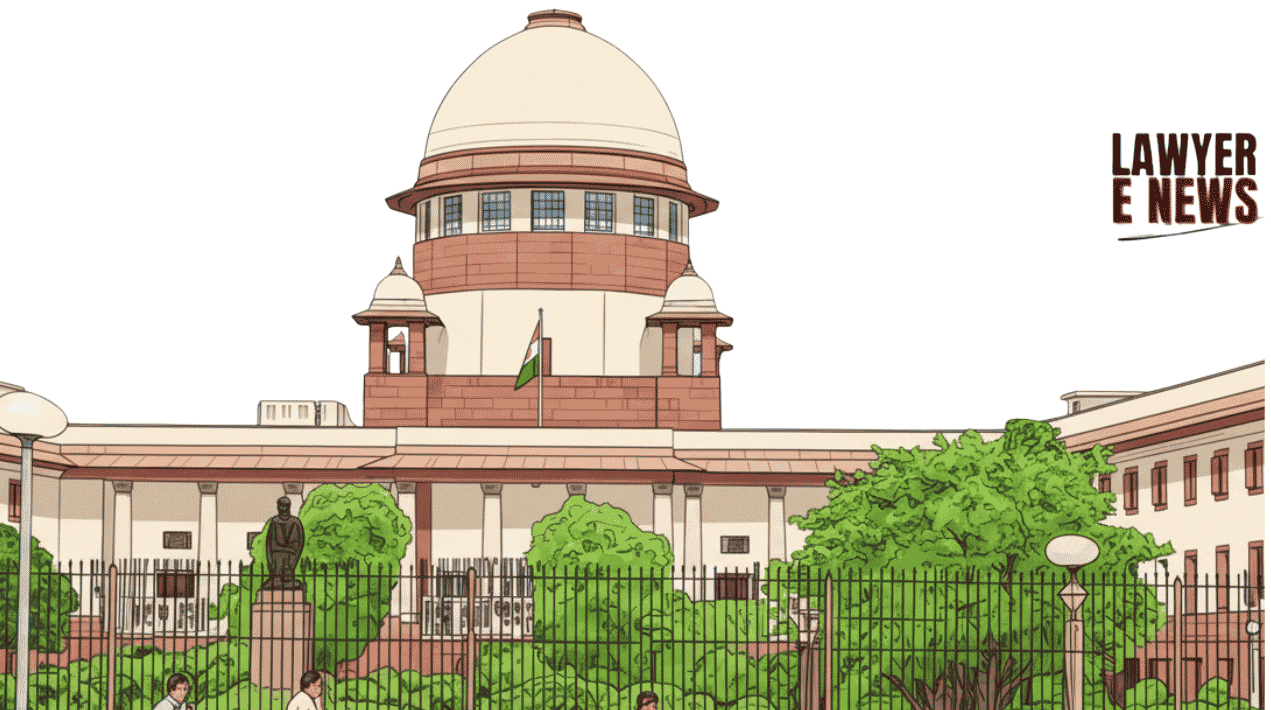
"There is clear lack of uberimma fides, which is the foundation for invoking the equitable and discretionary jurisdiction for grant of bail." Supreme Court, in a significant ruling dated 16 October 2026, held that an accused seeking discretionary relief such as bail must exhibit utmost good faith (uberrima fides), ruling that pursuing simultaneous proceedings across multiple forums while suppressing adverse orders amounts to an abuse of the judicial process.
A bench comprising Justice Dipankar Datta and Justice Sheel Nagu observed that while an accused possesses the legal right to challenge an arrest and apply for bail, "such conduct of pursuing remedies parallelly, particularly without adequate disclosure, clearly amounts to abuse of the process of law." The court laid down critical procedural directives for High Court registries regarding the computation of listing timelines that coincide with court vacations.
The appellant, Senior Intelligence Officer, Directorate General of Service Tax Intelligence, initiated prosecution against the respondent proprietor under Sections 16(2)(b), 132(1)(b), 132(1)(c), and 132(1)(f) punishable under Section 135 of the Central Goods and Services Tax Act, 2017 for alleged fraudulent input tax credit evasion exceeding Rs. 43 crore. Following his arrest on 16 September 2025 and subsequent rejections of bail by the trial and Sessions courts, the respondent approached the Karnataka High Court under Section 483 of the Bharatiya Nagarik Suraksha Sanhita, 2023, where a Single Judge granted him bail on 26 December 2025 during the winter vacation. Aggrieved by the urgent vacation listing, the denial of an effective adjournment to its Standing Counsel, and the suppression of an ongoing writ petition where ad-interim release was refused, the appellant approached the Supreme Court.
The primary question before the court was whether the pursuit of parallel bail remedies across different forums and the suppression of an order refusing ad-interim release disentitles an accused to discretionary bail on the grounds of abuse of process. The court was also called upon to determine whether a High Court Registry can list a matter directed to be listed "two weeks hence" during a court vacation without specific judicial authorization.
Appearing Panel Counsel Assisting The Court Negates Total Absence Of Representation
The Supreme Court first addressed the appellant's grievance regarding the violation of natural justice, wherein it was contended that the High Court proceeded with the bail hearing without the presence of the appellant's Senior Standing Counsel. Perusing the video recording and the official transcript of the High Court proceedings, the bench observed that while a panel counsel representing the appellant had faintly prayed for an adjournment, he eventually proceeded to argue the matter on merits upon being declined relief.
The bench remarked that as an officer of the court, the panel advocate chose to assist the Single Judge by resisting the bail plea, and thus it could not be held that the appellant was entirely unrepresented. The court noted that while it was accurate that the department could not be represented by its chosen Senior Standing Counsel, the panel counsel did advance legal submissions on merits before the High Court.
Parallel Remedies And Concealment Of Refused Interim Relief Constitutes Abuse Of Process
The bench expressed grave dissatisfaction with the procedural maneuvering adopted by the respondent to obtain bail during the winter vacation. The court highlighted that while the Section 483 BNSS bail petition was pending before the High Court since 9 December 2025, the respondent filed a subsequent bail plea before the Sessions Court on 10 December 2025, which was dismissed without such fact being brought to the High Court's attention.
The court further noted that on 22 December 2025, the respondent instituted a writ petition under Article 226 of the Constitution challenging his arrest and seeking ad-interim release on the express assertion that Section 483 BNSS was not an efficacious remedy. Although the High Court explicitly refused ad-interim release in the writ petition on 22 December 2025, the respondent moved an urgent memo later that same day to list the criminal bail petition before the Vacation Bench on 26 December 2025, completely concealing the refusal of ad-interim release.
"He indulged in suppressio veri and suggestio falsi."
Uberrima Fides Is The Prerequisite For Equitable And Discretionary Bail Jurisdiction
Condemning this conduct, the Supreme Court ruled that such deliberate non-disclosure stripped the respondent of clean hands, directly vitiating the equitable foundation required for seeking liberty. The bench noted that the respondent engaged in blatant forum shopping and kept judicial authorities entirely in the dark to steal a march over the prosecution.
The bench held that the foundational requirement of uberrima fides (utmost good faith) was conspicuously absent, underscoring that discretionary bail jurisdiction cannot be extended to shelter litigants who manipulate court processes. The judges cautioned that had the allegations involved a heinous offence rather than an economic offence, the court would have taken an exceptionally severe view of such deceitful conduct.
"To have obtained listing of a petition, without adequate notice to the appellant, was clearly an attempt to steal a march by even misleading the Court."
Listing Timelines Falling In Vacation Must Ordinarily Exclude Vacation Period
The Supreme Court critically analyzed how the matter came to be listed during the winter vacation despite the earlier regular bench directing the matter to be listed "two weeks hence" with directions to file objections. The court deprecated the practice of using urgent vacation memos to circumvent procedural timelines when the original bench had not specifically directed a vacation listing.
The bench laid down authoritative guidelines for High Court registries, ruling that when a bench directs listing after a specified period and that date happens to fall in the midst of a vacation, the registry must compute the period excluding the vacation. The court clarified that matters should only be placed before a Vacation Bench if specifically made returnable on a vacation date by the court or if an express judicial direction exists to place it before the Vacation Bench, subject to the applicable High Court rules.
Final Directions: Regular Bail Converted To Interim Bail And Matter Remitted
Weighing the completed investigation and the maximum five-year statutory sentence under the CGST Act against the egregious abuse of process, the bench declined to cancel bail outright but set aside the final disposal of the criminal petition. The court revived Criminal Petition No. 16884 of 2025 before the Single Judge of the Karnataka High Court for a fresh decision on merits.
The Supreme Court directed that the respondent shall continue on interim bail on the earlier terms and conditions until further orders are passed by the Single Judge. The appellant was granted peremptory liberty to file its counter-affidavit within two weeks, followed by a one-week rejoinder timeline for the respondent, with a request to the Single Judge to dispose of the revived petition afresh on merits preferably by the end of 2026.
The Supreme Court disposed of the appeal by setting aside the final disposal of the bail petition and converting the regular bail into interim bail, remitting the case for a fresh hearing before the High Court. The decision decisively reinforces that uberrima fides is indispensable when invoking discretionary bail jurisdiction and establishes that registries cannot list matters during vacations on timeline computation alone without express judicial authorization.
Date of Decision: 16 October 2026