-
by sayum
23 October 2026 1:16 PM







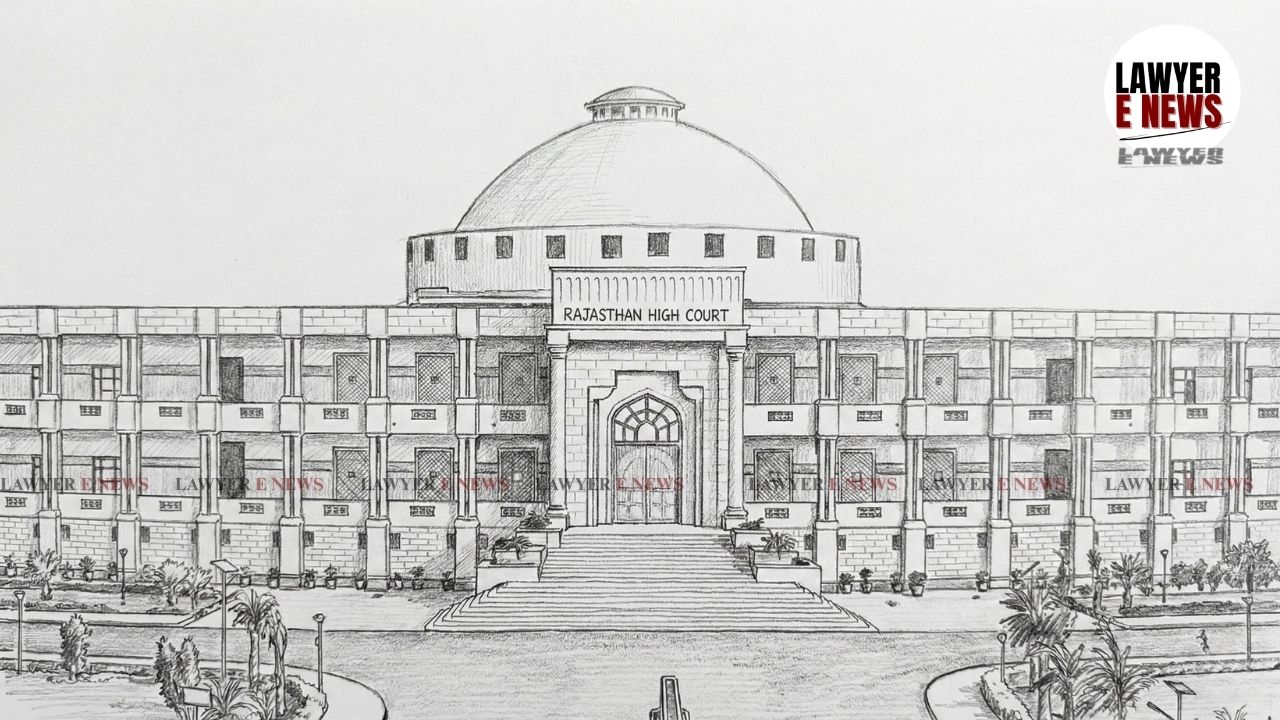
"The fact that the petitioner may not himself have physically prepared or forged the medical certificate does not, by itself, absolve him of the offence punishable under Section 471 IPC." Rajasthan High Court, in a significant ruling dated October 6, 2026, held that an accused cannot be discharged of charges under Section 471 of the IPC—relating to the use of a forged document as genuine—simply by arguing that they did not personally forge the document.
A bench of Justice Sunil Beniwal observed that the liability under Section 471 IPC is independent of the actual act of forgery, turning instead on the "requisite knowledge or reason to believe" regarding the document's forged character at the time of its use in legal proceedings.
The dispute arose from a 2007 complaint alleging that the petitioner had produced a forged medical certificate before a Civil Court to justify his absence and reopen evidence. After a long-drawn legal battle involving multiple rounds of investigation and revisions, the trial court took cognizance of offences under Sections 465 and 471 IPC and subsequently dismissed the petitioner’s application for discharge under Section 258 CrPC. The petitioner challenged these orders, contending that he was unaware of the forgery and had been misled by third-party intermediaries.
The primary question before the court was whether the petitioner could be held liable under Section 471 IPC despite his claim of lacking knowledge of the document's forged nature. The court was also called upon to determine whether the dismissal of a discharge application under Section 258 CrPC was legally sustainable when prima facie material existed.
Nature Of Section 471 IPC Liability
The court clarified that the core of Section 471 IPC lies in the act of using a document known or believed to be forged. The court noted that even if the petitioner did not physically create the document, his admission of paying money to an intermediary to "arrange" the certificate creates a strong prima facie case of suspicion.
"The allegation under Section 471 IPC concerns the use of a forged document as genuine with the requisite knowledge or reason to believe regarding its forged character. Thus, the question whether the petitioner himself prepared the document is distinct from the question whether he knowingly or having reason to believe the document to be forged, used it as genuine before the Civil Court."
Limitations Of Section 258 CrPC
Addressing the petitioner's reliance on Section 258 CrPC, the court emphasized that this provision does not grant an accused an absolute right to seek termination of proceedings. Where the record discloses a prima facie case, the court is duty-bound to proceed toward adjudication.
"The power under Section 258 Cr.P.C., even assuming its applicability, cannot be invoked as a matter of right for terminating proceedings where the material on record discloses a prima facie case requiring adjudication."
Evidence Of Fabrication
The court highlighted findings from the police investigation, which revealed that neither the doctor nor the hospital mentioned in the certificate existed at the cited particulars. These objective findings contradict the petitioner's claim of innocence and underscore the necessity of a full-fledged trial to determine his actual knowledge.
"These circumstances are sufficient to give rise to a strong prima facie suspicion regarding the document being forged and fabricated."
The High Court affirmed the lower court's orders, ruling that the petitioner's defence—regarding the lack of mens rea and inconsistent statements by the complainant—are matters of evidence that must be adjudicated during the trial. Consequently, the Court dismissed both criminal miscellaneous petitions, finding no jurisdictional error or perversity in the trial court’s decision to proceed with the case.
Date of Decision: 06 October 2026