-
by sayum
09 October 2026 12:19 PM







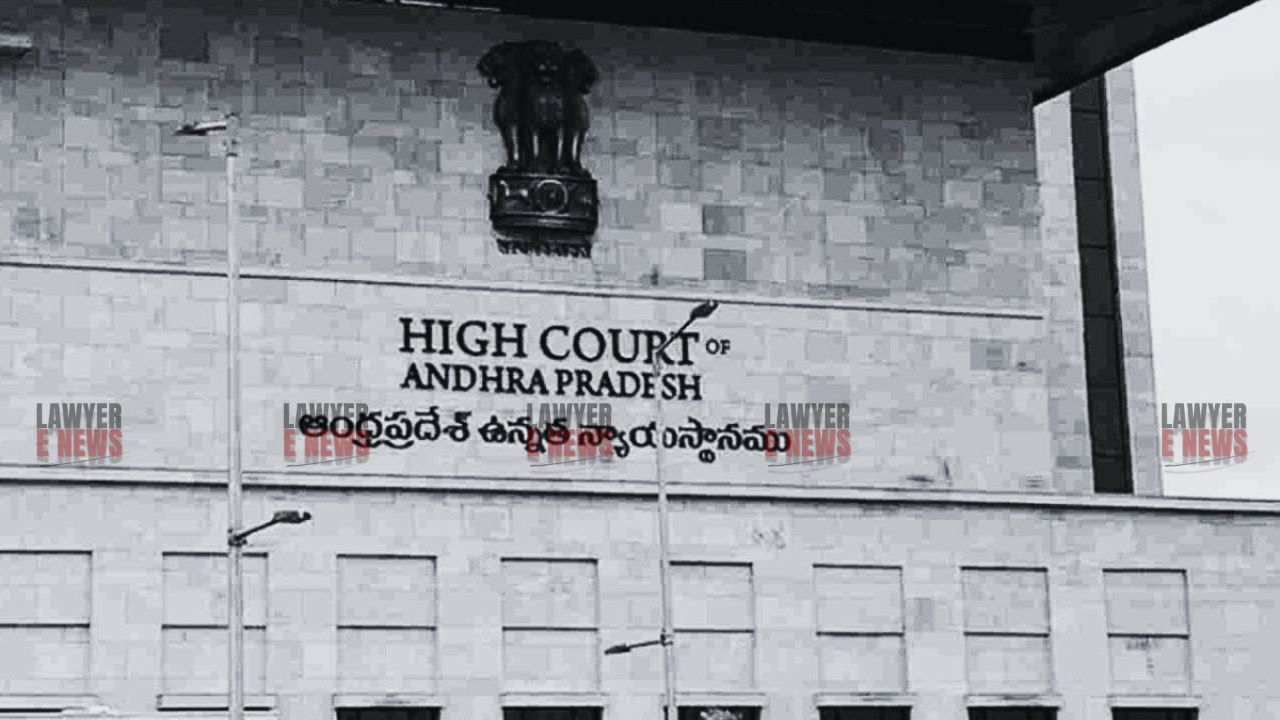
"The mere existence of power under Section 311 Cr.P.C. does not confer an absolute right upon a party to have a witness recalled. The Court must be satisfied that the proposed evidence is essential for the just decision of the case and that the application is bona fide and necessary in the circumstances of the case." Andhra Pradesh High Court
The Andhra Pradesh High Court, in a ruling dated September 18, 2026, held that the discretionary power to recall a witness under Section 311 of the CrPC cannot be invoked to fill evidentiary gaps or supplement a party's case after the trial has reached the stage of arguments.
A bench of Smt. Justice Sunitha Gandham observed that while the provision is wide, it is intended to advance the cause of justice rather than provide litigants with repeated opportunities to rectify earlier lapses in strategy.
The petitioner, an accused in a cheque bounce case under Section 138 of the NI Act, sought to recall his own evidence as a defence witness (DW.1) to mark certified bank documents. His intent was to establish that he was not employed at the address mentioned in the promissory note at the time of its alleged execution. Notably, the petitioner had previously filed an application under Section 91 CrPC to summon these same documents, which was dismissed by the trial court on merits.
The primary question before the court was whether the trial court erred in refusing to exercise its jurisdiction under Section 311 CrPC to recall the accused as a witness for the purpose of marking documents. The court also addressed whether a party can seek to introduce evidence at the stage of arguments after failing to elicit the same during the cross-examination of the complainant or through earlier procedural applications.
Scope of Section 311 CrPC
The court emphasized that Section 311 CrPC confers wide discretionary power to recall or re-examine witnesses at any stage of the trial. However, this power is not a tool for litigants to correct strategic oversights. The bench clarified that the determinative factor for exercising this jurisdiction is whether the evidence is truly "essential for the just decision of the case."
Judicious Exercise of Discretion
Referring to the Supreme Court’s mandate in Zahira Habibullah H. Sheikh v. State of Gujarat, the High Court noted that discretion must be exercised with due application of mind. In the present case, the petitioner failed to demonstrate why the documents were not produced during his initial testimony or why relevant questions were not put to the complainant (PW.1) during cross-examination.
No Absolute Right to Recall
The court observed that allowing a recall after the conclusion of evidence and at the stage of arguments would essentially permit the accused to "fill up lacunae" in the defence. Because the petitioner’s earlier application under Section 91 CrPC for the same documents had already been dismissed on merits, the current request was viewed as a repetitive attempt to prolong proceedings without any change in circumstances.
"Permitting recall in such circumstances, merely to fill an omission in the evidence after completion of the trial evidence, would result in permitting a party to improve upon or supplement its case at a belated stage."
Absence of Material Irregularity
Finding no perversity or legal error in the trial court's order, the High Court declined to interfere. It underscored that the trial court must remain free to adjudicate the main complaint on its own merits without being influenced by the unsuccessful attempts to recall evidence. Consequently, the criminal petitions were dismissed, and the trial court was directed to proceed with the matter.
The High Court’s decision reinforces the principle that judicial discretion under Section 311 CrPC is strictly limited to ensuring a fair trial and cannot be weaponized to frustrate the finality of criminal proceedings. By denying the petition, the court reiterated that litigants must exercise due diligence in presenting their evidence at the appropriate stages of trial.
Date of Decision: 18 September 2026