-
by sayum
18 October 2026 12:12 PM







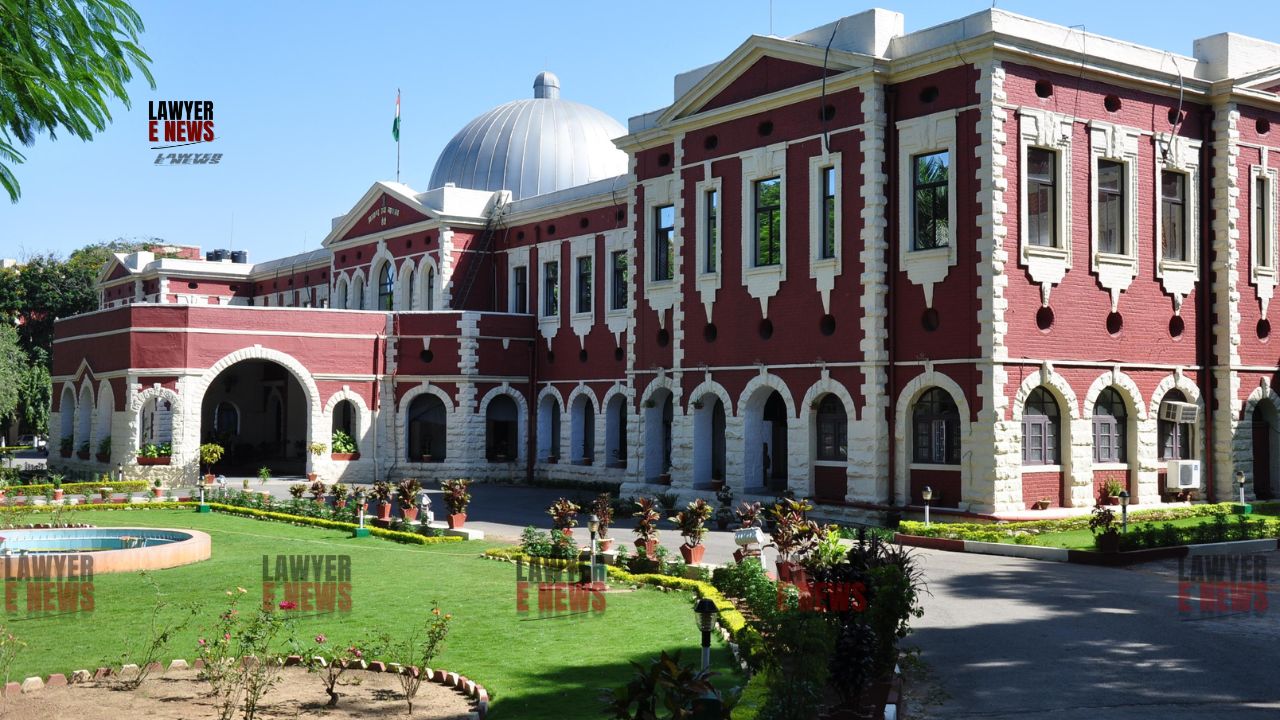
"The law is settled that the order of permanent alimony/ maintenance could be passed while passing a decree for dissolution of marriage and such order can be passed even on the basis of oral application made by the parties." High Court of Jharkhand, in a significant rulin g, held that a court exercising jurisdiction under the Hindu Marriage Act, 1955 is fully empowered to award permanent alimony and maintenance under Section 25 even on an oral application made by a party during the dissolution of marriage.
A division bench comprising Chief Justice M. S. Sonak and Justice Manoj Prasad affirmed the dissolution of marriage under Section 13(1-A)(ii) of the Act, 1955 while directing the respondent-husband to pay monthly maintenance to the appellant-wife and their minor son. Writing for the bench, Justice Manoj Prasad observed that statutory relief under Section 25 is intended to ensure maintenance and support and does not fail merely for want of a separate formal written petition.
The appellant-wife had approached the High Court challenging a judgment and decree dated May 23, 2022, passed by the Principal Judge, Family Court, Garhwa, which dissolved the marriage under Section 13(1-A)(ii) of the Hindu Marriage Act, 1955 due to non-restitution of conjugal rights for over one year following an unexecuted Section 9 decree. During the pendency of the appeal, the appellant submitted that since the respondent-husband had contracted a second marriage and fathered a child, restitution of conjugal life was impossible, thereby restricting her claim to the grant of permanent alimony.
The primary questions before the High Court were whether the appellant was entitled to permanent alimony under Section 25 of the Hindu Marriage Act, 1955 despite the absence of a formal written application, and whether the Family Court committed a jurisdictional error in framing additional issues regarding cruelty without appropriate pleadings.
Oral Application Sufficient For Relief Under Section 25
Addressing the maintainability and procedural prerequisites of an alimony claim, the High Court clarified the broad ambit of Section 25(1) of the Hindu Marriage Act, 1955. The bench underscored that the statutory framework enables courts to secure maintenance at the time of passing the decree or at any point subsequent thereto.
The court reiterated settled legal jurisprudence, explaining that technical procedural omissions cannot defeat a dependent spouse's entitlement to financial support. The bench emphasized that matrimonial courts possess the requisite jurisdiction to evaluate and award permanent alimony on an oral prayer raised in the course of proceedings.
"The law is settled that the order of permanent alimony/ maintenance could be passed while passing a decree for dissolution of marriage and such order can be passed even on the basis of oral application made by the parties."
Non-Compliance With Disclosure Mandate In Rajnesh v. Neha
The bench scrutinized the conduct of the respondent-husband, who had initially failed to submit an affidavit of assets and liabilities as mandated by the Supreme Court in Rajnesh v. Neha & Anr. (2021) 2 SCC 324. A coordinate bench had specifically directed compliance on August 13, 2026, to assess financial capacity for deciding permanent alimony.
The court noted that when the husband finally filed an affidavit during the arguments, it contained evasive statements regarding his true financial capacity and assets. In contrast, the appellant established that she was serving as a Sahiya under the National Rural Health Mission on a nominal honorarium of Rs. 2,000 per month, had no immovable properties, and shouldered the expenses of raising their minor child alone.
"Constrained by the materials available before us and the circumstances appearing in this case, we are of the considered view that it would be just, fair and reasonable to award monthly maintenance of Rs.10,000/- each for the wife and the minor son, which shall be paid to the appellant-wife."
"Framing of issue on the point of cruelty by the appellant on the respondent appears to be beyond pleading, which ought not to have been framed without an amendment in the pleading."
Courts Cannot Frame Issues Beyond Pleadings Without Formal Amendment
Examining the legality of the trial court's procedure, the bench took serious exception to the Family Court re-casting issues to incorporate allegations of cruelty by the wife against the husband. The record demonstrated that the trial court introduced this ground without any supporting pleadings, formal application, or substantive hearing.
The High Court laid down that neither evidence can be recorded nor findings returned on issues extraneous to the pleadings. While the issue regarding the husband's alleged cruelty was permissible as a defense justifying the wife's separate living, attributing substantive cruelty to the wife without an amendment of pleadings was held to be legally unsustainable.
Dissolution Upheld For Failure To Comply With Section 9 Decree
Despite the procedural irregularities in framing cruelty issues, the High Court declined to interfere with the final decree of divorce. The court observed that the core statutory ground under Section 13(1-A)(ii) of the Hindu Marriage Act, 1955 remained fully satisfied, as the decree for restitution of conjugal rights had attained finality and remained uncomplied with for over a year.
The bench concluded that the respondent was entitled to a decree for dissolution of marriage on the ground of non-resumption of cohabitation. The court made it clear that the monthly maintenance order would take effect from the date of the appellate judgment and would operate without prejudice to the recovery of prior accumulated maintenance arrears of nearly Rs. 3 lakhs.
The High Court dismissed the appeal against the dissolution of marriage but modified the decree to grant Rs. 10,000 monthly maintenance each to the appellant-wife and her minor child under Section 25 of the Hindu Marriage Act, 1955. The ruling firmly establishes that courts exercising matrimonial jurisdiction have inherent statutory power to award permanent alimony upon an oral prayer, preventing procedural hyper-technicalities from defeating substantive matrimonial justice.
Date of Decision: 15 October 2026