-
by sayum
22 October 2026 11:50 AM







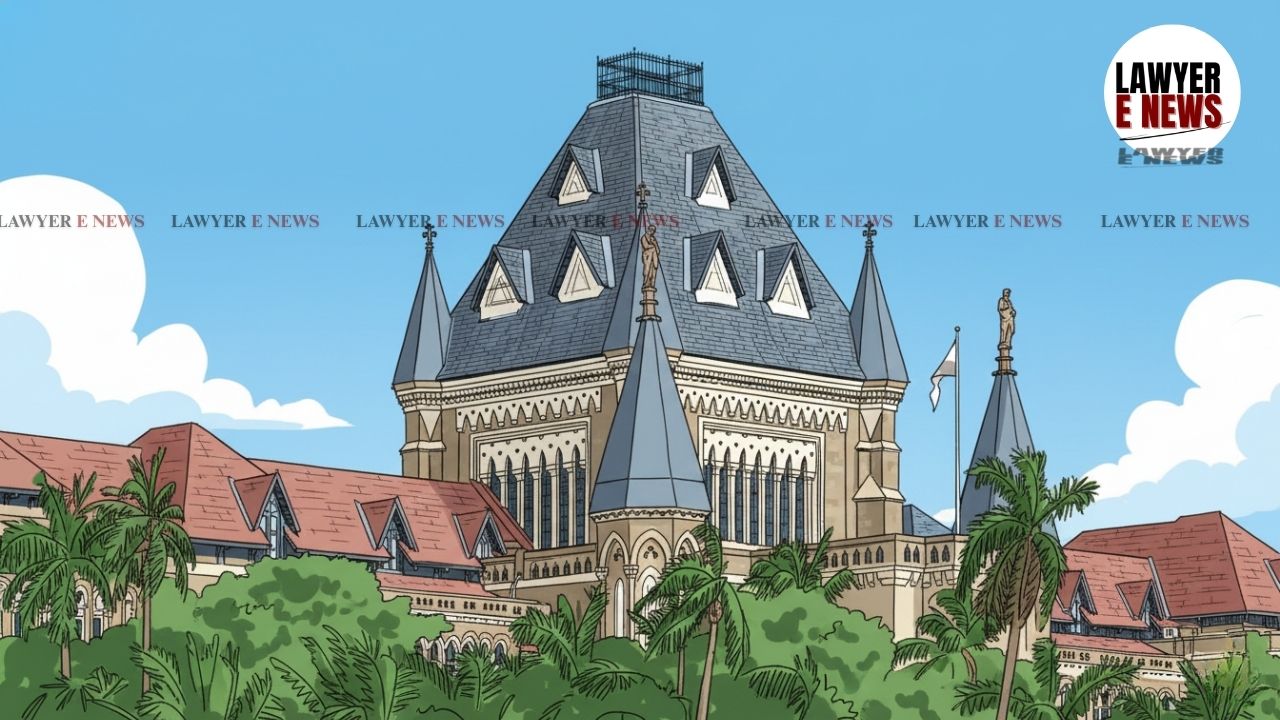
"If one Testamentary Petition establishes that a particular Will is genuine and operative, that finding can have a direct and substantial bearing upon the estate available for partition and the shares of the parties. Separate adjudication may result in duplication of evidence and the possibility of inconsistent findings." Bombay High Court, in a significant ruling delivered on October 14, 2026, held that a partition suit pending before a civil court can be transferred and clubbed with testamentary proceedings before the High Court under Section 24 of the Code of Civil Procedure, 1908, when the validity of a Will directly impacts the assets available for partition.
Emphasising the primacy of probate jurisdiction and the need to prevent contradictory outcomes, Justice Rajesh S. Patil observed that "it will be in the interest of the parties, if the Partition Suit pending in the Bombay City Civil Court is transferred back to this High Court and the Single Judge of this Court hearing the two Testamentary Suits should decide the Suits for partition as well."
The applicant sister filed a partition suit against her brother concerning their deceased father’s estate, which was originally instituted in the High Court but stood transferred to the Bombay City Civil Court following an upward revision of pecuniary jurisdiction in January 2024. Subsequently, both siblings initiated rival testamentary proceedings before the High Court seeking letters of administration in respect of the deceased father's Will, in which caveats were lodged. The applicant then moved the High Court under Section 24 CPC seeking transfer of the partition suit back to the High Court to be heard alongside the testamentary proceedings.
The primary question before the court was whether a civil suit for partition pending before the City Civil Court ought to be transferred under Section 24 CPC to the High Court to be tried jointly with testamentary petitions concerning the same estate to avoid conflicting adjudications.
Overlap In Subject Matter Between Partition Suit And Testamentary Petitions
The Court examined the schedule of properties listed in the partition suit as well as the two pending testamentary petitions filed by the siblings. Upon analyzing the property schedules, the Court noted that out of the four properties in question, three properties were indisputably common across all three proceedings, while the dispute regarding the fourth property pertained merely to its specific identification within the same housing society.
The bench highlighted that the applicant was the plaintiff in the civil suit and the respondent brother was the primary contesting defendant. Given that both parties were actively contesting each other's claims in the testamentary jurisdiction through caveats, the Court found that the dispute between the siblings essentially concerned the exact same pool of family assets.
Primacy Of Probate Court Over Determination Of Partible Estate
Reiterating the settled position of law, the High Court placed extensive reliance on the Supreme Court ruling in Shamita Singha v. Rashmi Ahluwalia (2020) 7 SCC 152. The bench noted that the probate court exercises primacy in determining the validity and execution of a testamentary instrument, which inherently dictates what constitutes the deceased's partible estate.
Quoting Shamita Singha, the Court noted that the outcome of probate proceedings has a direct bearing on a suit for partition because if letters of administration or probate are granted, the covered assets may cease to be available as part of the general partible estate. The bench stressed that the principle of "first past the post" does not govern transfer petitions under Section 24 or Section 25 CPC, as such discretionary powers are guided strictly by the ends of justice.
"The Probate Court having primacy in determining the question of grant of letters of administration or probate, it would be expedient for the ends of justice that the High Court... which is hearing the testamentary petition, should decide the suit for partition as well."
Distinguishing Inapplicable Precedents On Civil Court Jurisdiction
The respondent brother had resisted the transfer by citing the Supreme Court decisions in Kanwarjit Singh Dhillon v. Hardyal Singh Dhillon (2007) 11 SCC 357, Pasupati Nath Das v. Chanchal Kumar Das (2018) 18 SCC 547, and Kulwinder Kaur v. Kandi Friends Education Trust (2008) 3 SCC 659. The Court methodically distinguished each of these rulings, clarifying that Kanwarjit Singh Dhillon dealt with a post-probate suit where a civil court's jurisdiction had been wrongly ousted on a preliminary issue, which had already been explained in Shamita Singha.
Justice Patil further observed that Kulwinder Kaur pertained to an arbitrary exercise of Section 24 powers without prima facie satisfaction, which was not the case here. Similarly, the bench observed that the Single Judge ruling in Shanta Chatterjee v. A. Chatterjee was inapplicable since that matter did not arise under Section 24 CPC and the trial there had already concluded with evidence being closed.
Stage Of Proceedings Justifies Joint Adjudication To Avoid Inconsistent Findings
The bench underscored that in all three pending proceedings—the partition suit before the City Civil Court and the two testamentary petitions before the High Court—evidence had not yet commenced and issues were yet to be framed. In fact, an application for condonation of delay in filing the written statement was still pending in the City Civil Court.
Following the precedent in Markand Balabhai Desai v. Dhimant Balabhai Desai 2018 SCC OnLine Bom 13468, where a partition suit was transferred to be clubbed with testamentary proceedings, the Court observed that conducting separate trials would inevitably lead to duplication of oral and documentary evidence and create an imminent hazard of contradictory findings between different forums.
"If one Testamentary Petition establishes that a particular Will is genuine and operative, that finding can have a direct and substantial bearing upon the estate available for partition and the shares of the parties."
Allowing the application under Section 24 CPC, the High Court directed that Suit No. 6934 of 2024 pending before the Bombay City Civil Court be transferred to the High Court and clubbed for hearing alongside Testamentary Petition No. 2647 of 2024 and Testamentary Petition No. 5014 of 2024. This ensures that the genuineness of the testamentary disposition and the consequential distribution of the estate are adjudicated simultaneously by the same forum.
Date of Decision: 14 October 2026