
-
by sayum
25 August 2026 12:32 PM







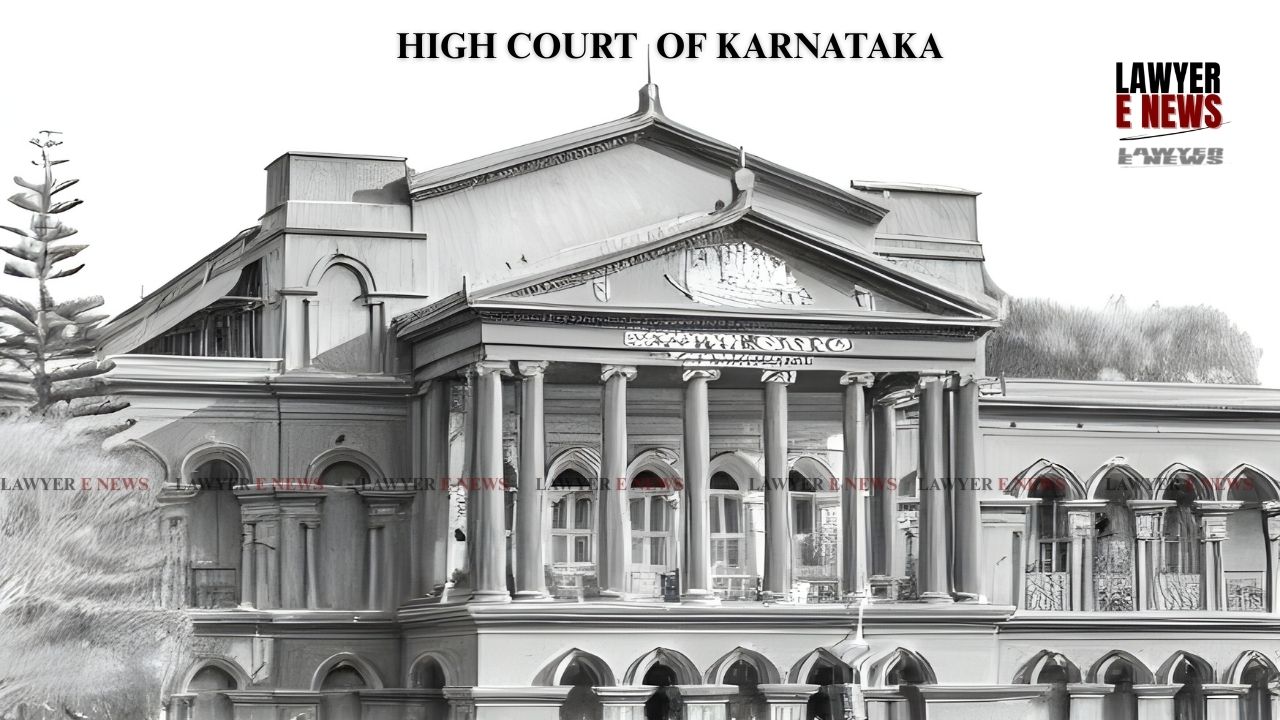
“Absence of Maintenance Clause Does Not Defeat Section 23 – Obligation Can Be Implied from Trust and Conduct”, In a powerful reaffirmation of the welfare object of the Maintenance and Welfare of Parents and Senior Citizens Act, 2007, the Karnataka High Court has held that an express maintenance clause in a gift deed is not mandatory for invoking Section 23. The Court declared that where a senior citizen transfers property on the assurance of care and is subsequently neglected, the transaction stands vitiated by “constructive fraud” and is liable to be annulled.
Justice Suraj Govindaraj quashed the concurrent orders of the Assistant Commissioner and Deputy Commissioner and annulled a gift deed executed by an 84-year-old father in favour of his daughters.
The Court restored the petitioner’s name in revenue records and made it clear that derivative claimants cannot assert independent rights once a transfer is annulled under Section 23.
Gift Made on Assurance of Care
The petitioner, an 84-year-old senior citizen and absolute owner of agricultural land in Tumakuru Taluk, executed a registered gift deed dated 19.04.2023 in favour of his daughters. According to him, the transfer was made solely on their assurance that they would provide food, shelter, medical care, and support in his old age.
Soon after mutation of revenue records, the daughters allegedly neglected him. The petitioner approached the Assistant Commissioner under Section 23(1) of the 2007 Act seeking annulment of the gift deed.
One daughter, Respondent No.5, filed a memo stating she had “no objection” to annulment. However, the grandson (Respondent No.6), impleaded as legal representative of the deceased daughter, opposed the proceedings.
Both the Assistant Commissioner and Deputy Commissioner rejected the application solely on the ground that the gift deed did not contain an express clause obligating the daughters to maintain their father.
Aggrieved, the senior citizen invoked Article 227 of the Constitution before the High Court.
“Section 23 Embodies Constructive Fraud – Focus Is on Substance, Not Form”
Justice Suraj Govindaraj held that the authorities had fundamentally misunderstood the statutory scheme. The Court clarified that Section 23 does not require an express recital of maintenance in the instrument of transfer.
The Court observed:
“Section 23(1) does not mandate that the condition of maintenance must be expressly incorporated in the instrument of transfer. The legislative emphasis is not on the form of the condition, but on the substance of the transaction, the circumstances under which the transfer was effected, and the subsequent conduct of the transferee.”
The Court further explained that Section 23 embodies the doctrine of constructive fraud, distinct from classical fraud under the Contract Act.
“Section 23 of the Act of 2007 embodies the doctrine of constructive fraud… It proceeds not on proof of deceit in the classical sense, but on the abuse of a position of trust and dominance by the transferee over a vulnerable senior citizen.”
Where a senior citizen transfers property in expectation of care and that expectation is defeated, the statute treats the transfer as vitiated.
“To Insist on Written Stipulation Would Defeat the Protective Object of the Act”
Rejecting the hyper-technical reasoning of the authorities, the Court recognized social realities governing family transfers.
“In our society, aged parents rarely insist upon written stipulations while transferring property to their children. Such transfers are ordinarily founded on social norms and moral obligations, which the Act of 2007 seeks to protect.”
The Court held that an oral understanding to provide care is sufficient compliance with Section 23, especially when the donor is illiterate and the document was drafted by the donees themselves.
It was noted that the petitioner was illiterate and had affixed only his thumb impression, and that the deed was prepared by the daughters. In such circumstances, absence of a maintenance clause could not be treated as a conscious waiver.
The Court decisively held:
“For the purposes of Section 23(1)… the absence of an express recital in a gift deed obligating the transferee to maintain the senior citizen does not disentitle the transferor from seeking annulment of the transfer.”
Admission by Donee: A Decisive Factor
A crucial aspect of the judgment was the evidentiary value of the memo filed by one of the daughters expressing no objection to annulment.
The Court observed:
“Under settled principles of evidence, an admission is substantive evidence… In proceedings under a summary welfare statute, such an admission assumes even greater relevance.”
The authorities had completely ignored this admission. The High Court held that such non-consideration struck at the root of the findings and amounted to perversity.
“Derivative Claimant Cannot Assert Independent Right Once Transfer Is Annulled”
The grandson (Respondent No.6), claiming through his deceased mother, sought to resist annulment. The Court categorically rejected this attempt.
Justice Govindaraj held:
“A legal representative can neither improve upon nor enlarge the rights of the person through whom he claims.”
The Court further clarified that proceedings under Section 23 are not conventional civil adjudications of title but welfare-oriented statutory proceedings. Once the conditions under Section 23 are satisfied, the transfer stands undone by operation of law, and all derivative rights collapse.
Importantly, the Court reaffirmed:
“A son or daughter does not acquire any vested, accrued, or enforceable right in the self-acquired property of a parent during the lifetime of the parent.”
Thus, Respondent No.6 lacked locus standi to resist annulment.
The High Court found that the Assistant Commissioner and Deputy Commissioner had adopted a “narrow, document-centric approach” and failed to consider:
the petitioner’s age and illiteracy,
the drafting of the deed by donees,
the admission by one donee, and
the derivative nature of the grandson’s objections.
The Court held that mechanical insistence on an express maintenance clause amounted to misapplication of the statute and rendered the concurrent findings legally unsustainable.
Allowing the writ petition, the High Court:
quashed the orders of the Assistant Commissioner and Deputy Commissioner,
allowed the application under Section 23(1),
annulled and declared void the gift deed dated 19.04.2023, and
directed restoration of the petitioner’s name in revenue records within six weeks.
The Court emphasized that the dignity and autonomy of senior citizens lie at the heart of the Act and that “age, trust, and vulnerability cannot be converted into instruments of exploitation.”
This judgment is a landmark reaffirmation of the protective spirit of the Maintenance and Welfare of Parents and Senior Citizens Act, 2007. It clarifies that Section 23 cannot be defeated by technical omissions in a document and that courts must focus on vulnerability, trust, and subsequent neglect.
The ruling strengthens the statutory remedy available to senior citizens and sends a clear message that property transfers founded on trust cannot be exploited at the cost of dignity and subsistence.
Date of Decision: 02 February 2026





