-
by sayum
23 August 2026 2:56 PM







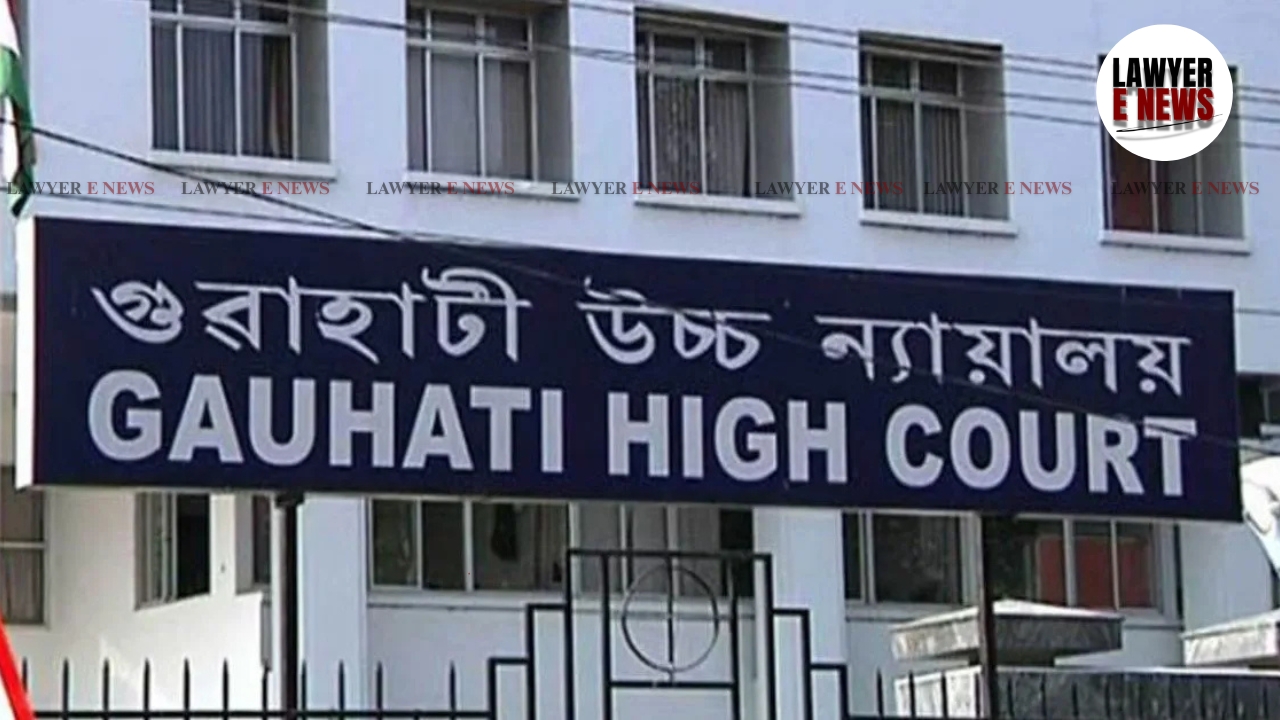
“Issuance of Notice to the Accused Must Follow, Not Precede, Examination of Complainant”— In a crucial ruling interpreting the procedural transformation brought about by the Bharatiya Nagarik Suraksha Sanhita, 2023 (BNSS), the Gauhati High Court struck down orders of a Judicial Magistrate who issued notice to accused persons before recording the complainants’ statements under oath.
Justice Anjan Moni Kalita declared that "issuance of notice to the accused prior to the sworn examination of the complainant is contrary to the mandate of Section 223 of BNSS", quashing the criminal proceedings initiated in C.R. Case Nos. 143/2025 and 144/2025 pending before the JMFC, Morigaon.
The High Court observed that the Magistrate’s act of issuing notice at a pre-cognizance stage, without first examining the complainant and any witnesses, was "a mechanical exercise, unsupported by the application of judicial mind, and in direct violation of statutory procedure."
“Section 223 BNSS creates a clear departure from the CrPC — Cognizance is not a mechanical formality, but a judicial act that must follow sworn testimony”
The Court emphasised that Section 223 of BNSS, unlike Section 200 of the CrPC, introduces a vital procedural safeguard — the requirement of a hearing to the accused before cognizance is taken — but only after the complainant and witnesses are examined on oath.
Justice Kalita held, “The involvement of the accused under Section 223(1) arises only at a post-examination stage. Issuing notice at the outset defeats the object of judicial scrutiny and renders the statutory requirement under Section 226 nugatory.”
Noting the contrast with the CrPC, the Court stated, “Under the old Code, the accused had no role at the initial stage of cognizance. However, the BNSS creates a new structure — examination of the complainant and any witnesses is the foundational step; only if the Magistrate finds the complaint not liable to be dismissed, is the accused to be noticed.”
The Court firmly observed that "the Magistrate's order dated 21.02.2025 reflects non-compliance with this scheme and must therefore be set aside."
“When Complaint Itself May Be Dismissed Under Section 226, Prior Notice to Accused Would Be a Futile Ritual”
Elaborating on the legislative design, the Court explained the interplay between Section 223 and Section 226 of the BNSS, clarifying that a complaint may be dismissed outright after examination of the complainant and witnesses, without the accused ever being summoned.
Justice Kalita reasoned, “If the Magistrate, after examination, finds no merit in the complaint, he may dismiss it under Section 226. Thus, serving notice to the accused prior to that would not only be premature, but also legally unnecessary. The law cannot demand a superfluous act.”
Relying on the Supreme Court’s judgment in Kushal Kumar Agarwal v. Directorate of Enforcement (2025 Supreme SC 919), the Court held that "the embargo under the Proviso to Section 223(1) prevents the Magistrate from taking cognizance without hearing the accused — but such hearing can only happen after the judicial threshold of sworn examination is crossed."
“Criminal Process Cannot Be Weaponised in Civil Land Disputes” – Court Notes Misuse, Allows Accused to Raise Civil Nature of Dispute Before Magistrate
While not entering the merits of the complaints, the Court took note of the pending Title Suit No. 16 of 2025, filed by the Petitioners before the Civil Judge, Morigaon, concerning the same land in dispute. The accused had argued that the criminal complaints were a retaliatory move amid an ongoing civil dispute, and had been filed to harass them.
Justice Kalita acknowledged the concern, stating, “The Petitioners shall be at liberty to raise the issue of the civil nature of the dispute before the Magistrate. The criminal process must not be allowed to operate as an instrument of oppression or vengeance in private property disputes.”
“A Magistrate Must First Examine the Complaint with Judicial Scrutiny — Not Turn the Process into a Rubber Stamp”
The Court cautioned that any deviation from the procedural safeguards under BNSS would render the proceedings vulnerable to judicial interference, especially when the liberty of an accused is at stake.
Referring to the act of the Magistrate as “non-application of judicial mind”, Justice Kalita stated, “Taking cognizance is not a mere formality. It is the outcome of an active application of mind to the facts and legal elements of the complaint. Without that, the process cannot be sustained.”
Orders Quashed, Cases Remanded for Fresh Consideration
Holding that the Magistrate had bypassed the foundational step under Section 223(1), the Gauhati High Court set aside both orders dated 21.02.2025 passed in the criminal complaints.
The Court ordered that the matters be remanded back to the JMFC, Morigaon, with a direction to first record the sworn statements of the complainants and witnesses, and only then issue notice to the accused, if necessary, after assessing whether there exists sufficient ground to proceed.
The judgment concludes by reiterating that “the criminal petitions are partly allowed to the extent that the orders dated 21.02.2025 are quashed, and the proceedings shall recommence in accordance with law, under Sections 223 and 226 of the BNSS, 2023.”
Date of Decision: 15 December 2025