
-
by sayum
25 August 2026 12:32 PM







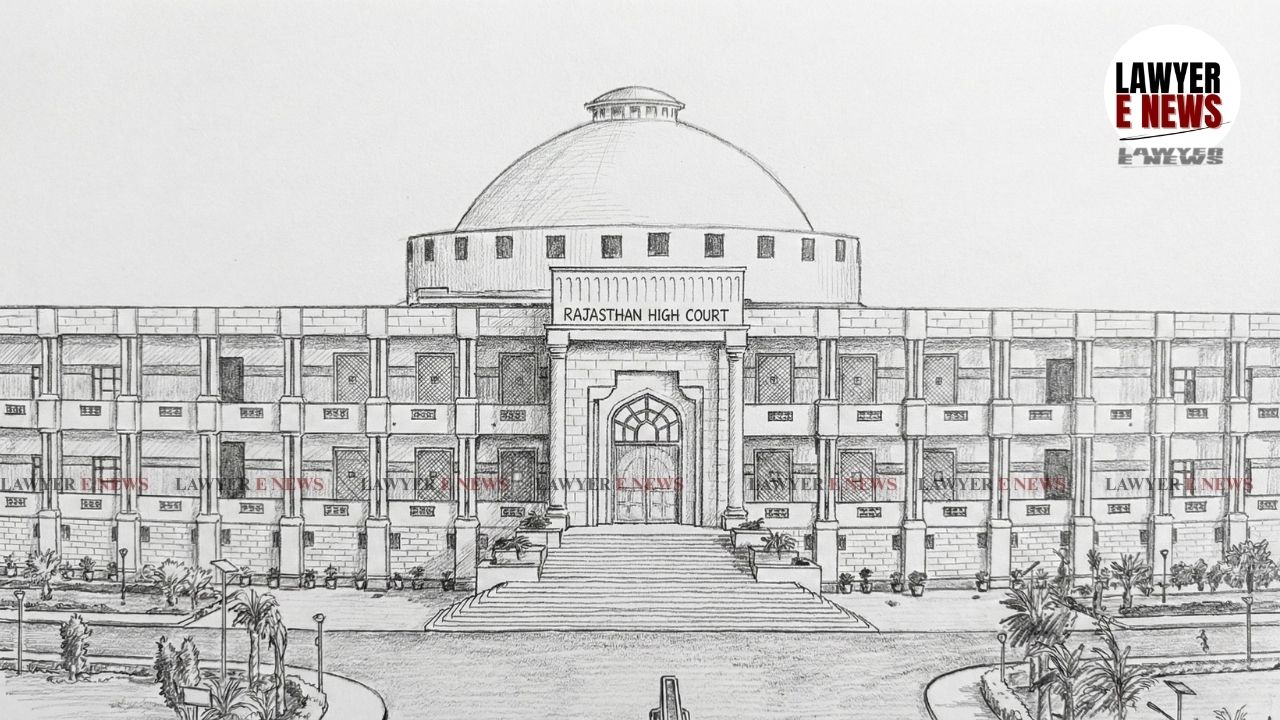
“Courts Can’t Play Detective”, In a significant ruling that draws a clear constitutional line between judicial oversight and executive discretion, the Rajasthan High Court at Jodhpur has partly allowed a criminal miscellaneous petition, holding that Magistrates and Revisional Courts cannot direct police to conduct investigations in a particular manner, including specifying forensic steps such as obtaining FSL reports.
On 7 February 2026, in the case of Mahaveer v. State of Rajasthan & Ajayraj Singh, Justice Sandeep Shah held that while the Court has the power to direct further investigation under Section 173(8) of CrPC, it cannot dictate the method, steps, or approach that the police should adopt. Any such direction, the Court held, amounts to unwarranted judicial interference and is without jurisdiction.
“Though the Court can direct holding of further investigation, it cannot direct the manner in which the investigation is to be conducted or the evidence is to be collected. That field lies within the exclusive domain of the Investigating Agency,” the Court ruled.
“Once Court Dictates the Method of Investigation, It Seals the Fate of the Case”: High Court Quashes Directions for FSL Examination
The case revolved around allegations of cheating, forgery, and criminal breach of trust, based on a complaint filed under Section 175(3) of the Bharatiya Nagarik Suraksha Sanhita, 2023 by one Ajayraj Singh, who accused the petitioner Mahaveer and his father of misusing blank cheques and forging signatures to siphon off funds.
The police, after investigation, filed a negative final report, concluding that the complaint lacked credible support from witnesses and that no offence was made out. Dissatisfied, the complainant filed a protest petition, leading the Chief Judicial Magistrate, Chittorgarh, to direct further investigation under Section 173(8) CrPC.
However, in doing so, the Magistrate went a step further, ordering that the disputed cheques and handwritten note be sent for FSL examination and that the police report be submitted after following this specific course. The Revisional Court upheld this direction.
That’s where the High Court drew the line.
“Prescribing the exact steps to be taken by the Investigating Officer — such as mandatory FSL examination — amounts to the Court itself acting as the investigator, which is impermissible,” said Justice Shah.
“Monitoring Is Not Supervising” — High Court Reiterates Supreme Court’s Caution Against Judicial Overreach
Citing a string of Supreme Court judgments, including M.C. Abraham v. State of Maharashtra (2003) and Manohar Lal Sharma v. Principal Secretary (2014), the Court reiterated the well-established position:
“Courts may monitor investigations to ensure fairness and promptness, but they cannot supervise by directing specific steps or controlling how evidence is collected.”
Drawing from Manohar Lal Sharma, the Court quoted:
“Once the Court supervises the investigation and facilitates the formulation of a report, the trial becomes a farce. Supervision of investigation by any court is a contradiction in terms.
“Separation of Powers Is Not Merely Theoretical – It Has Practical Boundaries”
The judgment underlines the constitutional scheme of separation of powers, stating that the investigation of cognizable offences falls under the exclusive domain of the executive, i.e., the police, and not the judiciary.
“Chapter XII of the CrPC is a self-contained code. The investigation — including how statements are recorded, evidence is collected, and forensic steps undertaken — is to be done by the police. The Court's role begins after the police submits a report,” the Court observed.
Justice Shah emphasized that even under Section 528 BNSS (corresponding to Section 482 CrPC), the Court's inherent powers cannot be used to micromanage investigations, however flawed they may appear.
“No Role of Court in Dictating Forensic Steps” – Direction for FSL Report Struck Down
At the heart of the dispute was the Magistrate's direction that FSL examination of signatures on cheques and a handwritten note must be undertaken as part of further investigation.
The High Court found this direction illegal, holding:
“Even if the Magistrate believes further evidence is required, the method of gathering that evidence is the prerogative of the Investigating Officer. Mandating an FSL report encroaches upon executive functioning.”
The Court noted that the police had already considered the evidentiary value of the cheques and the statements of all named witnesses — none of whom corroborated the complainant's version.
“Magistrate’s Overreach Would Prejudice Trial and Undermine Fairness”
The Court issued a word of caution against judicial overreach that prejudges the evidentiary route or the investigative theory:
“Once the Court directs the manner of investigation, it effectively pre-decides the direction in which the case must move, thereby compromising the neutrality expected in trial proceedings.”
Relying on the ruling in D. Venkatasubramaniam v. M.K. Mohan Krishnamachari (2009), the Court reminded that the judiciary must not instruct the police to arrest, seize, or record statements in a particular fashion. Doing so transforms the judiciary from a neutral umpire to an active participant in the prosecution process.
“Further Investigation Allowed, But Police Must Be Free to Investigate As Per Law”
The Rajasthan High Court carefully balanced the complainant’s right to proper investigation and the constitutional mandate to respect the autonomy of the Investigating Agency. Accordingly, the Court:
Set aside the direction for investigation in a specific manner, including the order to conduct FSL examination;
Upheld the order for further investigation;
Directed that the Investigating Officer shall proceed independently, without judicial directions on method or evidence collection.
“The Magistrate and Revisional Court have both exceeded their jurisdiction in directing the method of investigation. The law empowers them to order further investigation — but not to wear the hat of the investigator,” the Court concluded.
Date of Decision: 7 February 2026





