-
by sayum
12 October 2026 7:53 AM







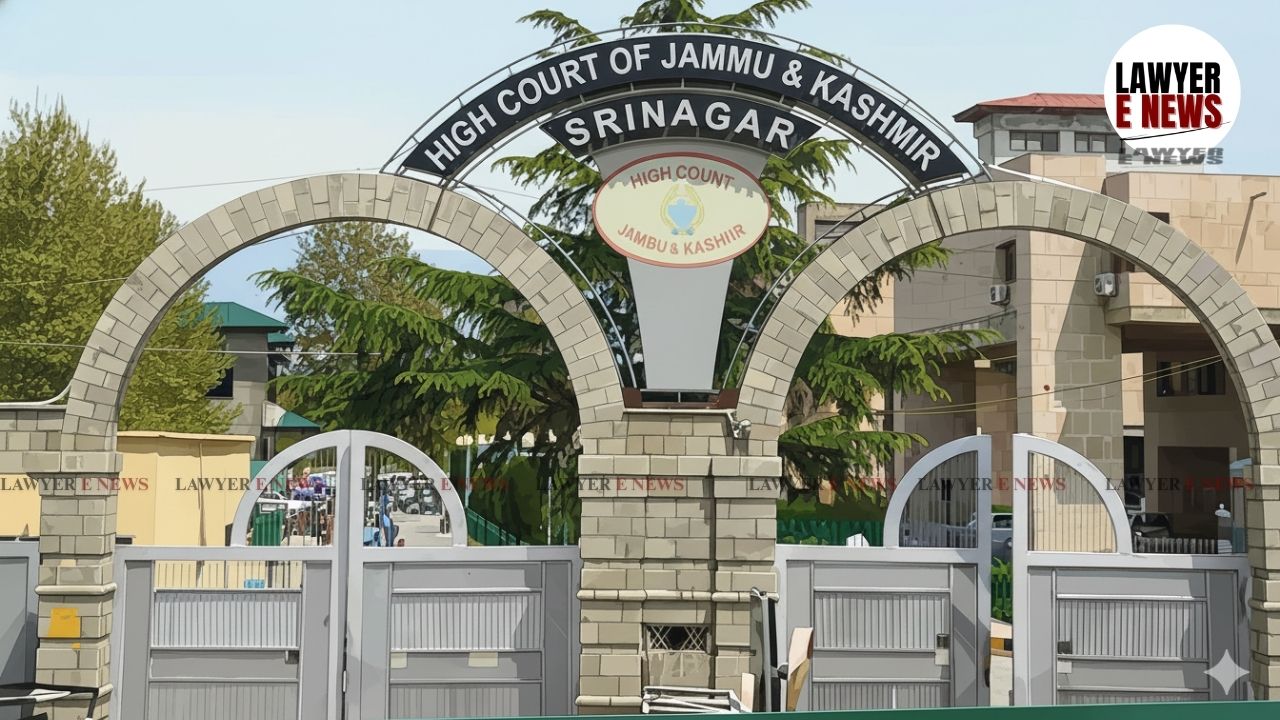
"The course adopted by the learned Magistrate is not countenanced in law. By issuing directions for registration of an FIR against the petitioners, the learned Magistrate not only flouted the procedure laid down by the Supreme Court... but he also gave a criminal colour to a purely administrative matter." High Court of Jammu & Kashmir and Ladakh held that a Magistrate acts illegally by invoking powers under Section 156(3) of the CrPC to direct the registration of an FIR in matters that are purely administrative in nature, particularly when the mandatory procedural safeguards stipulated by the Supreme Court are ignored.
Setting aside an FIR registered against a Tehsildar and an Executive Officer, the bench of Justice Sanjay Dhar observed that judicial officers must distinguish between administrative grievances and criminal acts.
The dispute arose when the petitioners, acting in their official capacities, attempted to demarcate a piece of land currently in the possession of the Munsiff Court at Thanamandi to facilitate a land transfer under a government road project. A court employee (Chowkidar) reported this incident to the Presiding Officer of the Munsiff Court, who, treating the communication as a criminal complaint, directed the police to register an FIR. The petitioners challenged this order, arguing that the complainant failed to comply with the mandatory pre-conditions under Sections 154(1) and 154(3) of the CrPC and that the action was a result of bona fide administrative duties.
The primary issue before the Court was whether a Magistrate can invoke powers under Section 156(3) CrPC to direct an investigation without the complainant exhausting the mandatory procedural requirements of approaching police authorities first. The court also examined whether an administrative dispute regarding land possession between government departments can be elevated to a criminal proceeding through a Magistrate’s intervention.
The High Court emphasized that the procedural mandates established in Priyanka Srivastava and Anr. v. State of U.P. and Others are binding and cannot be bypassed. The Court noted that the initial report filed by the employee was not a complaint in the strict legal sense but merely an administrative intimation to a superior.
Non-Compliance with Section 154 CrPC
The bench observed that the complainant had failed to approach the police station or the Superintendent of Police as required by law. The Court reiterated that a petition under Section 156(3) must be supported by an affidavit to ensure the veracity of allegations, a safeguard clearly missing in the present case.
Magistrate’s Misuse of Judicial Power
The Court held that the Magistrate failed to exercise judicial restraint, opting to criminalize a land dispute that should have been resolved through administrative channels. The bench remarked that the Magistrate should have referred the matter to the District Judge or the High Court on the administrative side rather than issuing a directive for a criminal investigation.
"The application made by the official to the Presiding Officer of the Court it appears was only an information to a superior officer in administrative capacity."
High-Handedness and Administrative Resolution
While quashing the FIR, the Court did not condone the conduct of the petitioners. It observed that the act of encroaching upon land in the possession of a court without prior notice to the presiding judicial officer exhibited a degree of high-handedness. The Court concluded that such issues must be addressed through formal administrative communication between the Revenue Department and the High Court.
In light of the legal infirmities in the registration of the FIR, the Court quashed the criminal proceedings. To ensure a systemic resolution, the Court directed the Registrar General of the High Court to take up the matter with the Deputy Commissioner, Rajouri, to resolve the land possession issue through appropriate administrative processes.
Date of Decision: 05 October 2026