-
by kapil
15 October 2026 12:52 PM







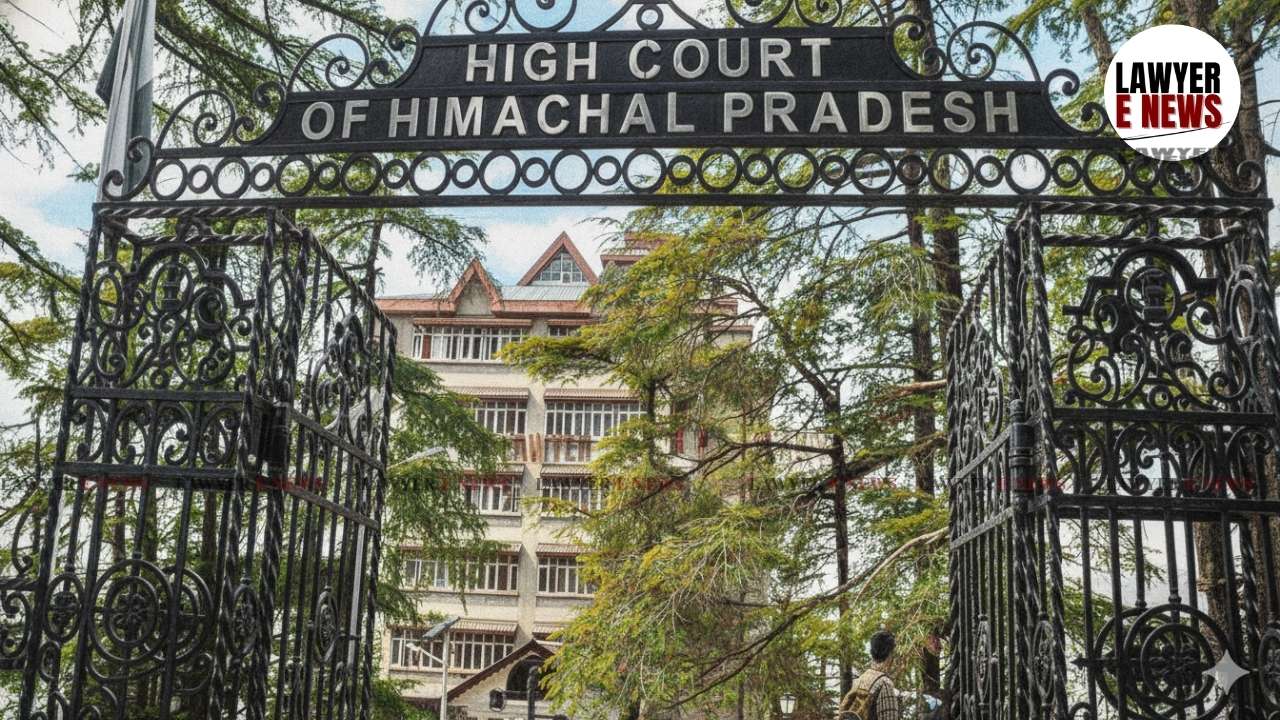
"The evidence tendered by the defence witnesses cannot always be termed to be a tainted one by reason of the factum of the witnesses being examined by the defence. The defence witnesses are entitled to equal respect and treatment as that of the prosecution." Himachal Pradesh High Court, in a judgment dated 05 October 2026, held that while a statutory presumption under Section 139 of the Negotiable Instruments Act (NI Act) arises in favour of the holder of a cheque, this presumption is rebuttable and disappears once the accused produces evidence that makes their defence probable.
A bench of Justice Rakesh Kainthla observed that the courts must apply the same yardstick of credibility to defence witnesses as they do to prosecution witnesses, cautioning against the "traditional, instinctive disbelief" often directed toward the defence side.
The case originated from a complaint under Section 138 of the NI Act, where the complainant alleged that the accused had issued a cheque for ₹9,25,000 towards the balance payment for an apple crop. The accused took the defence that he was in Chandigarh at the relevant time, that he had left a signed chequebook at home, and that his brother, Jitender, had inadvertently handed over the cheque to the complainant in his absence. The trial court acquitted the accused, finding this explanation plausible and sufficient to rebut the statutory presumption, leading to the current appeal by the complainant.
The primary legal issue before the High Court was whether the trial court’s acquittal was perverse or unsustainable, and specifically, whether the testimony of defence witnesses and the cross-examination of the complainant were sufficient to discharge the evidential burden placed on the accused under the NI Act.
Court Explains The Scope Of Interference With Acquittals
The Court emphasized that an order of acquittal reinforces the presumption of innocence. Referring to the Supreme Court’s ruling in Sanjay Kumar v. State of Bihar, the bench noted that an appellate court should not interfere with a judgment of acquittal unless it is found to be perverse, impossible, or manifestly illegal. Even if an appellate court believes that another view is possible on the evidence, it must defer to the trial court's assessment if the trial court's view is reasonable.
Presumption Under Section 139 Is Rebuttable
The High Court clarified that while the admission of a signature on a cheque triggers the presumption under Sections 118 and 139 of the NI Act, this presumption is not absolute. Citing the decision in Rajesh Jain v. Ajay Singh, the Court noted that the presumption is a "procedural device" that functions only in the absence of evidence to the contrary. Once the accused produces evidence that makes the non-existence of the debt probable, the presumption "disappears as a rule of law."
Equal Weightage To Defence Witnesses
A critical aspect of the ruling was the Court’s firm directive regarding the treatment of defence evidence. Relying on the precedent in Adambhai Sulemanbhai Ajmeri v. State of Gujarat, the Court reiterated that the law does not permit a hierarchy of witnesses. Evidence provided by the defence must be subjected to the same judicial scrutiny as that of the prosecution without any pre-existing bias or predilection.
"Depositions of witnesses, whether they are examined on the prosecution side or defence side or as court witnesses, are oral evidence in the case, and hence the scrutiny thereof shall be without any predilection or bias."
Complainant’s Evidence Found Doubtful
Upon reappreciating the evidence, the Court found significant contradictions in the complainant’s testimony regarding the sale of the apple crop and the receipt of cash payments. The Court observed that these inconsistencies, coupled with the testimony of the defence witnesses—who corroborated the accused's presence in Chandigarh—rendered the complainant's case doubtful. Consequently, the Court held that the trial court had acted within its jurisdiction in accepting the accused's version as a probable defence.
The High Court ultimately dismissed the appeal, upholding the acquittal of the respondent. The Court concluded that the accused had successfully discharged the burden of proof required to rebut the statutory presumption, and the trial court's finding was a reasonable view that did not warrant appellate interference.
Date of Decision: 05 October 2026