-
by sayum
21 October 2026 1:30 PM







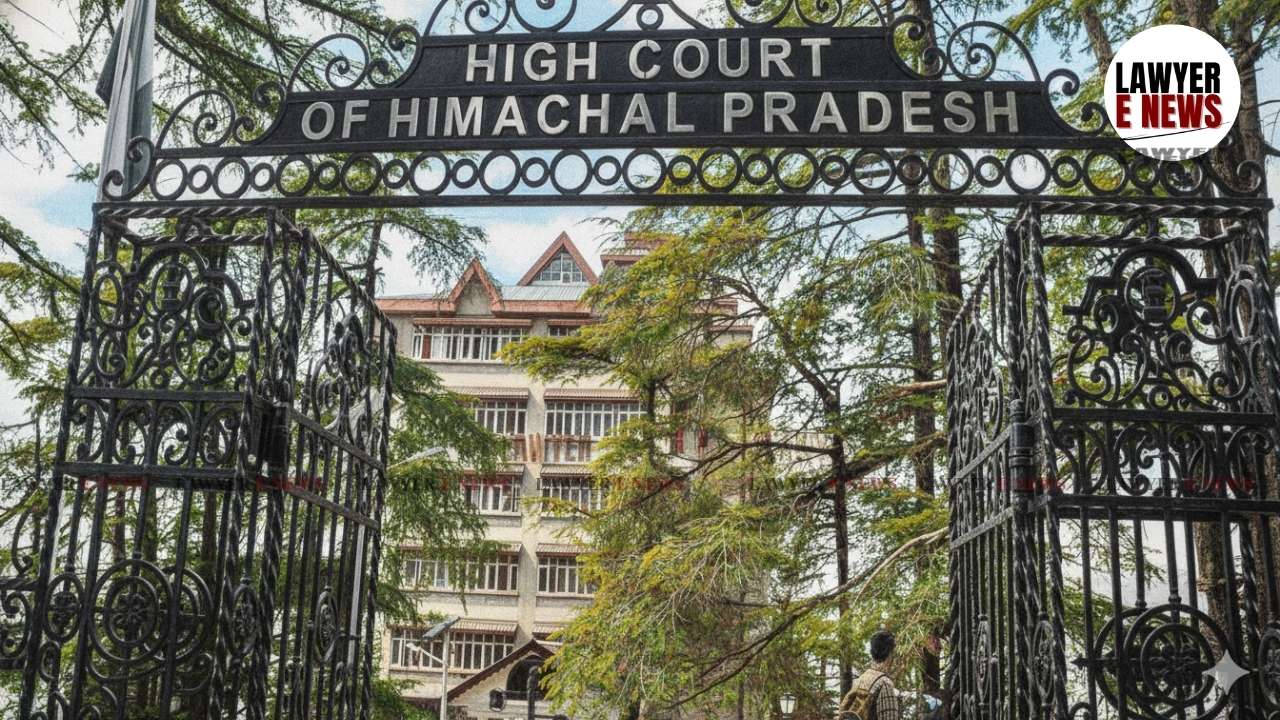
"The appellant miserably failed to prove any nexus or connection by adducing any evidence, whatsoever, worth the name with the said firm... A mere statement in the affidavit in this regard is not sufficient to meet the requirement of law." Himachal Pradesh High Court, in a judgment dated 5 October 2026, upheld the acquittal of an accused in a cheque dishonour case, ruling that a complainant who fails to provide documentary evidence of their proprietorship over the firm named on the cheque lacks the legal standing to maintain a complaint under Section 138 of the Negotiable Instruments Act.
A bench of Justice Rakesh Kainthla observed that the mere assertion of ownership in a complaint is insufficient to establish the status of a 'payee' or 'holder in due course' when the accused disputes the nexus.
The complainant, Sanjay Pant, operating under the trade name 'M/s Sanjay Traders', filed a complaint against the respondent for the dishonour of a cheque issued for hardware goods. The trial court acquitted the respondent, primarily on the ground that the complainant had not personally appeared to depose, relying instead on his power of attorney holder without proving the validity of that authorization. The complainant appealed the acquittal, contending that the trial court’s technical dismissal was erroneous.
The primary legal issue before the High Court was whether the complaint was maintainable given the lack of documentary evidence establishing the complainant's proprietorship of the firm named on the cheque. The court was further tasked with determining whether an appellate court should interfere with a judgment of acquittal where the trial court’s conclusion is based on a reasonable view of the evidence.
Court Clarifies Standing Of Power Of Attorney
Addressing the initial ground for acquittal, the High Court clarified that the trial court erred in dismissing the case solely because the complainant did not personally step into the witness box. Citing the Supreme Court’s decision in A.C. Narayanan v. State of Maharashtra, the bench noted that a power of attorney holder is competent to depose and verify the contents of a complaint if they witnessed the transaction or possess personal knowledge of it.
Absence Of Evidence Regarding Proprietorship
However, the Court emphasized that the acquittal was sustainable on a more fundamental ground: the lack of proof regarding the complainant's legal connection to the firm. The cheque in question was drawn in the name of 'M/s Sanjay Traders', but the complainant failed to produce any registration documents, tax records, or bank statements to substantiate his claim of being the sole proprietor.
"No Evidence To Link Complainant With Firm"
The High Court observed that when the status of the complainant as the owner of a proprietorship concern is challenged, the burden shifts to the complainant to produce cogent documentary proof. Relying on the precedent set in Milind Shripad Chandurkar v. Kalim M. Khan, the bench reiterated that in the absence of such evidence, the complainant cannot be recognized as the 'payee' or 'holder in due course' entitled to initiate criminal proceedings under Section 138 of the NI Act.
"Mere Assertion Not Sufficient To Meet Requirements Of Law"
The Court further noted that even during the appellate stage, the complainant made no attempt to adduce additional evidence to cure this fatal defect. Consequently, the appellate court held that it could not interfere with the trial court's acquittal, as the conclusion that the complainant failed to establish his legal nexus with the firm was neither perverse nor unsustainable.
The Court dismissed the appeal and affirmed the order of acquittal. While upholding the trial court's verdict, the High Court invoked the provisions of Section 437-A of the CrPC, directing the respondent to furnish bail bonds to ensure his appearance before the Supreme Court should the judgment be challenged in a higher forum.
Date of Decision: 05 October 2026