-
by sayum
13 October 2026 6:59 AM







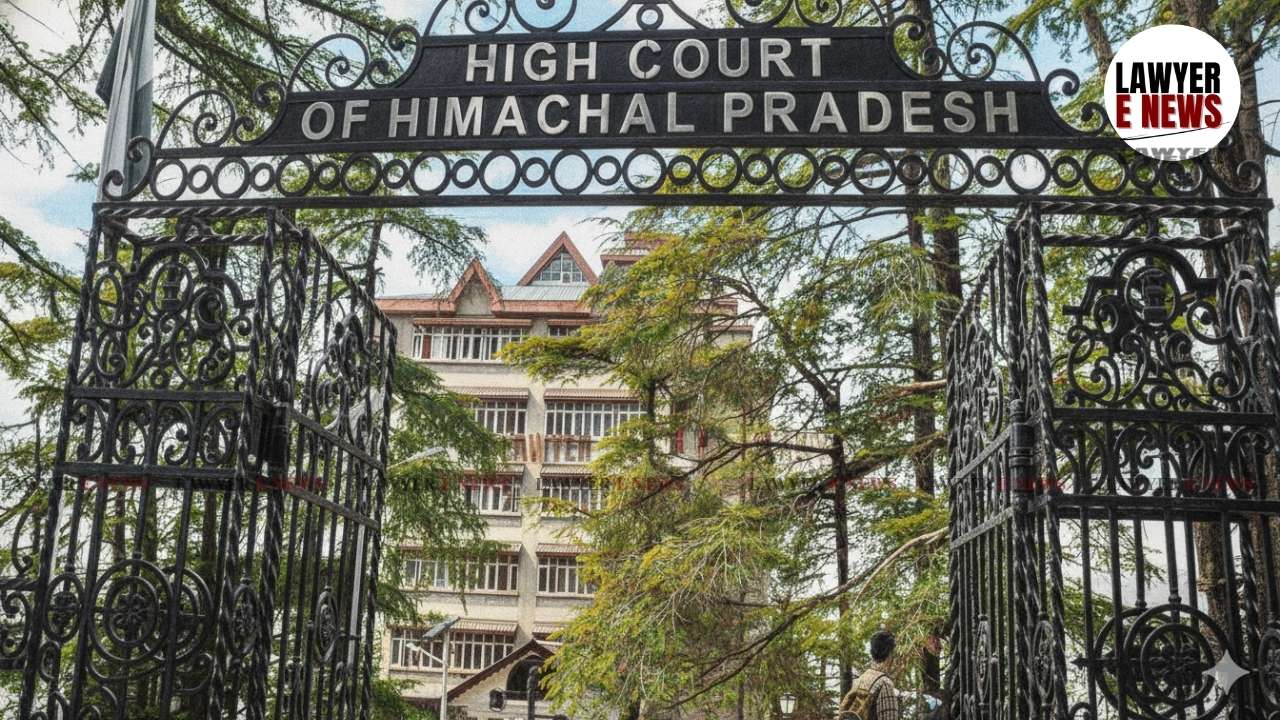
"The appellant miserably failed to prove any nexus or connection by adducing any evidence, whatsoever, worth the name with the said firm... A mere statement in the affidavit in this regard is not sufficient to meet the requirement of law." Himachal Pradesh High Court, in a ruling dated 05 October 2026, dismissed an appeal against an acquittal, holding that a complainant in a cheque dishonour case must lead cogent documentary evidence to establish their status as the sole proprietor of a firm if the cheque was issued in the firm's name.
A bench of Justice Rakesh Kainthla observed that failing to establish this nexus disentitles the complainant from being treated as a 'payee' or 'holder in due course' under the NI Act.
The appellant, Sanjay Pant, challenged the judgment of the Judicial Magistrate First Class, Shimla, which had acquitted the respondent (accused) of an offence under Section 138 of the Negotiable Instruments Act. The accused had purchased hardware articles from the complainant’s firm, 'M/s Sanjay Traders', and issued a cheque that was subsequently dishonoured due to insufficient funds. The Trial Court acquitted the accused on the grounds that the complainant had not appeared in person and had failed to prove the power of attorney or his proprietorship.
The primary legal issue before the High Court was whether the complainant, despite not appearing personally and failing to produce documentary evidence of his proprietorship, was entitled to maintain a complaint under Section 138 of the NI Act merely through the deposition of his power of attorney. The court was also tasked with determining the threshold for appellate interference in an order of acquittal.
Court Clarifies Scope Of Power Of Attorney
The High Court first addressed the Trial Court’s reasoning regarding the absence of the complainant. Referring to A.C. Narayanan v. State of Maharashtra, the Court held that a power of attorney holder is indeed competent to depose and verify the contents of a complaint, provided they have witnessed the transaction or possess due knowledge of the same. The Court clarified that the dismissal of the complaint solely on the ground of the complainant’s absence without seeking court permission was legally unsustainable.
Requirement To Prove Proprietorship
Despite correcting the procedural stance on the power of attorney, the High Court upheld the acquittal on the substantive ground of lack of locus standi. The Court emphasized that when a cheque is issued in the name of a business entity, the individual complainant must prove they are the sole proprietor to claim the status of a 'payee'. Relying on Milind Shripad Chandurkar v. Kalim M. Khan, the Court noted that a bald assertion in the complaint or affidavit is insufficient to establish this nexus.
"The appellant miserably failed to prove any nexus or connection by adducing any evidence, whatsoever, worth the name with the said firm."
No Evidence Of Business Connection
The Court observed that the complainant failed to produce any documentary evidence—such as business registration records, income tax filings, or sales tax documentation—that would connect him to 'M/s Sanjay Traders'. The Court noted that in a hardware business involving transactions of significant value, a lack of such basic documentary evidence is fatal to the complainant’s case. The Court reiterated that the presumption of innocence is reinforced upon acquittal, and appellate courts must refrain from interfering unless the Trial Court’s view is perverse or wholly unsustainable.
Parameters For Appellate Interference
The Court underscored that under the settled principles of criminal jurisprudence, if two views are possible, the view favourable to the accused must prevail. Referencing Sanjay Kumar v. State of Bihar, the Court noted that wrongful acquittal and wrongful conviction do not stand on the same footing. Since the complainant failed to establish his foundational status as the proprietor of the firm, the High Court found the Trial Court’s judgment to be a reasonable view of the evidence, warranting no interference.
The High Court ultimately dismissed the appeal, confirming the acquittal. Pursuant to Section 437-A of the CrPC (Section 481 of the BNSS, 2023), the Court directed the respondent to furnish bail bonds for a sum of ₹25,000 to ensure his presence before a higher court should a Special Leave Petition be filed.
Date of Decision: 05 October 2026