-
by sayum
18 October 2026 12:12 PM







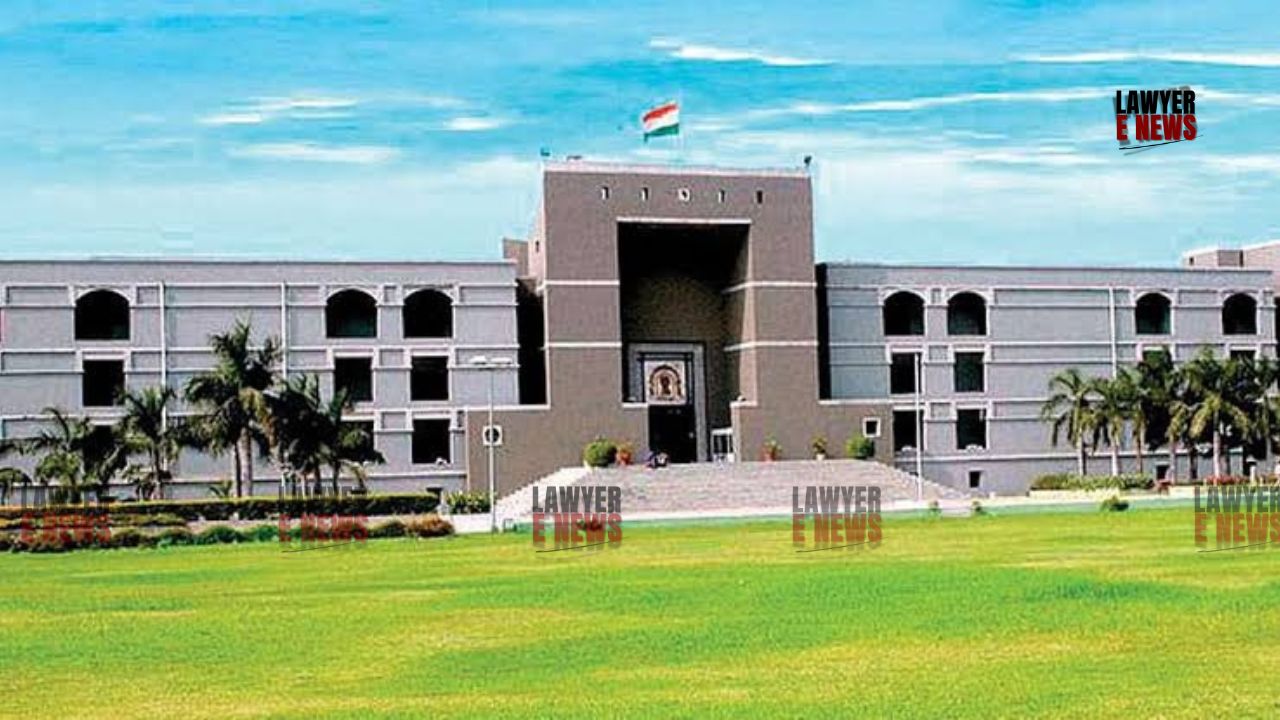
"The presumption which arises on the signing of the cheque cannot be rebutted merely by the report of a handwriting expert. Even if the details in the cheque have not been filled up by drawer but by another person, this is not relevant to the defence whether cheque was issued towards payment of a debt or in discharge of a liability." Gujarat High Court, in a significant ruling dated 28 September 2026, held that once an accused admits to signing a cheque, the request to refer the document for forensic handwriting analysis to rebut the statutory presumption under Section 139 of the Negotiable Instruments Act (NI Act) loses its legal efficacy.
A bench of Justice M. K. Thakker observed that the power to summon an expert under Section 45 of the Indian Evidence Act cannot be exercised to facilitate a fishing expedition or to protract trial proceedings when the foundational admission of signature is already on record.
The petitioner was facing prosecution in a cheque bounce case pending since 2018. During the trial, the accused sought to move an application for referring the disputed cheques and a promissory note to a Forensic Science Laboratory (FSL) to verify signatures and the age of the writing. Both the trial court and the revisional court rejected this plea, noting that the accused had already categorically admitted his signatures on the cheques during his deposition.
The primary question before the court was whether the refusal to allow forensic examination of a signed cheque and promissory note violates the accused's right to a fair trial and the ability to rebut the presumption under Section 139 of the NI Act. The court was also tasked with determining whether a delayed application for expert opinion, filed after the completion of the accused’s evidence, could be entertained to address a disputed signature.
Admission of Signature Precludes Expert Plea
The High Court observed that the petitioner had unequivocally admitted his signatures on the disputed cheques during cross-examination. Consequently, the court held that any attempt to challenge the authenticity of the signature through expert evidence at such a belated stage—more than four months after the conclusion of the accused's evidence—was a clear attempt to prolong the trial.
Bold pull-quote: "The petitioner has categorically admitted the signature on the disputed cheque... and was having the knowledge with regard to returning of the cheque."
Rebutting Statutory Presumption
The Court emphasized that the presumption under Section 139 of the NI Act operates once the execution of the cheque is admitted. Relying on the Supreme Court’s decision in Oriental Bank of Commerce v. Prabodh Kumar Tewari, the court clarified that the act of filling in the details of a cheque by a person other than the drawer does not invalidate the instrument or absolve the drawer of liability.
Scope of Section 139 NI Act
The court reiterated that the burden on the accused to rebut the statutory presumption is guided by the "preponderance of probabilities." The mere aspiration to obtain a handwriting expert report does not automatically satisfy this evidentiary burden. The bench noted that the accused had failed to take any prior legal action, such as filing a police complaint regarding the alleged misuse of the cheques by third parties, further undermining the credibility of the request.
Bold pull-quote: "The presumption which arises on the signing of the cheque cannot be rebutted merely by the report of a handwriting expert."
No Efficacious Substitute for Timely Defence
The High Court rejected the argument that bank officials were incompetent to testify regarding signatures. It held that the accused had an adequate opportunity to cross-examine witnesses or lead other evidence to discharge the burden of proof. The court underscored that scientific examination is not a substitute for the failure to raise a probable defence at the appropriate stage of the trial.
Finding that the trial had been pending for eight years and the application was a tactical delay, the court dismissed the petition. It concluded that no case was made out for interference with the lower court's orders, effectively discharging the Rule and allowing the trial to proceed to its logical conclusion.
Date of Decision: 28 September 2026