-
by sayum
22 October 2026 11:50 AM







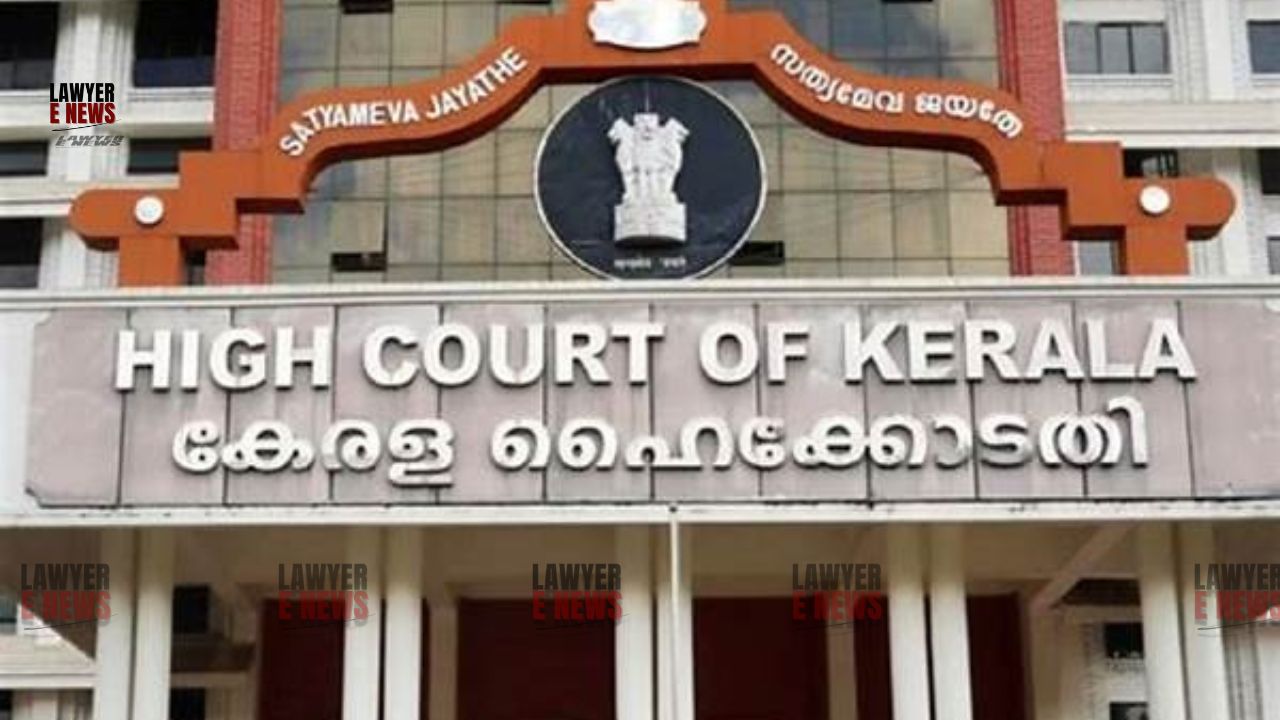
"The provisions of Section 100 of the Act would also include the entitlement of the Government to use the patent or invention for manufacturing the medicine covered by the patent and sell the same to a person, including a needy patient, on a non-commercial basis." Kerala High Court, in a significant ruling dated September 28, 2026, held that the Central Government possesses the legal authority under Section 100 of the Patents Act, 1970, to intervene and authorize the manufacture and non-commercial sale of life-saving patented drugs to needy patients.
A bench presided over by Justice Harisankar V. Menon observed that the state’s obligation under Article 21 and Article 47 of the Constitution to protect public health necessitates that the term "purposes of Government" in Section 100 be interpreted expansively to include the provision of affordable medical access.
The petition was originally filed by a breast cancer patient who challenged the exorbitant pricing of the patented medicine "Ribociclib," which was essential for her treatment. Following her demise, the Court, acknowledging the gravity of the issue, allowed the writ petition to continue as a suo motu proceeding to address the systemic challenge of access to life-saving patented medicines. The Court appointed an Amicus Curiae and impleaded pharmaceutical manufacturers and national cancer institutes to comprehensively examine the intersection of patent rights and the right to health.
The central question before the Court was whether the Central Government is legally obligated to invoke Section 100 or Section 92 of the Patents Act to ensure the availability of life-saving medicines at affordable prices. The Court was further called upon to determine whether the scope of "use for purposes of Government" under Section 100 is restricted to departmental use or extends to the public distribution of medicines for life-saving purposes.
Interpretation of Section 100
The Court meticulously examined the language of Section 100 of the Patents Act, noting that while it begins with a non-obstante clause, it must be read in harmony with the provisions of Chapter XVII. The Court rejected the argument that "purposes of Government" is limited to departmental or sovereign functions. Instead, it emphasized that sub-sections (4) and (6) explicitly permit the government to authorize third parties to vend medicine on a non-commercial basis.
"The provisions of Section 100 impose no restriction on who the purchaser could be. When that be so, the provisions under Section 100 would include the entitlement of the Government to use the patent or invention for manufacturing the medicine covered by the patent and sell the same on a non-commercial basis to a person who can be none other than the needy patient."
State’s Constitutional Obligation
The Court held that the government's duty to improve public health under Article 47 of the Constitution must inform the interpretation of statutory powers related to patents. Relying on precedents like Paschim Banga Khet Mazdoor Samity v. State of W.B., the Court reaffirmed that financial constraints cannot be a justification for the state to shirk its constitutional obligation to preserve life.
Court Emphasizes Duty To Preserve Life
"Preservation of human life is of paramount importance. That is so on account of the fact that once life is lost, the status quo ante cannot be restored as resurrection is beyond the capacity of man."
Balancing Patent Rights and Public Health
The bench clarified that while patents are granted to incentivize innovation, this right is not absolute and is subject to the general principles laid down in Section 83 of the Patents Act. The Court noted that patents must act as instruments to promote public interest and ensure that benefits are available at reasonably affordable prices. However, the Court also cautioned that it would not issue a blanket positive mandamus to invoke Section 100 without the government first conducting a rigorous data-driven assessment of affordability and availability.
"It is for the Central Government to consider whether Section 100 requires to be invoked after collecting the necessary statistics."
The Court concluded by directing the government to collate accurate data regarding the prevalence of specific cancer categories, the number of patients affected, and the efficacy of existing price-capping schemes. It emphasized that while the legal framework for intervention exists, the final decision to trigger Section 100 remains a policy prerogative based on empirical evidence. The writ petition was disposed of with these findings, leaving the government to decide on the necessity of intervention based on systematic data collection.
Date of Decision: 28 September 2026