
-
by sayum
24 August 2026 6:22 AM







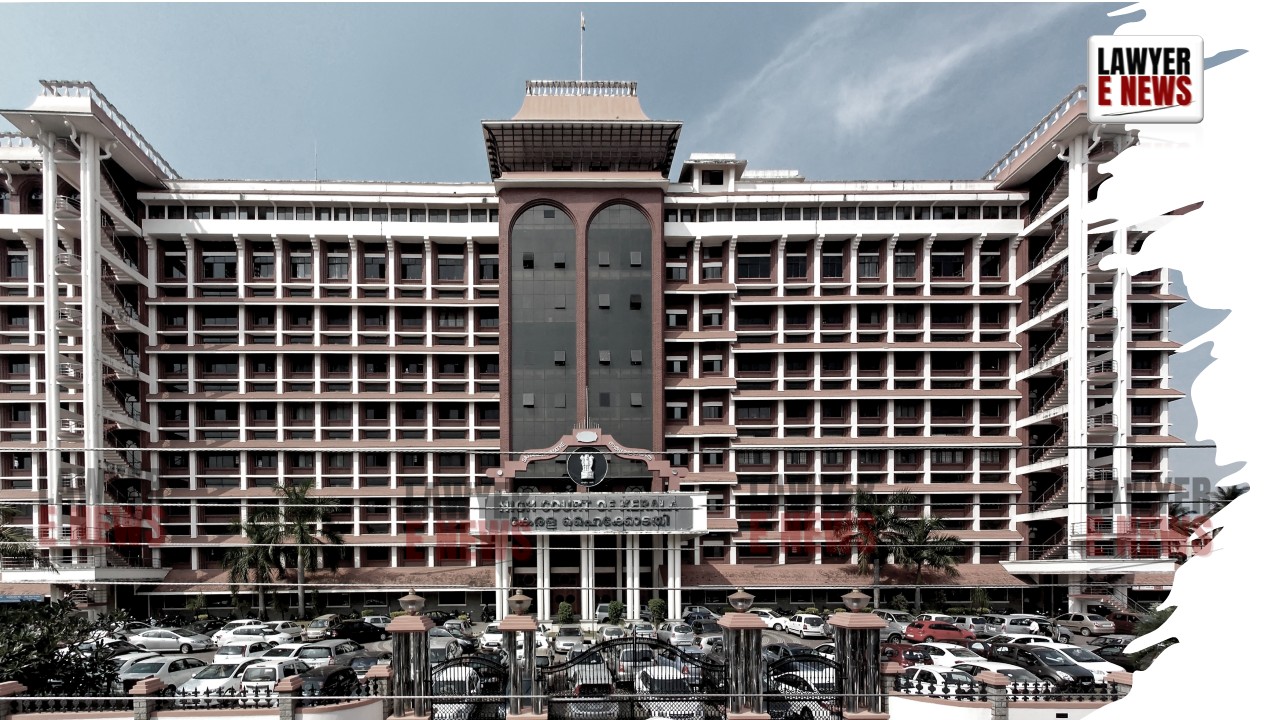
“Pre-deposit under Section 18 is a condition precedent, and must be made before the Appellate Tribunal — there’s no statutory shortcut”, In a decisive reaffirmation of procedural discipline under the SARFAESI Act, the Kerala High Court on January 7, 2026, ruled that any amount deposited by a borrower before the bank—even if directed by the High Court—cannot be counted as the statutory pre-deposit required under Section 18 of the SARFAESI Act, 2002.
Single Judge had allowed the borrower to deposit money with the Bank and treated the same as a statutory pre-deposit for purposes of appeal before the Debt Recovery Appellate Tribunal (DRAT).
Terming such a direction unsustainable, the Division Bench comprising Justice Anil K. Narendran and Justice Muralee Krishna S. held that:
“There is no provision in the SARFAESI Act which permits deposit before the secured creditor to be treated as a statutory pre-deposit before the DRAT. Such deposit must be made with the Appellate Tribunal itself.”
The Court further clarified that the pre-deposit mandated by Section 18 is a jurisdictional threshold, without which DRAT cannot entertain or judicially consider the appeal, and therefore, the High Court cannot bypass this statutory structure through Article 226.
Borrower Cannot Bypass Statutory Appeal or Mandatory Deposit by Approaching High Court
The case involved M/s Prajith Builders & Developers Pvt. Ltd., a borrower who defaulted on an overdraft facility of ₹70 lakhs, leading to SARFAESI proceedings initiated by Kerala Gramin Bank. After the Debt Recovery Tribunal (DRT) dismissed their Securitisation Application (SA No. 530/2022), the borrowers filed a writ petition before the High Court instead of proceeding directly to DRAT as provided under Section 18 of SARFAESI Act.
The Single Judge, while entertaining the writ petition, noted that the borrowers had already deposited ₹10 lakhs before the Bank pursuant to interim orders and directed them to deposit a further ₹15 lakhs with the Bank, treating the total ₹25 lakhs as a valid statutory pre-deposit for DRAT purposes. The Court also directed the DRAT, Chennai, to proceed with hearing the appeal on merits.
The Bank challenged this direction in the present writ appeal, arguing that pre-deposit under Section 18 must be made before the Appellate Tribunal and not the Bank, and that the writ petition itself was not maintainable, given the availability of a statutory alternative remedy.
“No Appeal Can Be Entertained Unless Deposit is Made Before DRAT — Not the Bank”
The Division Bench struck down the Single Judge’s judgment, holding that the High Court had no authority to dilute the mandatory condition under Section 18 of the SARFAESI Act.
Citing Narayan Chandra Ghosh v. UCO Bank, the Court observed:
“There is an absolute bar to the entertainment of an appeal under Section 18 of the Act unless the condition precedent, as stipulated, is fulfilled. Unless the borrower makes a pre-deposit with the Appellate Tribunal, the appeal cannot be entertained.”
The Court also referred to Kotak Mahindra Bank v. Ambuj A. Kasliwal and Sidha Neelkanth Paper Industries v. Prudent ARC Ltd., reiterating that DRAT’s discretion in reducing the pre-deposit is limited to 25%, and no complete waiver is statutorily permissible.
The Bench firmly held that: “The procedure followed by DRAT is to return the pre-deposit to the depositor after the culmination of the appeal. There is no legal backing for treating a deposit before the Bank as a valid statutory pre-deposit.”
Writ Petition Held Incompetent — “Statutory Remedy Must Be Exhausted”
Equally important was the High Court’s ruling on maintainability of the writ petition. The Bench held that: “When an efficacious statutory remedy exists under Section 18 of the SARFAESI Act, a writ petition under Article 226 is not maintainable.”
The Court cited the Supreme Court’s caution in Authorized Officer, State Bank of Travancore v. Mathew K.C., where it was held that writ jurisdiction should be exercised only under exceptional circumstances—such as jurisdictional errors, violations of natural justice, or fundamental procedural irregularities.
In the present case, the Bench found that none of the exceptional circumstances existed. The borrowers’ allegation that the DRAT would delay hearing the appeal was held to be a vague and speculative ground, insufficient to invoke constitutional writ jurisdiction.
“The borrower has to deposit 25% of the debt with the DRAT to invoke its jurisdiction. Instead, filing a writ petition to bypass that mandate is impermissible and contrary to binding judicial precedents.”
Single Judge’s Direction to Treat Bank Deposit as Pre-Deposit “Legally Unsustainable”
The Court took exception to the manner in which the Single Judge bypassed the statutory procedure and diluted the clear command of Section 18:
“We find no legal backing for the order of the learned Single Judge to count the amount deposited before the Bank as the mandatory pre-deposit to be made before the DRAT.”
The Division Bench set aside both the original judgment dated 14.08.2024 and the review order dated 29.11.2024, declaring them unsustainable in law, and restored the correct position of law.
Appeal Allowed — Writ Petition Dismissed for Bypassing Statutory Framework
In a detailed and emphatic ruling, the Division Bench allowed the writ appeal filed by Kerala Gramin Bank, observing that the borrowers must pursue the appeal before DRAT in strict compliance with the statutory mandate of Section 18, including the mandatory pre-deposit.
“The High Court must insist that before availing remedy under Article 226, a person must exhaust the remedies available under the relevant statute. The judgment of the learned Single Judge is thus liable to be set aside.”
Accordingly, the judgment dated 14.08.2024 in W.P.(C) No. 21833 of 2024 was set aside, and the writ petition was dismissed, relegating the borrowers to pursue their appeal under Section 18 strictly in accordance with law.
Date of Decision: January 7, 2026