
-
by sayum
16 August 2026 12:05 PM







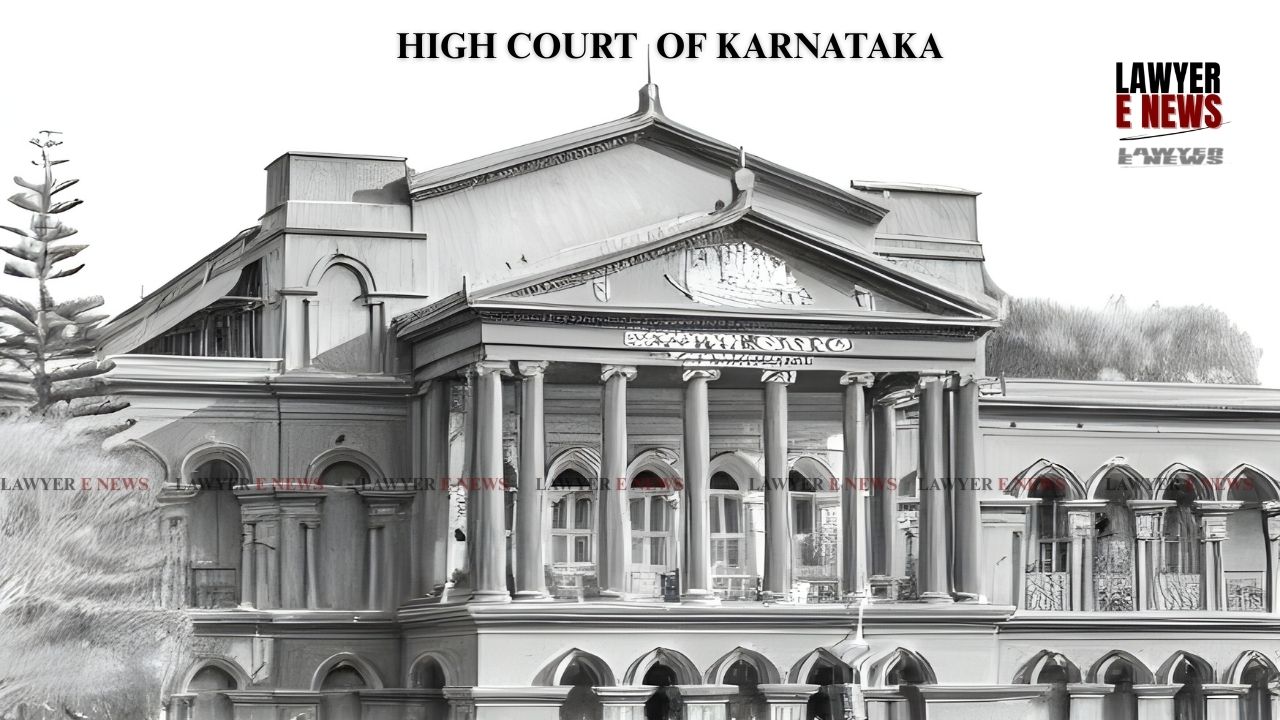
"Fraud and justice never dwell together. When there is a fraud in executing the document, the same is not having legal sanctity. Fraud unravels everything," High Court of Karnataka, in a significant ruling, held that a sale deed executed by a son in respect of his father's absolute property during the father's lifetime is void ab initio if the son had no authorization or title.
A bench of Justice H.P. Sandesh observed that such a transaction, especially when based on manipulated revenue records, cannot confer any title on the purchaser under the principle of 'nemo dat quod non habet'.
The dispute originated from agricultural land originally purchased by one Mallige Byrappa in a 1944 public auction. During his lifetime, his son Ramaiah sold the property to a third party, D. Krishnappa, in 1979 by allegedly manipulating RTC records to show himself as the owner. The appellants, who purchased the property from Byrappa’s daughters (legatees under a registered Will), challenged the validity of the son's sale after lower courts had dismissed their suits by applying the doctrine of res judicata.
The primary questions before the court were whether a son has the exclusive right to sell property belonging to his father during the latter’s lifetime under Section 7 of the Transfer of Property Act. The court was also called upon to determine if the findings in earlier rounds of litigation operated as res judicata when the previous decisions were based on erroneous legal conclusions regarding the son's capacity as a 'kartha'.
Son Lacks Competence Under Section 7 Of The Transfer of Property Act
The court meticulously analyzed the scope of Section 7 of the Transfer of Property Act, which mandates that a person must be competent to contract and entitled to transferable property to effect a valid transfer. The bench noted that as of 1979, the father, Mallige Byrappa, was the absolute owner and was very much alive, yet the son executed the sale deed in his individual capacity.
The court observed that there was no documentary evidence to show that the father had authorized the son to sell the property or that the father had relinquished his rights. The bench emphasized that the son could not have derived any valid title to the property while the original owner was alive and had not consented to the transaction.
Court Applies Principle Of Nemo Dat Quod Non Habet
Invoking the fundamental legal maxim 'nemo dat quod non habet' (no one can confer a better title than what he himself has), the High Court ruled that since Ramaiah had no title, he had nothing to convey to the purchaser. The court rejected the respondent's contention that the son acted as a 'kartha' or manager of the joint family.
The bench noted that the recitals in the 1979 sale deed specifically stated the son was selling the property on his own behalf and for his children, rather than for the joint family. The court held that the lower courts erroneously assumed the son's status as a manager without any supporting documentary evidence or proof of legal necessity.
"No one can confer a better title than what he himself has. If the vendors did not have any title, they had nothing to convey to the respondent, except perhaps the litigation."
Fraud In Revenue Records Vitiates Entire Transaction
A critical aspect of the court’s decision was the finding of fraud regarding the manipulation of the Record of Rights, Tenancy and Crops (RTC). The Trial Court had previously noted discrepancies and overwritings in the RTC records where the son's name was inserted to facilitate the 1979 sale.
The High Court held that the lower courts committed a grave error by ignoring this fraud, observing that the son had indulged in the creation of documents behind the back of his father. The bench reiterated that fraud avoids all judicial acts and that any document or decree obtained through such means is a nullity in the eyes of law.
"A judgment or decree obtained by playing fraud on the Court is a nullity and non est in the eyes of law. Such a judgment must be treated as a nullity by every Court, whether superior or inferior."
Exceptions To The Doctrine Of Res Judicata
The respondent had heavily relied on the principle of res judicata, arguing that earlier litigations had already attained finality. However, the High Court, citing the Supreme Court’s decision in Canara Bank v. N.G. Subbaraya Setty, clarified that an erroneous decision on a question of law or one that sanctions something illegal cannot operate as res judicata.
The bench observed that the previous courts had misapplied the law by treating a junior member of the family as a 'kartha' while the senior member was alive and residing in the same house. The court held that such a fundamental legal error, coupled with the evidence of fraud, prevents the application of Section 11 of the CPC.
"The doctrine of res judicata cannot impart finality to an erroneous decision on the jurisdiction of a court or a question of law which sanctions something that is illegal."
Final Directions And Grant Of Declaratory Relief
The court finally took note of the registered Will executed by Mallige Byrappa in 1980 in favor of his daughters, which had been proved in earlier proceedings. It held that the daughters were the rightful legatees and had validly conveyed the title to the appellants in 2006.
Setting aside the judgments of the Trial Court and the First Appellate Court, the High Court allowed the regular second appeals. The court declared the appellants as the absolute owners of the suit properties and granted a permanent injunction against the respondents, concluding that possession follows title.
The High Court reversed the lower court decrees, declaring the 1979 sale deed non-est and void. The appellants were declared the owners based on the proven Will of the original purchaser, thereby ending a litigation cycle spanning over 45 years.
Date of Decision: 12 June 2026