-
by sayum
25 August 2026 9:55 AM







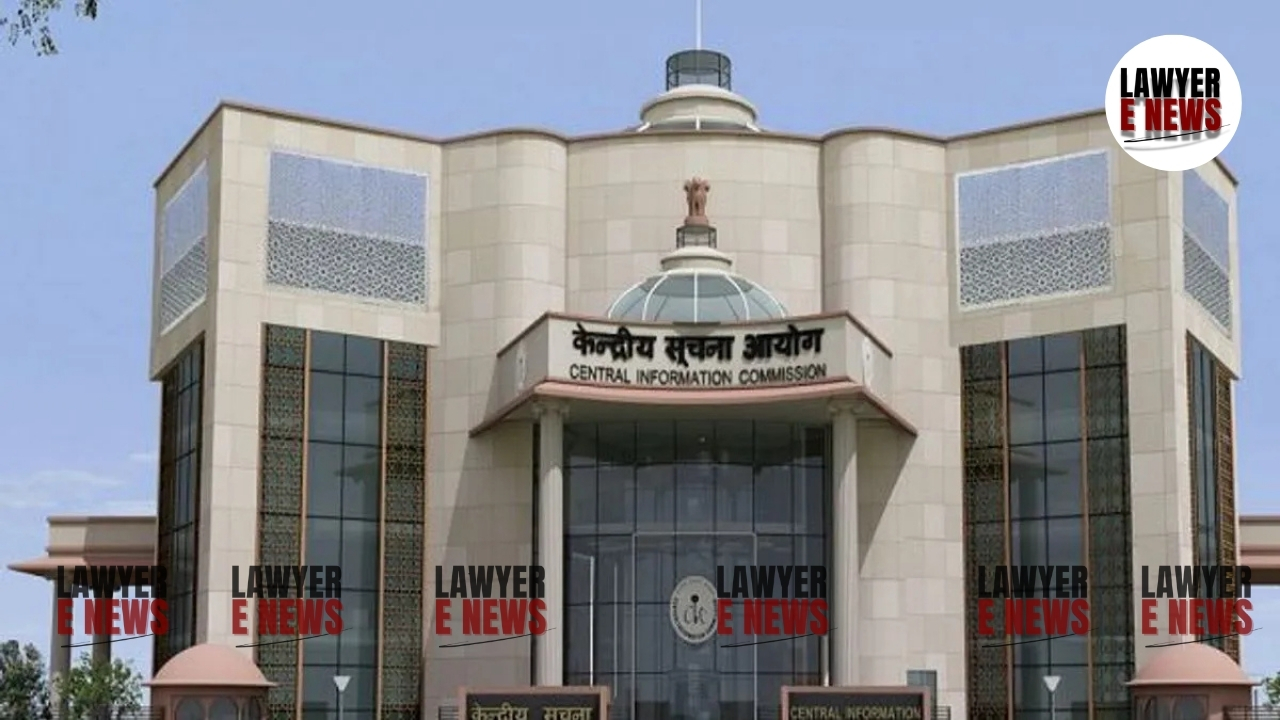
“Certified Copy Of What You Already Possess Cannot Be Sought Under RTI” – In a significant ruling delivered on 25th June 2025, the Central Information Commission, headed by Chief Information Commissioner Shri Heeralal Samariya, dismissed both a Complaint and a Second Appeal filed by Shri Siddhartha Mukherjee against the Ministry of Petroleum and Natural Gas and Hindustan Petroleum Corporation Ltd. (HPCL). The Commission, while issuing a strongly worded order, declared that the Right to Information Act is a powerful instrument for ensuring transparency but cannot be reduced to a tool for personal vendetta, harassment, or vengeance.
The Commission categorically held, “The RTI Act cannot be permitted to become an instrument of oppression or intimidation of public officials. Filing 235 RTI applications and 147 First Appeals against the same public authority in the guise of transparency is a textbook case of misuse of the RTI mechanism.”
The ruling came in response to an RTI application filed by the complainant seeking a certified copy of Office Memorandum No. HRD 2022 issued by HPCL. The CPIO of the Ministry of Petroleum and Natural Gas had, vide communication dated 21st January 2025, transferred the application to HPCL under Section 6(3) of the RTI Act, stating, “The requisite information may be lying with CPIO, HPCL. Hence, the RTI application is being transferred for necessary action.”
Dissatisfied with the transfer, the appellant filed a First Appeal, which was dismissed. Subsequently, he approached the CIC with a Complaint under Section 18 and a Second Appeal under Section 19 of the RTI Act, challenging the denial of information.
The CPIO of HPCL submitted before the Commission that the applicant was already in possession of the document sought. The CPIO contended, “It is an admitted fact that the complainant already possesses the document. Once the information is in the possession of the applicant, it ceases to be information ‘held by the public authority’ under Section 2(f) of the RTI Act.”
The CPIO further stated, “Entertaining such requests for certified copies of documents already held by the applicant will result in a disproportionate diversion of the limited resources of the public authority. This would set a dangerous precedent where any RTI applicant could endlessly seek certified copies of every letter, communication, or order ever issued to them, regardless of whether they already hold those documents.”
The Commission took serious note of the appellant’s history of litigation. The order records that Shri Siddhartha Mukherjee had filed not only 235 RTI applications but also 147 First Appeals against the same public authority. The Commission observed, “The pattern of conduct exhibited by the complainant clearly shows a misuse of the RTI Act driven not by any larger public interest but by personal grievances.”
Referring to the Supreme Court judgment in Advocate General, Bihar v. M.P. Khair Industries, the Commission quoted, “Filing of frivolous and vexatious petitions amounts to abuse of legal processes.” The Commission further recalled the Apex Court’s landmark observation in Ashok Kumar Pandey v. State of West Bengal that, “Frivolous litigation criminally wastes the valuable time of the courts, causing undue delays to genuine litigants and thereby shaking public faith in the justice delivery system.”
Drawing strength from the Supreme Court’s ruling in CBSE v. Aditya Bandopadhyay, the Commission remarked, “While transparency is a cherished goal, indiscriminate demands under RTI for all and sundry information unrelated to accountability or corruption would be counter-productive and would cripple the functioning of public authorities.”
The Commission also recorded a disturbing history of litigation initiated by the complainant before the Delhi High Court and the Supreme Court, most of which ended in dismissal, including with costs for filing frivolous and repetitive petitions. Citing the Delhi High Court’s observation in Review Petition No. 244 of 2025, the Commission noted, “The filing of repeated misconceived applications diverts the attention of the Court from genuine cases... It is now necessary to impose an order of costs upon him.”
In this context, the Commission found that the CPIO of the Ministry of Petroleum and Natural Gas had lawfully transferred the RTI application to HPCL under Section 6(3) since HPCL was the holder of the requested information. The CIC categorically declared, “There is no infirmity in the CPIO’s action; the transfer is completely valid and in line with the provisions of the RTI Act.”
Addressing the question of whether the CIC, while entertaining a Complaint under Section 18, could direct disclosure of information, the Commission relied on the landmark judgment of the Supreme Court in Chief Information Commissioner v. State of Manipur. Quoting paragraph 31 of the judgment, the CIC reiterated, “While entertaining a Complaint under Section 18, the Commission has no jurisdiction to pass an order providing access to the information... The only order that can be passed is an order of penalty under Section 20, provided the conduct of the Information Officer was not bona fide.”
In the present case, the Commission held, “There is no evidence to suggest any mala fide denial of information by the CPIO. Therefore, no action is warranted under Section 18 or 20 of the Act.”
In a sharp warning, the Commission declared, “The RTI Act is not absolute. It must balance the right to information with the efficient functioning of public authorities. The filing of hundreds of repetitive and irrelevant RTIs to resolve private disputes is neither the purpose nor the spirit of the RTI Act.”
Refusing to impose a penalty on compassionate grounds, the Commission nevertheless issued a stern caution to the appellant, stating, “This Commission strongly advises the appellant to refrain from misusing the RTI mechanism to ventilate personal grievances unrelated to any larger public interest.”
In conclusion, the Complaint and the Second Appeal were dismissed. The Commission reiterated, “The responses provided by the CPIO are legally appropriate and fully compliant with the RTI Act.”
The decision echoes a powerful message that the RTI Act is a tool for fostering accountability and transparency but cannot be weaponized as an instrument of harassment or vengeance against public officials.
The Commission concluded its order with a clear reminder, “If the RTI Act is allowed to be hijacked for personal grudges, it risks becoming an obstacle to the very transparency it seeks to promote.”
Date of Decision: 25th June 2025