-
by sayum
19 August 2026 1:58 PM







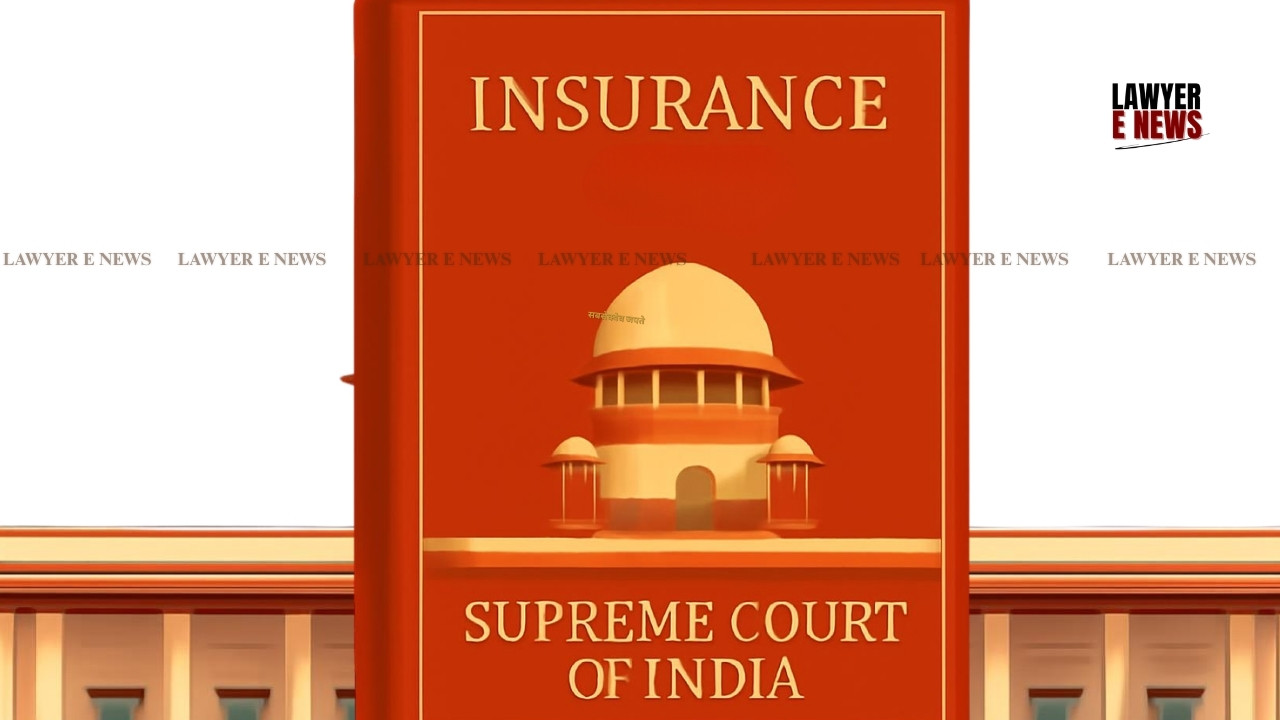
"When a Registered 99-Year ‘Demise’ Speaks Clearly, Courts Cannot Rewrite It as a Licence" — In a decisive ruling reaffirming the sanctity of registered instruments, the Supreme Court of India set aside the Orissa High Court’s judgment and restored the concurrent findings of the Trial Court and First Appellate Court, holding that the document dated 23.03.1998 created a 99-year lease and not a mere licence.
The Bench of Justice Pankaj Mithal and Justice S.V.N. Bhatti emphatically held that where the language of a registered deed is clear, courts must apply the literal rule of construction and cannot dilute express covenants by relying on subsequent conduct. The Court declared the unilateral cancellation of the lease as illegal and clarified that purchasers during the subsistence of the lease could not defeat the lessee’s rights.
The ruling is a strong reiteration of principles under Sections 105 and 111 of the Transfer of Property Act, 1882, Section 52 of the Indian Easements Act, 1882, and the settled jurisprudence distinguishing lease from licence.
Late Anima Bose, owner of the suit property in Baripada Town, Odisha, executed a registered instrument on 23.03.1998 in favour of Vivekananda Kendra for a term of 99 years at an annual rent of Rs. 1,000. The document expressly stated that the “Lessor hereby demises to the Lessee” the property for the purpose of establishing and carrying on the activities of the Kendra. It permitted construction and bound successors and assigns.
Despite this, in December 2003, Anima Bose unilaterally executed a deed cancelling the registered lease and demanded possession. In 2005, possession was allegedly disturbed, and in 2006 the property was sold to third parties during the pendency of the suit.
The Trial Court decreed the suit declaring the cancellation illegal and recognising the leasehold rights. The First Appellate Court affirmed the decree. However, the High Court in second appeal reversed the concurrent findings, holding that the document was only a licence to administer a centre and not a lease.
The Supreme Court was thus called upon to determine the true nature of Ext. 1.
“Substance Must Prevail Over Form — But Clear Words Need No Reconstruction”
The Court revisited the classic distinction laid down in Associated Hotels of India Ltd. v. R.N. Kapoor, where it was observed:
“To ascertain whether a document creates a licence or lease, the substance of the document must be preferred to the form… if the document creates an interest in the property, it is a lease.”
Applying this principle, the Bench analysed the clauses of Ext. 1 and noted the unmistakable language of transfer. The deed used the expression “demises”, fixed the tenure at 99 years, prescribed annual rent, authorised construction, and extended rights to “heirs, successors, administrators and permitted assigns.”
The Court concluded:
“The above clauses in Ext. 1 denote that the Plaintiff is a lessee, and Ext. 1 satisfies the meaning of a lease deed.”
Rejecting the High Court’s reasoning, the Bench held that reliance on cross-examination and post-execution conduct to reinterpret an otherwise clear document was legally unsustainable. It observed that purposive or contextual interpretation is unnecessary when the intention is evident from the plain and ordinary meaning of the text.
The judgment firmly declared:
“In the case at hand, the document’s nomenclature, text and context lead to only one conclusion: that Defendant No. 1 entered into a 99-year lease deed.”
“Exclusive Possession Is Assessed Qua the Demised Portion — Retention of First Floor Does Not Convert Lease into Licence”
One of the High Court’s key reasons for treating the document as a licence was that the lessor retained occupation of the first floor. The Supreme Court rejected this reasoning.
The Bench clarified that exclusive possession must be examined in relation to the demised portion and not the portion expressly excluded from the agreement. Mere retention of a part of the building by the owner does not negate the creation of leasehold interest over the demised property.
This finding reaffirms that the real test is transfer of interest in property, not superficial indicators of control.
“Rights Accrued Under a Registered Lease Cannot Be Defeated by Unilateral Cancellation”
The Court further held that the unilateral cancellation deed dated 03.12.2003 was illegal. There was no clause in the original lease permitting unilateral termination, nor was there proof of determination under Section 111 of the Transfer of Property Act.
The Bench categorically observed:
“Unless the parties agree bilaterally, disturbing the Plaintiff’s possession is illegal.”
The judgment reinforces that there is no provision enabling unilateral cancellation of a registered lease so as to extinguish vested leasehold rights.
“Purchasers Step into the Shoes of the Lessor — They Take Subject to the Lease”
The property was sold in 2006 during pendency of litigation. The purchasers claimed to be bona fide purchasers.
The Supreme Court held that the sale could not extinguish the 99-year lease. The vendees acquired only such rights as the lessor retained, namely the reversionary interest.
The Court observed:
“Defendant Nos. 3 and 4 are vendees from the first Defendant, and rights which are preserved and protected in favour of the lessor are allowed to be enjoyed by Defendant Nos. 3 and 4.”
Thus, the lessee’s interest remained intact.
Allowing the Civil Appeal, the Supreme Court set aside the High Court’s judgment and restored the decrees of the Trial Court and First Appellate Court. The 99-year lease was upheld, the unilateral cancellation was declared illegal, and the rights of the lessee were protected against subsequent purchasers.
The decision is a strong reminder that courts must respect the clear language of registered instruments and that leasehold rights, once validly created, cannot be casually nullified by unilateral action or subsequent sale.
Date of Decision: 26 February 2026