-
by sayum
09 October 2026 12:19 PM







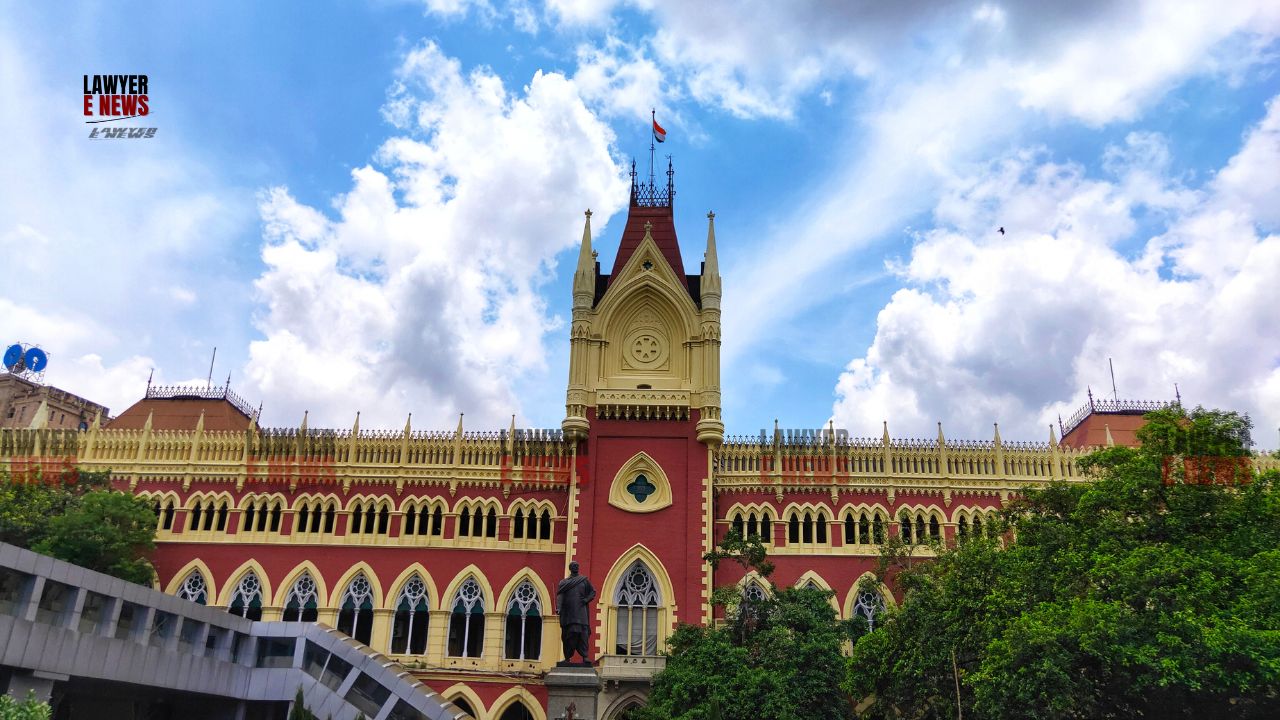
"Electricity is an essential commodity. The right to live in a healthy and dignified manner, has been guaranteed by our constitution. In modern times, living without electricity amounts to deprivation of a meaningful civilized living." Calcutta High Court, in a significant ruling, held that the restoration of electricity to occupants of a premises cannot be construed as an acknowledgement of their right to remain in possession or create any equitable title.
A bench of Justice Shampa Sarkar and Justice Arjun Ray Mukherjee observed that while electricity is an essential commodity and a facet of the constitutional right to a dignified life, its provision is independent of the legal status of the occupants in a property dispute.
The litigation arose following the disconnection of electricity by CESC Ltd. due to safety hazards caused by water percolation at the meter board location. While the learned Single Judge had directed the restoration of power supply to ensure safety and facilitate repairs, the appellants—the landlords—challenged the order, arguing that it disregarded proceedings initiated by the Kolkata Municipal Corporation (KMC) under Section 412A of the KMC Act, 1980, regarding the dilapidated condition of the building.
The court was primarily called upon to determine whether the restoration of electricity in a premises subject to a demolition or eviction dispute confers any additional legal rights upon the occupants. Furthermore, the court examined whether the pendency of proceedings under Section 412A of the KMC Act should serve as an absolute bar to the restoration of an essential service like electricity to the occupants.
Constitutionality of Essential Services
The court emphasized that the deprivation of electricity in modern times constitutes a denial of the right to a meaningful and civilized existence. Rejecting the landlord’s plea that the restoration would prejudice their case, the bench clarified that access to essential services is a human necessity that exists independently of ownership disputes.
The Principle of Non-Equity
The court categorically held that the status of the occupants remains subject to the outcome of independent civil proceedings or KMC actions. Crucially, the bench established that the court's intervention to restore electricity does not create any "equity" or possessory rights in favor of the occupants.
"The status of these occupants is not decided in this proceeding. Secondly, restoration of electric supply to the persons in occupation of the premises can never create any right or equity in their favour and shall be subject to the proceedings initiated by the Kolkata Municipal Corporation or pending before civil court, as the case may be."
Independence of Proceedings
The bench underscored that the present appeal was limited strictly to the issue of electricity as a utility. By segregating the right to basic amenities from the determination of land title or building stability, the court ensured that the utility provider's mandate to maintain safety and supply does not become a tool for influencing the adjudication of property rights.
Dismissing the appeal, the court maintained the restoration of supply while explicitly preserving the liberty of the landlords and the KMC to proceed with all pending legal actions regarding the property’s status. The judgment serves as a precedent ensuring that in property disputes, the "essential nature" of electricity is treated as distinct from the "legal status" of the occupier.
Date of Decision: 27 August 2026